

Summarize This Article With AI
 Try with ChatGPT
 Try with Claude
 Try with AI Mode
If you’re still only tracking keyword rankings on Google, you’re missing half the story. Search today is not limited to the classic blue links. Users now get answers directly inside AI search engines, LLM chat interfaces, and Google’s AI Overviews. Sometimes, those answers are all they need.
So here is the new question: When someone searches for you in AI, does your brand show up?
This is where LLM rank tracker tools come into play.
They track visibility not just in search results but also in generated answers. They monitor when AI mentions your products. They analyze which search queries trigger competitors instead of you. And they help you discover prompts you need to win if you want to stay relevant.
It is a completely different world from traditional rank tracking. And it is quickly becoming essential for brand visibility, competitive benchmarking, and generative engine optimization success.
Whether you lead SEO for an enterprise brand or run a fast-moving marketing team, this guide will show you what matters right now and how modern tracking tools can help you stay ahead.
Article Summary
- What LLM rank trackers are and how they work
- Why traditional SEO rank trackers no longer give the full picture
- Key capabilities to demand in AI search visibility tools
- Which leading tools help track brand mentions in AI answers
- How to choose the right platform for your SEO stack and reporting needs
- Why tracking AI visibility is now a required part of SEO strategy
What Are LLM Rank Tracker Tools?
To understand LLM rank trackers, you first need to understand what has changed in search.
We are no longer living in a world where the only goal is to rank number one in Google and celebrate with cake.
Today, people ask AI chatbots and answer engines for recommendations.
They search inside conversational interfaces rather than typing keywords into a box. And those systems do not show ten links. They show one AI-generated answer.
This means your success depends on whether AI models like Gemini, GPT, Claude, and Perplexity actually know your brand. If they do, you show up in answers. If they don’t, well… you become invisible.
What LLM Rank Trackers Actually Do
LLM rank tracker tools flip the traditional SEO measurement on its head. Instead of tracking keyword rankings in blue links, they measure:
- When your brand appears in AI responses
- Where you show up inside AI Overviews and other AI search results
- Which search queries trigger competitors instead of you
- How your visibility compares across multiple AI platforms, not just Google
- Share-of-voice inside AI-generated answers, not just SERPs
This is the new frontier of LLM SEO and generative engine optimization.
It’s no longer about how well a page ranks. It’s about how well your brand is understood as an authority. LLM tracking tools help you monitor that authority in real time.
Why It Matters
If someone asks ChatGPT:
“Which is the best SEO agency?”
and you are not included in the answer… You just lost a customer. And the worst part is that you never even knew the battle happened.
That is the risk brands now face in AI search environments. Visibility disappears quietly. Purchase decisions happen before users ever click a link. And because old-school rank trackers do not monitor these interactions, most brands have no clue they are losing ground.
LLM tracking tools fix that.
They bring visibility to visibility. They tell you when AI engines:
- Cite you correctly
- Misrepresent your offerings
- Forget you exist entirely
With that insight, you gain a strategic roadmap for content creation, entity optimization, and brand mentions, allowing you to align what you publish with how AI understands your brand.
Why Traditional Rank Trackers Fall Short in 2025
For years, SEOs lived and died by one measurement: Where does my page sit in Google’s blue links?
If you ranked number one, you celebrated.
If you ranked number ten, you panicked and refreshed the dashboard five times (been there…seriously).
That world has changed.
Users are asking search queries in natural language. They are expecting full, conversational explanations. And instead of scrolling through search engine results pages, people are getting what they need directly within AI-generated results.
If Google answers the question for them, why would they click?
Traditional Tools Only Track Half of Reality
Classic rank trackers still focus on where web pages appear in Google search results. They might even alert you when you move up or down a position. But here’s the problem: users often never see those rankings anymore.
Because they stop right at:
- AI Overviews
- Google AI Mode
- Answer engines like Perplexity
- Voice search responses
- Recommender-style responses powered by LLMs
These are the new gatekeepers.
And they often skip linking to web pages completely.
So your SEO dashboard may say you’re doing great. Meanwhile, your visibility in AI search could be plummeting without you noticing.
Brands Are Now Measured by Mentions, Not Just Rankings
Search engines are evolving into answer engines.
Instead of tracking which website gets the click, we now have to track which brand gets named in the answer.
If other websites are consistently cited. If competitors are being cited as reliable sources. If your brand is nowhere to be found.
That is a brand problem. Not a keyword problem.
Traditional tools simply cannot measure:
- Where your brand appears inside AI responses
- How often it is included or excluded
- How you compare to competitors as a recommended option
- Freshness and accuracy of entity associations
- Visibility across multiple AI platforms, not just Google
SEO reporting that ignores this is outdated reporting.
And Here’s the Business Risk
If you do not appear in AI answers, you do not influence decisions, you do not build trust, and you do not drive demand.
Traffic drops quietly. Conversions fall slowly. The spreadsheet says rankings are fine. But new customers are finding someone else inside the generated response.
Traditional rank tracking is looking at yesterday’s internet.
LLM tracking is built for today’s search behavior.
It’s not optional anymore.
It’s a new requirement.
Key Features to Look For in LLM Rank Tracker Tools
Choosing LLM rank tracker tools in 2025 is not just a cool-tool-collector move. It is mission-critical search visibility insurance.
You’re tracking a world where Google’s AI Overviews can rewrite the SERP in real time, and answer engines decide who gets recommended. Your tool needs to keep up with that reality.
And if it can’t follow users into AI search engines, AI chatbots, and multiple AI platforms, it’s already obsolete.
Here’s what actually matters.
AI Overview and SGE Monitoring
You can rank number one in the classic search engine results, yet the user never sees your page. Why? Google placed an AI Overview above everything, wrote its own answer, and cited a competitor instead.
In AI search, the click never happens. The decision does.
So, monitoring AI search results means asking:
- Are we in the answer?
- Are we cited correctly and consistently?
- Do we appear for the search queries that drive our business?
A modern LLM tracking tool must show whether your brand appears where the choice is made, not five scrolls below where the click used to happen.
Entity-Based Tracking
Keywords are not the main character anymore. Entities are.
LLMs decide credibility based on who you are and what you are known for, not how many times you repeat a target keyword in a sentence. If models do not associate your brand with your product or expertise, the AI does not recommend you. End of story.
This is where AI visibility and brand visibility tracking matter.
You need a tool that monitors:
- How you are referenced across AI responses
- Whether competing brands are positioned as “more authoritative”
- Where entity connections are weak or missing entirely
Because if the model misunderstands you, users will too.
SERP Feature and Search Visibility Monitoring
Search behavior is fragmented. A user might see you in:
- A brief citation under AI-generated answers
- A Knowledge Graph panel
- A recommended follow-up inside a chat interface
- A tiny search bar suggestion
- A People Also Ask style prompt in AI Mode
Those micro-moments are where trust forms. And where visibility tracking must happen.
If your reporting tool ignores these touchpoints, it is measuring a version of search that users have already left behind.
Speed, Accuracy, and Fresh Data
Here is the brutal truth. AI tracking is volatile.
You can gain or lose search visibility multiple times a day.
That means:
Weekly reports are too slow. “Static results” are a polite lie. And “check back next month” is career sabotage.
You need data quality and frequency that keep pace with how fast AI models evolve. You need a user-friendly interface that your team can actually use. And you need updates fast enough to act before a competitor does.
Because in AI search, there are only two outcomes. You adapt quickly. Or you disappear quietly.
Why AI Visibility Tracking Is Now Essential for Search Everywhere Success
Let’s be brutally honest. Brands are still spending the majority of their SEO budgets optimizing for search engines, while users have already moved on to AI answers. People are asking questions in Google AI Mode, ChatGPT, Perplexity, and even social-led conversational search.
They expect the best answer instantly, and they want someone (or something) to just tell them what to buy.
Decision-making is shifting upstream.
The recommendation is the conversion.
This is exactly why Search Everywhere Optimization™ exists. Visibility cannot end at a blue link. It must include everywhere the customer:
- Asks
- Researches
- Compares
- Decides
And increasingly, that is happening through LLM engines that serve a single, authoritative response. If your brand appears in that response, you gain trust and action. If you’re missing from that moment, the click never happens, the lead never enters the funnel, and the competitor gets silently chosen.
No alerts. No warning. Just lost revenue because AI doesn’t know you exist.
Traditional SEO metrics like rankings and organic traffic still matter, but they now represent the trailing indicators of success. AI visibility is the leading indicator. It shows whether the model believes you are credible before a user ever sees a SERP.
Winning this game means:
- Reinforcing entity understanding across content and mentions
- Monitoring which AI search engines trust your expertise
- Tracking how AI summarizes your value compared to competitors
- Creating content aligned to real search queries, people now speak to machines
And you cannot improve what you cannot measure.
That is why LLM rank tracker tools are the heartbeat of Search Everywhere.
Because influence has moved to the answer layer.
The brands that earn space there will become the brands users choose everywhere else.
If you want your brand to remain discoverable, recommendable, and revenue-driving in a world led by AI search results, it is time to elevate how you measure visibility.
Want help building a Search Everywhere Optimization™ strategy that includes AI visibility tracking? Check out our Search Everywhere Optimization™ services.
Needless to say, as an agency that specializes in Search Everywhere Optimization™ and services major enterprise brands globally, tracking AI visibility for our clients is a top priority.
And with that, we’ve tried and tested our fair share of LLM rank tracker tools.
Below are our favorites, along with why we love them.
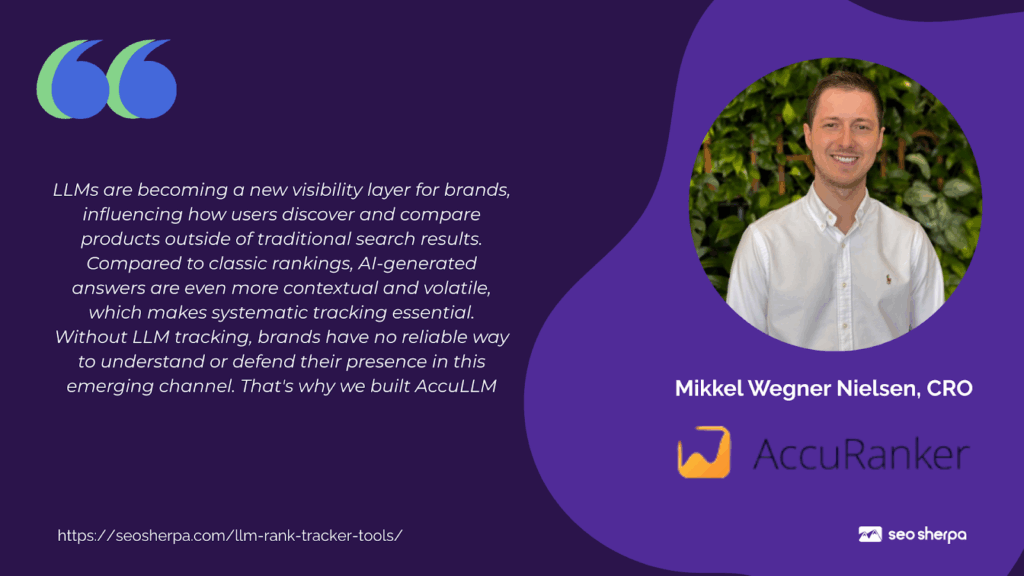
Top Recommended Tool: AccuRanker’s AccuLLM
AccuRanker has built something genuinely ahead of where most brands are operating. Traditional rank tracking is still in there, of course, because we still live in a world with search engines and blue links.
But AccuLLM layers on a deeper visibility lens. One that shows not only where your pages rank but also where your brand appears in AI answers across major AI search engines.
This is where things get exciting.
AccuLLM lets you track how your brand is represented in AI search results and AI Overviews, whether you are credited as a source, and which topics you are gaining or losing authority on in real time. It pulls back the curtain on AI search visibility, exposing how language models talk about you, whether they trust you, and whether users are discovering you at all.
Now for the fun part. The feature that made me audibly gasp.
AccuLLM gives you prompt intelligence.
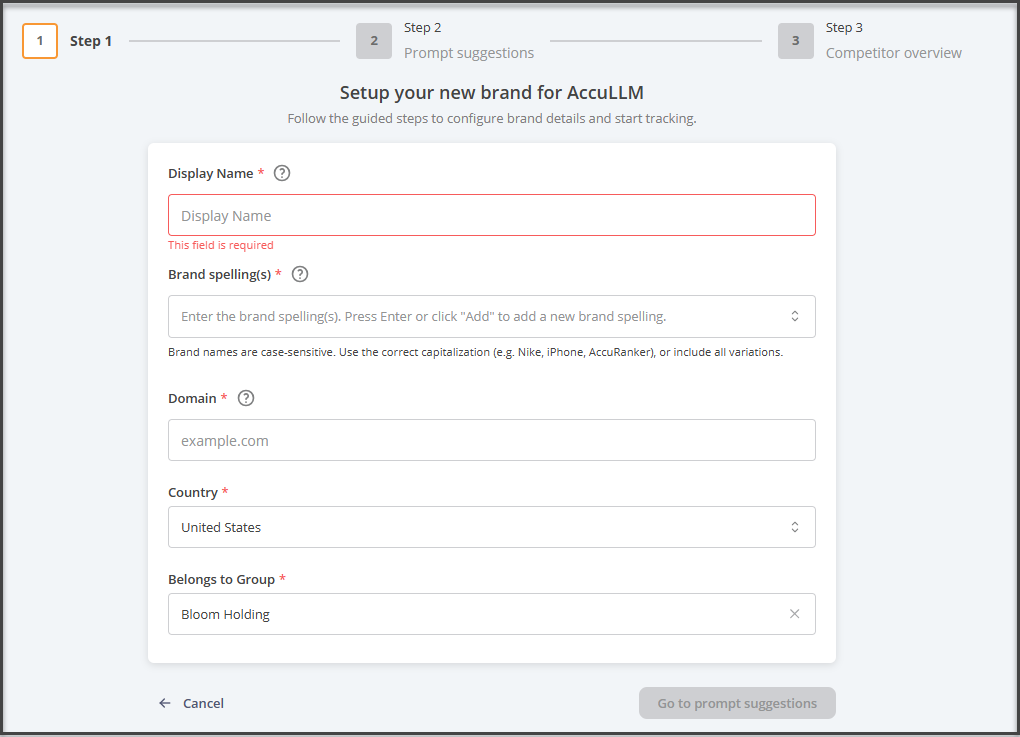
First, add your brand information. Your brand name and any way it is mentioned online (e.g., SEO Sherpa, seo sherpa, seosherpa) and your domain.
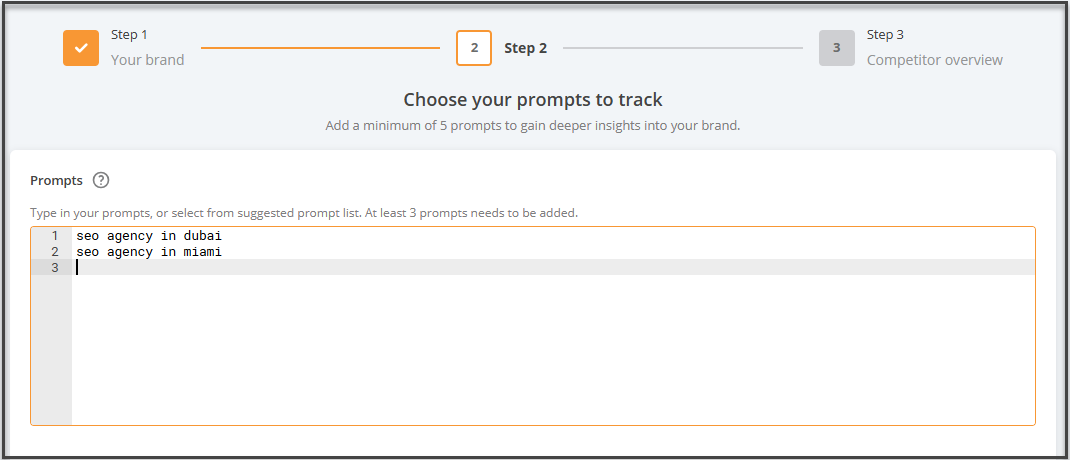
Then you move to prompt selection.
You can add your own prompts to track.
Or you can select from the AccuLLM suggestions… and this is where the magic happens!
AccuLLM generates recommendations based on real prompts users are typing into AI platforms. Not keywords. Not theories. Actual search behavior occurs within answer engines and Google AI Mode.
And this is not a chaotic list of phrases. It is structured:
- By category (like content pillars already baked for you)
- By search intent (informational vs commercial vs transactional)
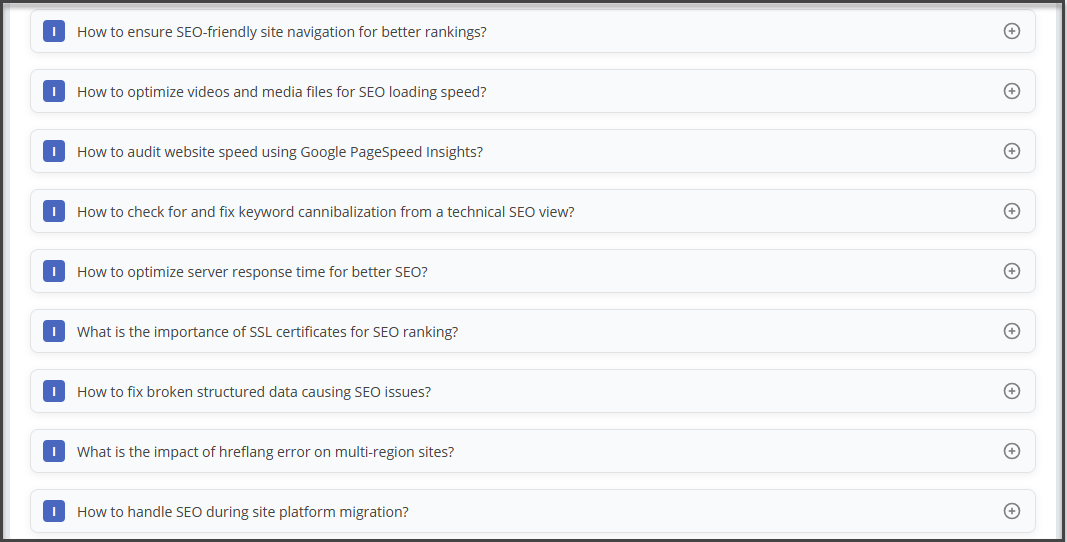
This feature alone feels like someone just handed you the playbook for winning Generative Engine Optimization. It’s like seeing the questions AI thinks you should be answering… before your competitors catch on.
And once you choose which prompts to start tracking, AccuLLM builds the dashboards for you, visualizing where you appear, how you perform, and what next actions can move the needle. You will get info on mentions, sentiment, citation data, and more, and you can segment the results by LLM Engine (ChatGPT, Perplexity, Gemini, and AI Mode). You will also get to see the sources the LLMs pull, the landing pages, and monitor your share of brand mentions.
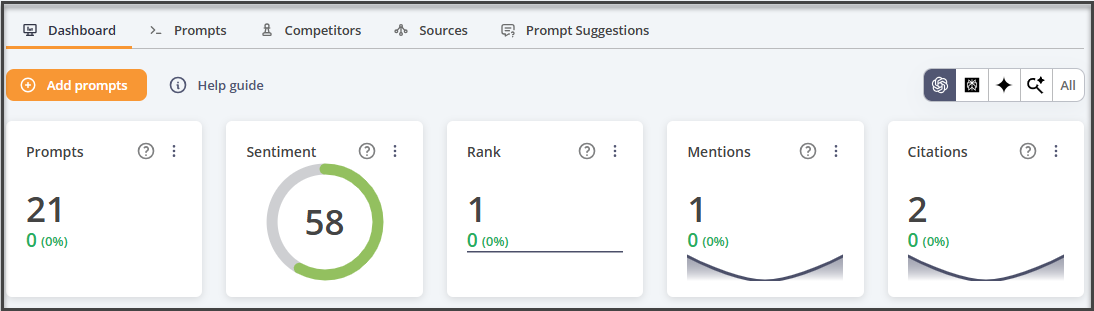
Seeing your brand mentions directly tied to AI responses, mapped to specific search queries and content gaps, means strategy and execution finally connect. You are not just tracking performance. You are engineering it.
This is not rank tracking.
This is visibility tracking for the world we are actually living in.
Why We Recommend AccuLLM
AccuLLM is one of the few tools built for the version of search we are watching unfold right now. It tracks visibility where humans are making decisions. It measures brand presence where impressions actually form. And it turns data into an actionable roadmap instead of another intimidating spreadsheet.
And that recommended prompt feature? It is a content roadmap goldmine. You see exactly:
- Which prompts already include competitors
- Which LLM tracking opportunities you’re missing
- Where you need stronger entity reinforcement
- How to align your messaging with AI models to boost trust
It’s like waking up to a morning report that politely says:
“You want to win? Start here.”
AccuLLM was designed for in-house teams who want clarity, for agencies who need proof of value, and for brands ready to stop guessing what AI wants from them.
You track performance.
You influence how AI engines perceive your expertise.
You finally know if what you’re doing is working.
That’s why we recommend it. Simple as that.
Other Noteworthy LLM Rank Trackers We’ve Tested
AccuLLM may currently be leading the charge, but it’s not a one-horse race.
A handful of AI visibility tools are innovating fast, and each one brings something valuable to the table depending on your SEO maturity, tech stack, and budget reality.
Surfer AI Tracker
Surfer’s AI Tracker is one we use regularly.
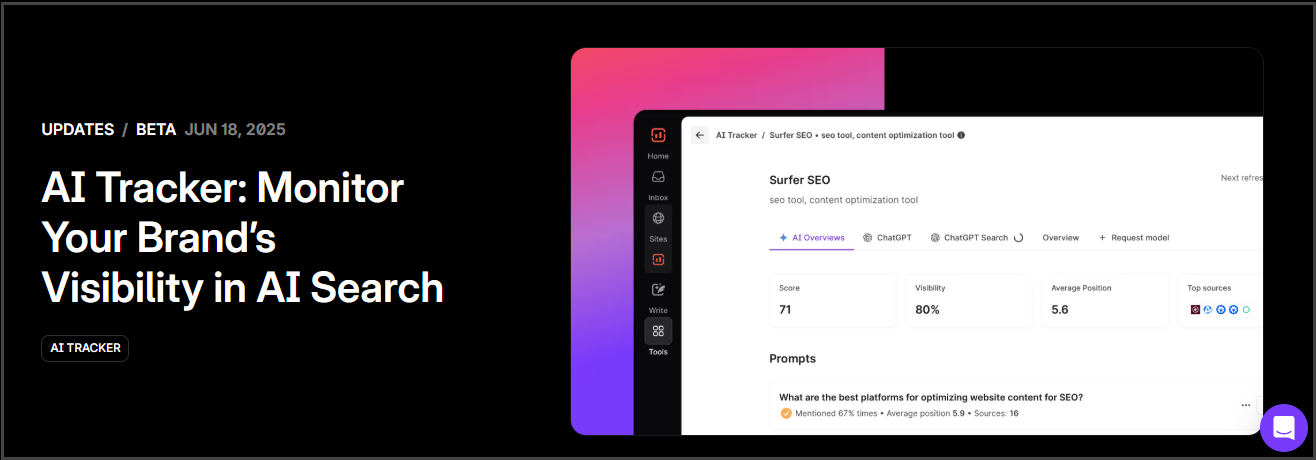
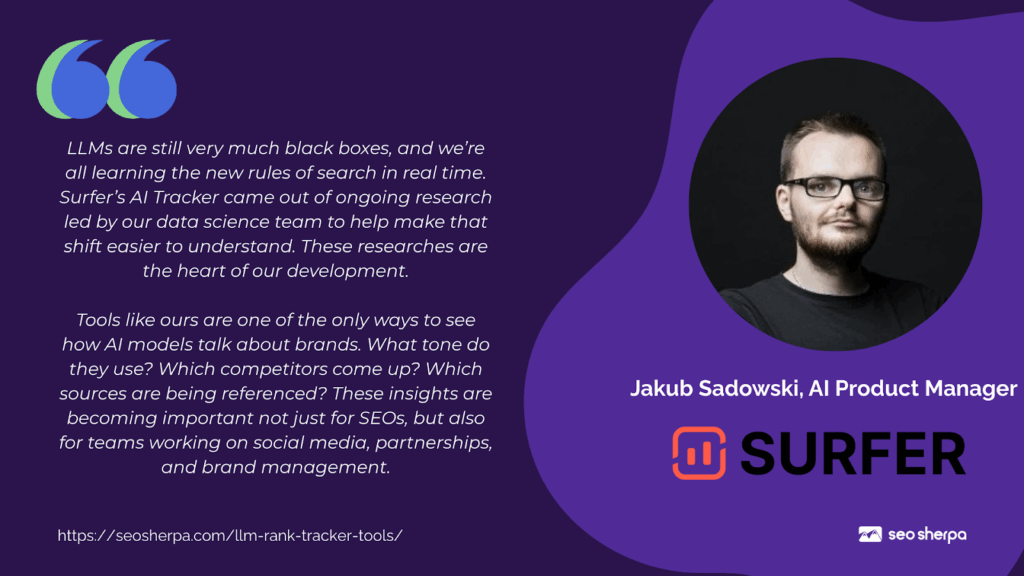
It’s a paid tool and still evolving (we were proud beta testers), but the direction is spot on. Surfer has clearly recognized that the future of SEO reporting depends on understanding visibility in AI search.
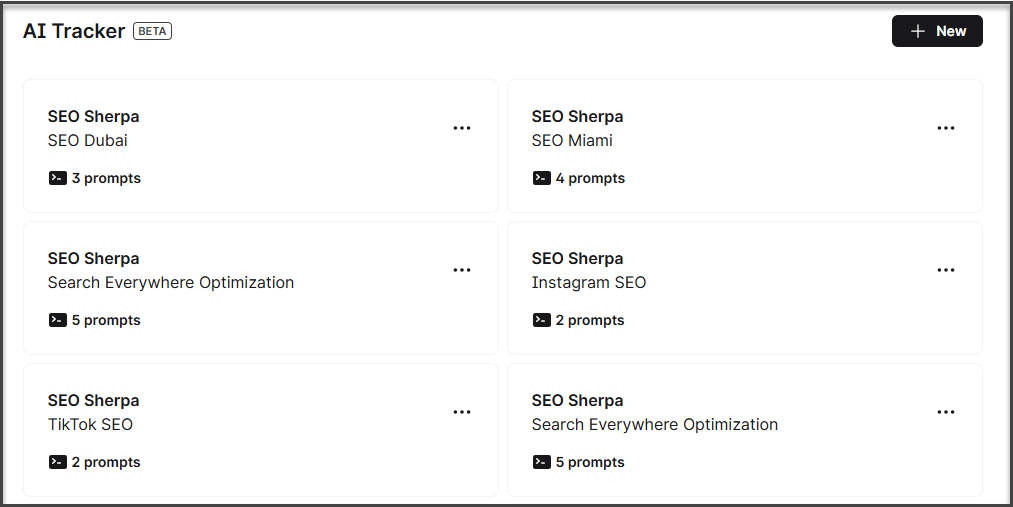
Right now, their AI monitoring is more supplemental than foundational. It gives you a useful pulse check, especially when tied to existing Surfer workflows like content scoring. The thing we appreciate most is their speed of iteration. They are treating LLM tracking as a product priority, and it shows. If history is any indicator, Surfer will catch up quickly.
Ahrefs Brand Radar
Ahrefs Brand Radar is here, and it’s genuinely one of the most exciting features they have shipped in years. It taps into AI search engines like Perplexity to show when your brand appears in AI answers and how often you are being mentioned across multiple AI platforms. That is a huge step forward for a tool historically built on backlinks and traditional search analytics.
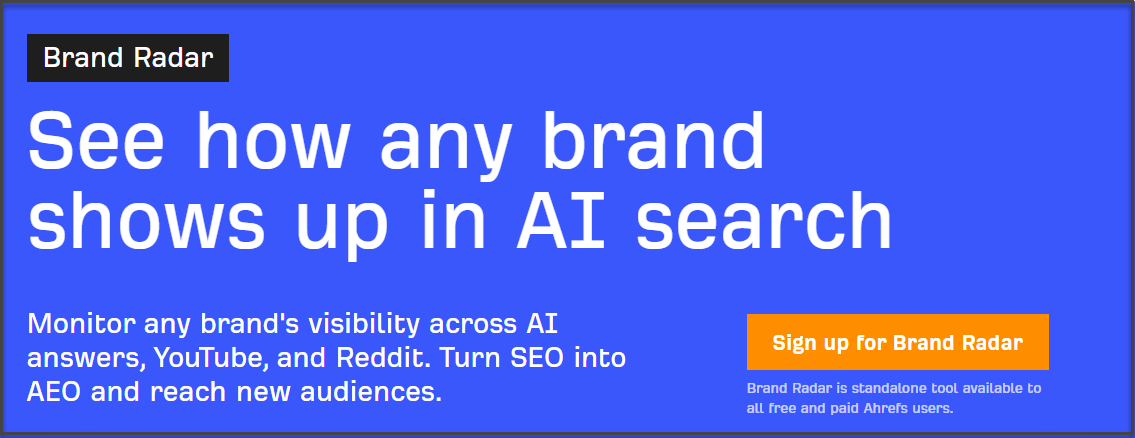
Brand Radar is still evolving and not yet at the prompt-level granularity needed to map LLM visibility directly into a content roadmap. But the signal quality and credibility Ahrefs brings to the table mean that they are building toward something powerful. If you’re already using Ahrefs as your SEO rank tracker of choice, Brand Radar gives you meaningful early visibility into how AI sees your expertise. And knowing Ahrefs, this is only the beginning.
LLMrefs
Then there’s LLMrefs.
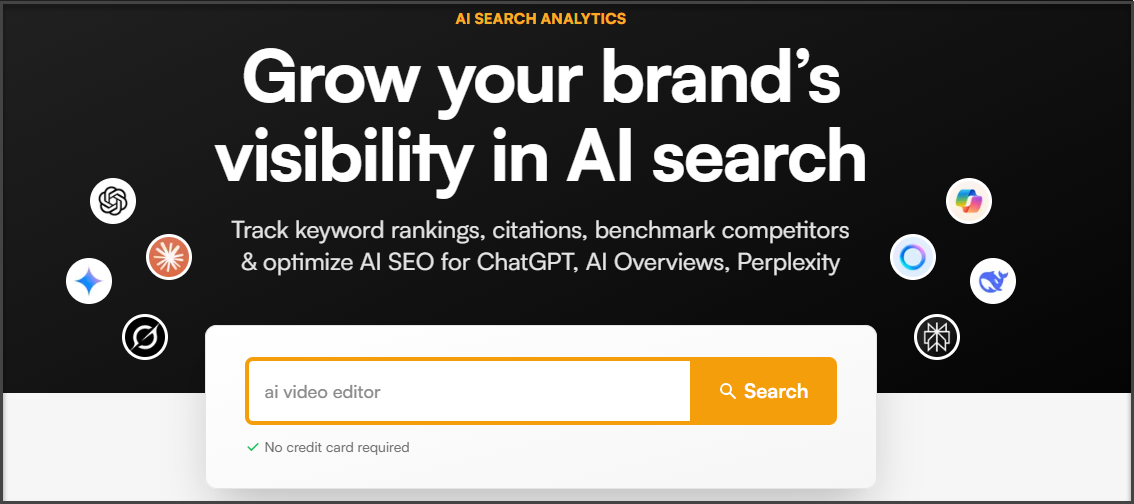
It’s the lesser-known tool in this space, but honestly, it deserves WAY more love and recognition.
The UX alone? Chef’s kiss!
The free version lets you track AI mentions, citation data, and brand presence across major AI search engines without entering your card details. It’s lightweight, fast, and gives you a clean signal on whether answer engines even know you exist.
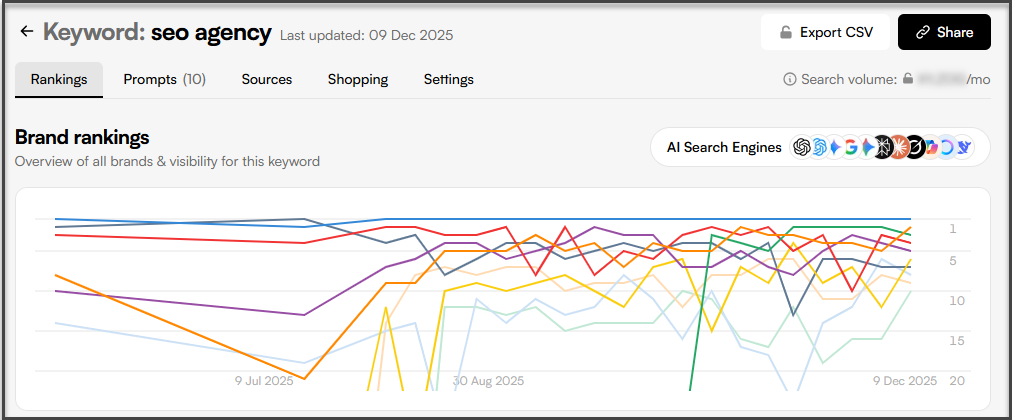
Is it as advanced as a full LLM tracking tool like AccuLLM or the enterprise AI visibility tracking features we are seeing from larger SaaS players? Not yet.
But what it (currently) lacks in key capabilities like prompt categorization or competitor benchmarking, it makes up for with accessibility. If you are a solo SEO, consultant, or early-stage brand just starting to track performance in AI-generated results, this is a smart way to dip your toe in.
LLMrefs gives you exactly what many teams need right now: proof.
Proof of whether you’re showing up in AI search results or if you’re invisible. And when those first brand citations start rolling in, it’s a huge confidence boost that your generative engine optimization efforts are working.
Knowatoa
And finally, there’s Knowatoa.
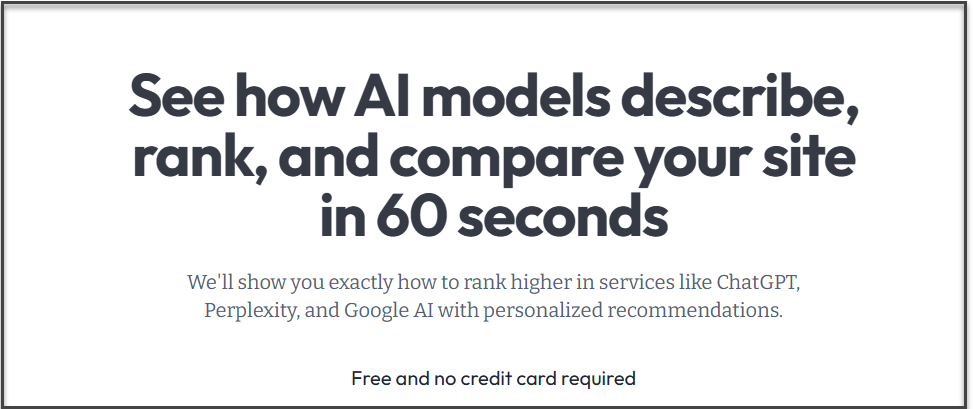
Knowatoa is one of our favorite AI visibility tracking tools for a very specific reason. It doesn’t just tell you whether your brand appears in AI answers. It shows you how people are actually searching in conversational environments and where your content visibility is falling short. It blends search analytics with topic discovery so you can identify entire clusters where your brand should exist but currently… does not.
And the best part: it’s free.
Like, actually free. No “7-day trial ends at noon, and we take your firstborn” free.
You jump in, explore real search queries across multiple AI platforms, and walk away with actionable content strategy inspiration.
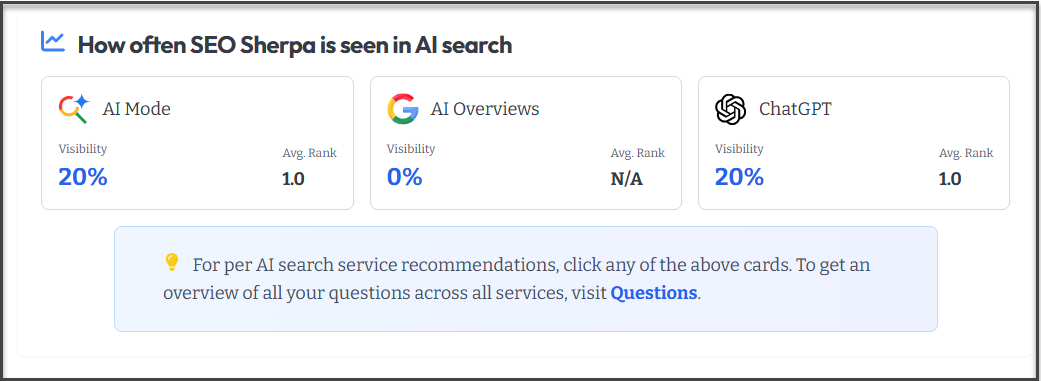
Knowatoa is especially useful for teams wanting to:
- Strengthen their brand’s AI visibility
- Build content that aligns with search intent in AI conversations
- Spot competitors dominating your AI search visibility
- Understand what users searching are being told about your niche
Does it replace a full rank tracker or an all-in-one AI SEO suite like AccuLLM or Surfer AI? No.
It’s not designed for deep dashboards or ongoing visibility tracking. But as a research and ideation tool, it punches way above its weight.
Think of Knowatoa like that incredibly helpful friend who always knows the tea. It shows you where the conversation explorer opportunities are, and then you decide what to publish to start owning the narrative.
All the above tools are paid products, including AccuRanker. LLMRefs and Knowatoa, however, provide free access options, which makes them great entry points if you’re testing the waters or building internal buy-in.
A Quick Note on LLM Rank Trackers
Here’s the honest take:
Every one of these tools is operating in new territory.
None of them is perfect. But all of them are improving… at record speed.
We’re all building the plane while it’s flying. Except the plane is a large language model, and sometimes it decides mid-flight that gravity is optional.
Every LLM rank tracker today is working in a completely new terrain.
Why?
Because AI search is still figuring out how to rank… anything.
The “rules” change weekly. One update and suddenly your brand goes from “Top industry expert” to “Never heard of it.”
Here’s what makes these tools a little imperfect right now:
- LLMs are still learning which sources they trust, and they change their minds often
- AI answers are generated dynamically, not pulled from a fixed result set like a traditional SERP
- New data is constantly flowing in, which means visibility signals shift faster than your morning coffee kicks in
- Every platform has its own logic, and none of them have agreed on a standard (yet)
- The great AI search race is on, and the engines are sprinting, not strolling
But here’s the upside.
The smartest brands are not waiting for perfection. They are getting in early and shaping what LLMs “learn” about them.
What matters most is choosing an LLM tracking tool that can:
- Measure visibility where real decisions now happen inside AI answers
- Monitor entities, expertise, and brand mentions rather than just keywords
- Surface insights fast enough to stay ahead of the curve, not react months later
- Help teams influence brand perception inside AI environments
If a tool can do that today, it’s already a competitive advantage. And that’s exactly why partnering with experts matters.
Because knowing the data is one thing
Knowing how to interpret it in a brand-defining moment is another.
This is where agencies like SEO Sherpa come in. We spot the early patterns. We understand what a signal is and what AI-induced noise is. We set realistic expectations while still taking bold action.
AI search is a moving target.
You want a team that can hit it even while it is moving.
How to Choose the Right Tool for Your SEO Stack
Choosing LLM rank tracker tools is like choosing a gym membership. In theory, they’ll all make you stronger. In practice, only one gives you the equipment you’ll actually use without crying or canceling after 90 days.
There’s no universal “Best Tool for Every Business.” Instead, your choice should depend on:
- Where you play: Enterprise brand? Agency? Solo digital hero?
- How sophisticated your AI search strategy is: Are you doing basic monitoring or full Generative Engine Optimization
- Which KPIs actually matter to you: Citations in AI-generated answers or just impressions in reports nobody reads
- How deeply you need to track brand presence across multiple AI platforms: Some only check Google AI Overviews, others monitor multiple AI platforms like ChatGPT, Perplexity, Bing, and more
A national brand might need conversation explorers, competitive analysis, and entity sentiment tracking. An ecommerce business may care most about its brand appearing in product-related prompts.
Agencies usually need support from multiple brands and scalable reporting. In-house SEOs? A user-friendly interface that shields them from having to explain why traditional rank trackers are gaslighting them.
Then there’s integration. The best setups plug into:
- GA4 for measuring conversion influence
- GSC for tracking any residual traditional search engine visibility
- Content dashboards and ticketing systems for workflow (Nothing like an LLM saying “your content doesn’t exist” to motivate publishing)
Last but not least: data quality.
Fast visibility data is great. Accurate visibility data is what keeps your job.
This is the era of brand visibility tracking inside AI search results. Real decisions are influenced by what AI engines recommend, not what your Google search results page says. If your reporting isn’t capturing that shift, your SEO strategy is steering toward the wrong finish line.
Here’s the truth:
Traditional SEO rank trackers are not going extinct. They’re just losing custody of the narrative. Especially as we enter a shift towards LLM browsers.
If you want to track performance where people now discover brands, you need a tracker built for:
- Entity-first measurement
- AI visibility tracking
- Insight into why visibility changed, not just how much
The right tool should not just show you data. It should change what you choose to do next.
The Future of Rank Tracking With LLMs
SEO got tired of waiting for Google to tell us what matters.
AI search stepped in and said
“Give me better content, and I’ll decide myself.”
The businesses that adjust fastest will win visibility, while others cling to rankings that look pretty in reports but never convert. Search visibility is no longer measured by blue links on page one. It is measured by:
- Whether AI answers cite you
- Whether answer engines understand your brand
- Whether your expertise is trusted everywhere people search
This shift is not slowing down.
The sooner you evolve your stack, the sooner you stay ahead.
If you’re ready to upgrade your visibility reporting and want a system built for modern AI-driven discovery, we would love to help.
Book a free discovery call and learn how to future-proof your brand visibility across AI search engines.


















Leave a Reply