
Summarize This Article With AI
 Try with ChatGPT
 Try with Claude
 Try with AI Mode
For the past two years, one of the most frustrating conversations in SEO has gone something like this:
Someone asks how much traffic the site is getting from ChatGPT or Perplexity. Someone else opens GA4, stares at the Referral bucket, and shrugs. The honest answer has been “somewhere in there, probably, mixed in with forum backlinks and directory listings, and we have no real way of knowing.”
That era is officially over.
On May 13, 2026, Google added a native “AI Assistant” channel to GA4’s Default Channel Group, automatically classifying traffic from recognized AI chatbot referrers without requiring any manual configuration. No regex patterns. No custom channel groups. No burning one of GA4’s two precious custom channel slots on a workaround that needed updating every time an AI platform changed its domain.
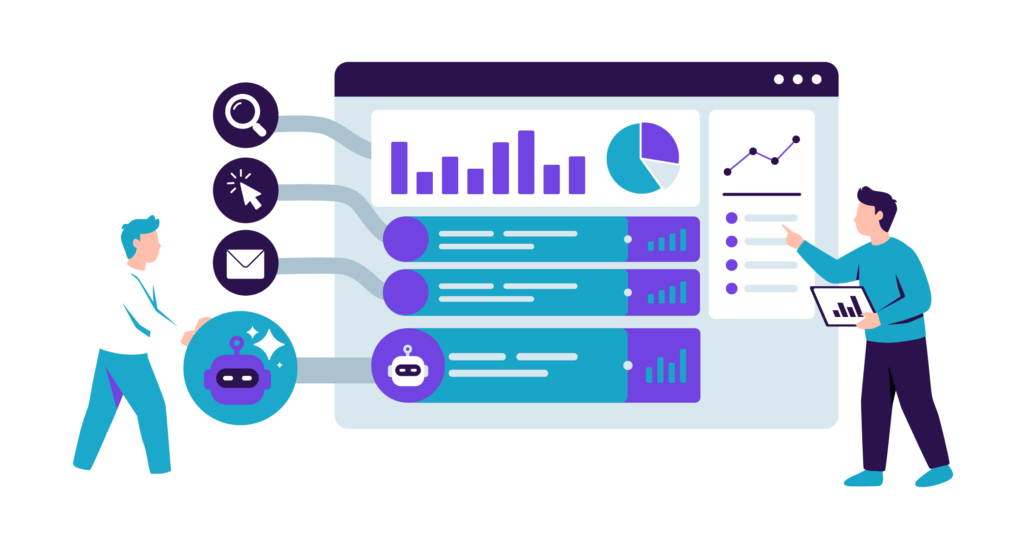
Traffic from ChatGPT, Gemini, Claude, and other recognized AI assistants now gets its own dedicated row in your acquisition reports, sitting alongside Organic Search, Paid Search, Direct, and Referral like the grown-up channel it has quietly become.
Article Summary
- GA4 added a native AI Assistant channel to the Default Channel Group on May 13, 2026, requiring zero configuration from property owners.
- When GA4 detects a referrer matching a recognized AI assistant, it automatically assigns “ai-assistant” as the medium, groups the session under “AI Assistant” in Default Channel Group reports, and labels the campaign “(ai-assistant).”
- Google has confirmed ChatGPT, Gemini, and Claude as recognized referrers, but has not published the full list.
- The channel captures the floor of AI traffic, not the ceiling. Between 20 and 40 percent of AI-originated visits still arrive without a referrer header and land as Direct.
- Historical data is not reclassified. May 13 is the baseline. Everything before that date stays where it was.
- AI-referred traffic consistently converts at a higher rate than other channels, making it worth watching closely even at smaller volumes.
What Actually Changed Inside GA4
The update touches three traffic source dimensions simultaneously, and all three happen automatically. When Google Analytics detects a referrer matching a recognized AI assistant, it assigns “ai-assistant” as the medium value, groups the session under the “AI Assistant” channel in Default Channel Group reports, and labels the campaign with the reserved value “(ai-assistant)”. Property owners do not need to configure anything. It just appears.
This follows the same pattern Google used in 2022 when it added “cross-network” as a default channel group to capture Performance Max and Smart Shopping traffic. That update also pulled sessions out of generic buckets and gave them their own home without requiring manual setup.
The difference now is that the stakes are considerably higher. AI referrals are not a niche edge case anymore. They are a fast-growing and commercially meaningful part of how people discover brands, and the fact that Google felt it necessary to create a dedicated channel says everything about how far this has come.
The practical effect is that any acquisition report using the Default Channel Group now surfaces AI traffic as a distinct line item. Traffic Acquisition, User Acquisition, and channel-based Explorations all reflect the new channel going forward.

The Limitations Nobody Should Ignore
Here is where the nuance matters, because there has been a lot of enthusiasm about this update that glosses over some significant gaps.
The channel only captures what GA4 can see in the referrer header. Studies of AI referral traffic suggest that between 60 and 80 percent of actual AI-originated visits carry a clean referrer header. The remaining 20 to 40 percent arrive without one, landing quietly in Direct. This happens through in-app browsers, mobile apps, and the extremely common behavior of copying a link from an AI response and pasting it into a new browser tab. Across 446,405 visits analyzed in early 2026, 70.6 percent of AI traffic arrived without referrer headers and landed as Direct in GA4. That traffic converts at more than four times the non-AI rate, and most teams have no idea it exists.
The new channel captures the floor, not the ceiling.
There is also the zero-click problem, which no analytics update can solve. When an AI assistant answers a user’s question using your content but the user never clicks through, no session is generated and GA4 never fires. You are providing the value but not seeing the traffic. And when an AI recommends your brand by name and the user searches for you directly on Google five minutes later, that visit enters GA4 as Organic Search.
The AI’s role in the journey is completely invisible to the attribution system. The only clue is a rise in branded search volume that does not correlate with other organic activity.
Google has also not published the full list of recognized AI referrers beyond naming ChatGPT, Gemini, and Claude as examples. Microsoft Copilot and Perplexity were included in earlier custom channel group guidance, but their inclusion in the new native system has not been confirmed. Until the Default Channel Group definitions page is updated, you cannot know exactly which platforms are in.
One final thing worth noting: historical data is not reclassified. Everything that landed in Referral before May 13 stays in Referral. Treat that date as your baseline. If you want any kind of long-term view, you will need to layer in your custom channel group history or rebuild a comparison report by source.
Why This Is Still a Big Deal Despite the Gaps
The limitations are real, but they do not diminish the significance of what Google just did.
For two years, teams running AI search visibility as a 2026 priority have been stitching together makeshift measurements using custom channel groups, Looker Studio workarounds, and a lot of guesswork. The custom channel group approach had real problems. Regex patterns required manual maintenance every time an AI platform changed its domain. Setting them up required editor-level access. And GA4’s hard limit of two custom channel groups meant dedicating one of those precious slots entirely to AI tracking.
All of that goes away now.
The strategic signal here is just as important as the technical change. Google only introduces default channel classifications when a traffic behavior becomes large enough and operationally important enough to justify dedicated measurement infrastructure. This is the same logic that gave us Organic Social and Cross-Network as default channels. Google is formally acknowledging that AI assistants are now a meaningful acquisition source, distinct from everything that came before.
For brands already building Search Everywhere Optimization™ strategies, this is the measurement layer finally catching up with the reality on the ground. AI-mediated discovery has been shaping user journeys for some time. Now it gets a line in the report.
What to Do With This Right Now
First, check whether the AI Assistant channel has appeared in your property yet. The rollout is gradual and is expected to take several weeks to reach full deployment, so if you are not seeing it yet, that is normal. Open Reports, then Acquisition, then Traffic Acquisition, and look for the AI Assistant row in your Default Channel Group. If it is there, you are live.
Do not delete your existing custom channel group yet. Until Google publishes the full recognized referrer list, your custom regex may be catching platforms that the native channel is missing. Run both in parallel for now and compare the numbers before making any changes.
Once the channel is active, the most useful thing you can do is resist the temptation to judge it on volume alone. AI-referred traffic consistently outperforms other channels on engagement and conversion metrics, often converting at four to eleven times the rate of standard organic search traffic. The sessions may be smaller in number but significantly higher in intent. Compare engagement rate, conversion behavior, landing page performance, and assisted conversions rather than just raw session counts.
Look at which pages AI traffic is landing on. Pages that answer specific questions clearly, support comparisons, explain processes, or provide structured decision support tend to attract stronger AI referral traffic. If those pages are converting well from AI sources, that is a signal about what kind of content your AI visibility strategy should be building more of.
Set a weekly review cadence. Establish your baseline now, track it consistently, and you will be in a much better position to show leadership real numbers when the questions start coming, and they will.
The Bigger Picture
This update does not solve AI attribution. It never claimed to. The zero-click problem remains. The referrer-stripping problem remains. The opacity around which platforms are recognized remains.
What it does is formalize AI as a channel worth measuring separately, which is itself a significant statement about where search is heading. Users are no longer moving through a single linear path from query to blue link to site. They discover brands through AI Overviews, AI Mode responses, ChatGPT answers, Claude summaries, and Perplexity sessions. Measurement systems that lump all of that together make it nearly impossible to understand how visibility is actually earned across modern search environments.
A dedicated AI Assistant channel does not answer every question. But it asks the right one. How much of your traffic is coming from AI, and what is it doing when it gets there?
If you do not know the answer to that yet, now is a good time to start finding out.
Want Help Making Sense of Your AI Traffic Data?
Understanding what the numbers mean is only half the challenge. Knowing what to do with them is the other half. If you want to understand how AI search is currently driving discovery for your brand, where you are being cited, where you are being overlooked, and what your content needs to do to show up more consistently across AI platforms, book a free discovery call with SEO Sherpa. We will show you what the data is actually telling you, and how to build a strategy around it.


















Leave a Reply