
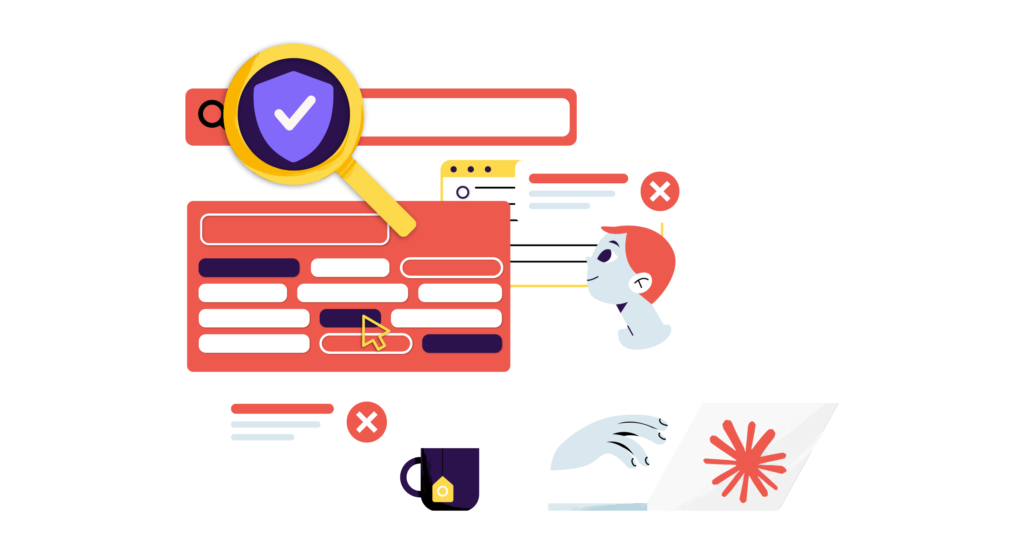

Anthropic, the company behind Claude, has updated its Usage Policy to explicitly prohibit using its AI services to manipulate search engines and AI-generated answers through fake reviews, fabricated sources, misleading content, and other deceptive tactics.
The update, announced on October 8, 2026, and taking effect on November 12, could have significant implications for businesses investing in Generative Engine Optimization (GEO), particularly those working with agencies promising suspiciously quick results.
But does this mean GEO is being banned? Could optimizing your business for AI search now get you into trouble? And how do you know whether the agency managing your AI visibility is following the rules?
Before anyone starts frantically deleting their GEO content, let’s establish what’s actually happening.
Anthropic isn’t banning GEO. It’s cracking down on people using Claude to manufacture credibility that doesn’t exist.
And if you’ve been involved in SEO long enough to remember the wild west of keyword stuffing, link farms, and other questionable shortcuts, this might sound rather familiar.
Article Summary
- Anthropic has updated Claude’s Usage Policy to explicitly prohibit using its services for deceptive campaigns, including manipulating the information AI search systems use to generate answers.
- The restrictions address tactics such as fake reviews, fabricated third-party endorsements, misleading websites, artificial online conversations, and undisclosed commercial relationships.
- The policy governs how people use Claude. It does not introduce a new system for penalizing websites that attempt to influence Claude’s answers.
- Legitimate GEO remains permitted. Businesses can continue using AI to create helpful content, improve their online presence, and build genuine brand authority.
- The update reinforces the importance of working with experienced GEO professionals who understand the difference between sustainable optimization and manipulating search systems.
What Has Anthropic Actually Changed?
On October 8, 2026, Anthropic announced an update to its Usage Policy, introducing a dedicated section called Do Not Engage in Deceptive Campaigns or Artificial Activity.
The section explicitly addresses the use of Claude to manufacture artificial credibility, misrepresent who is behind online content, and manipulate the sources that search engines or AI systems rely on when generating answers.
Essentially, Anthropic doesn’t want its technology being used to create fake evidence that makes a business, person, or organization appear more popular, credible, or independently endorsed than they actually are.
And that includes attempts to influence AI search.
The policy specifically prohibits using Anthropic’s services to:
“Manipulate the sources from which search engines or AI systems draw answers by seeding them with content that misrepresents its origin, authorship, or independence.”
That’s quite a sentence, so let’s translate it into something a normal business owner can understand without requiring a degree in search marketing.
You cannot use Claude to create or facilitate deceptive content designed to trick AI systems into believing your business has earned independent recognition when it hasn’t.
Anthropic also clarifies that many of these activities were already prohibited under its previous policies. The update consolidates those restrictions and makes their application to modern AI capabilities more explicit.
So, this isn’t an entirely new rulebook.
It’s more like Anthropic looking at how people are actually using its technology and deciding it’s time to spell a few things out.

Why Is Anthropic Addressing AI Search Manipulation?
Because AI search has created a new opportunity for businesses to influence purchasing decisions.
Traditionally, someone looking for an accounting software provider might search Google, browse several websites, read reviews, compare pricing, and make a decision.
Today, that same person might open ChatGPT, Claude, Gemini, or Perplexity and ask:
What’s the best accounting software for a construction business with fewer than 20 employees?
The AI assistant may recommend several providers, explain their advantages, and provide supporting information or links.
For the businesses mentioned, that’s a potentially valuable opportunity to reach customers during the consideration stage.
This is where Generative Engine Optimization (GEO) comes in.
GEO focuses on improving how businesses are discovered, understood, mentioned, and cited by AI-powered search systems.
But there’s an obvious problem.
If the information available online can influence what AI systems recommend, what’s stopping someone from manufacturing that information?
Well, apparently, Anthropic would quite like people to stop doing exactly that.
What GEO Practices Is Anthropic Targeting?
To understand the update, imagine two businesses competing to appear in AI-generated recommendations.
Business A invests in helpful content, collects genuine customer reviews, publishes original research, and earns recognition from established industry publications.
Business B hires an agency that creates 50 fake websites, invents customer testimonials, and floods online discussions with fictional customers recommending its products.
Both businesses want more visibility.
But only one is building genuine credibility.
Anthropic’s policy targets the deceptive activities involved in the second approach when Claude is used to carry them out.
Let’s look at what this means in practice.
1. Fake Customer Reviews and Testimonials
Imagine a marketing agency offering to generate 100 positive reviews for your business.
You don’t need to contact customers, conduct surveys, or collect any feedback.
The agency simply uses Claude to write convincing testimonials from fictional customers and publishes them across websites and review platforms.
Each review describes a positive experience that never happened.
The objective is to convince prospective customers, and potentially AI systems encountering those reviews, that your business has widespread customer approval.
Anthropic’s updated policy explicitly prohibits using Claude to create or operate fake accounts and reviews intended to mislead people.
And frankly, a fake five-star review doesn’t become authentic just because AI wrote it with excellent grammar.
What businesses should do instead: Encourage genuine customer feedback and ensure testimonials accurately represent real experiences.
2. Fake Reddit Discussions and Artificial Brand Recommendations
Another tactic is astroturfing.
That’s the practice of manufacturing what appears to be genuine public opinion or grassroots support.
For example, imagine someone posting a question on Reddit asking which project management software is best for small businesses.
One account recommends your company.
Another agrees.
A third claims to have used your product for years and shares an incredibly enthusiastic review.
Sounds promising, right?
Except all three accounts belong to the same marketing agency, and Claude generated the entire conversation.
The apparent consensus is completely artificial.
This can be particularly relevant to AI search because some AI systems retrieve information from community platforms, including forum discussions, when answering questions.
Anthropic’s policy explicitly addresses using its services to create fake personas, coordinate artificial activity, and mislead audiences about how widely an opinion is held.
What businesses should do instead: Build genuine community engagement, participate transparently in relevant conversations, and encourage real customers to share their experiences.
3. Networks of Fake Independent Websites
This is one of the most directly GEO-related examples in the update.
Imagine your business wants to become the most recommended CRM provider in its industry.
A GEO agency offers to publish 50 articles across different websites, all describing your company as the leading provider.
That might initially sound like a fantastic digital PR campaign.
But there’s a catch.
All 50 websites are owned by the same agency.
They use fictional authors, pretend to be independent publications, and repeat similar claims about your business.
The intention is to make AI systems believe that dozens of unrelated sources independently recommend your company.
In reality, it’s one agency recommending one client 50 different ways.
That’s not independent validation. It’s a very elaborate game of pretend.
Anthropic’s policy specifically names networks of websites posing as unrelated sources that corroborate the same claims.
That doesn’t mean publishing content across multiple websites is prohibited.
Legitimate digital PR, expert contributions, and independent editorial coverage remain valuable activities.
The problem arises when someone uses Claude to disguise the ownership, authorship, sponsorship, or independence of content to manufacture credibility.
4. Fabricated Business Statistics, Awards, and Achievements
Let’s say a business uses Claude to create a public-facing article claiming:
- Its products have a 98% customer satisfaction rate, despite never conducting a survey.
- It has won several prestigious industry awards that don’t exist.
- It has helped more than 10,000 customers achieve measurable results, despite having no evidence to support the figure.
- Independent research proves its product outperforms every competitor, despite that research never taking place.
Those claims could potentially influence customers and AI systems encountering the content.
But they’re still fabricated.
This is relevant to both Anthropic’s restrictions on deceptive campaigns and its separate rules against creating or spreading misleading information about businesses and other entities.
It also raises an important issue for businesses using Claude internally.
AI tools can sometimes generate inaccurate claims even when nobody specifically asks them to.
If someone uses Claude to draft a case study and it invents a statistic, that doesn’t automatically establish a deliberate deceptive campaign.
However, publishing unverified claims can still mislead customers and create unnecessary risks.
The lesson? AI can help write your marketing materials, but it shouldn’t be allowed to invent your achievements.
Human fact-checking is still essential.
5. Undisclosed Sponsorship and Misleading Paid Placements
Paid advertising and sponsored content aren’t inherently problematic.
Businesses pay for promotional opportunities every day.
However, Anthropic’s policy prohibits using its services to intentionally conceal sponsorship in content intended to influence public opinion or decision-makers.
For example, suppose an agency arranges for several publications to recommend your product.
The articles are presented as independent editorial recommendations, but the agency secretly paid for every placement.
If Claude is used to facilitate content that deliberately misrepresents those relationships, the activity may fall under the new restrictions.
The important distinction is transparency.
A clearly identified sponsored partnership is very different from a paid endorsement designed to appear completely independent.
Does This Mean Businesses Can No Longer Use Claude for GEO?
Absolutely not.
And this is where we need to separate the headlines from what Anthropic has actually announced.
Creating content intended to improve AI search visibility is not inherently prohibited. Creating or facilitating deceptive content to manipulate AI systems is.
There is nothing in the policy that categorically prohibits a business from using Claude to support legitimate content marketing, SEO, or GEO activities.
For example, you can use Claude to help:
- Write educational articles addressing genuine customer questions.
- Improve product and service descriptions.
- Draft accurate case studies based on verified results.
- Structure content so important information is easier to understand.
- Research content opportunities and industry topics.
- Develop FAQs based on genuine customer concerns.
- Organize information for website pages or other marketing resources.
You can even create public-facing content through Claude Artifacts, provided its use and the resulting content comply with Anthropic’s policies.
Of course, publishing a Claude Artifact doesn’t automatically mean AI search engines will discover, retrieve, or cite it.
But using the technology to make legitimate information accessible isn’t the issue.
A Simple Example
Imagine you own a dental clinic and want to improve how your business appears when people ask AI assistants about dental implants.
Legitimate GEO: You use Claude to help draft an educational article explaining different implant procedures. A qualified dental professional reviews the article, verifies its accuracy, and publishes it on your website.
Deceptive GEO: You use Claude to invent patient testimonials, fabricate a clinical study showing your practice has the highest success rate in the country, and publish articles on fake independent websites praising your clinic.
The first approach uses AI to communicate genuine expertise.
The second manufactures evidence of expertise.
That’s the difference.
Can Claude Penalize Your Website for GEO Spam?
Not under any new website-ranking penalty system announced in this update.
This is an important distinction because some commentary around the policy has suggested Anthropic is introducing the equivalent of Google’s search penalties.
That isn’t what has been announced.
Anthropic’s Usage Policy regulates how people and organizations use Anthropic’s products and services.
If an agency uses Claude to manufacture fake reviews or operate a deceptive publishing network, Anthropic may take action against the account or access involved.
Its available enforcement measures include warnings, restrictions, suspension, and termination.
However, that isn’t the same as imposing a search penalty on the business benefiting from the campaign.
Anthropic has not announced a new domain-level penalty system that automatically suppresses websites from Claude’s answers for engaging in GEO manipulation.
What if Someone Uses Another AI Tool?
Here’s another distinction worth understanding.
If a marketing agency uses another AI tool to generate fake reviews or manually creates a deceptive network of websites, that activity doesn’t automatically violate Anthropic’s Usage Policy.
Why?
Because Claude wasn’t involved.
However, if the agency then uses Claude to distribute, coordinate, maintain, or otherwise facilitate the deceptive campaign, that use of Claude could still be prohibited.
The policy is concerned with the misuse of Anthropic’s technology, not exclusively with whether Claude wrote the original content.
And businesses shouldn’t mistake the absence of a Claude-specific violation for a free pass.
Other platforms have their own rules, and certain deceptive advertising practices may also breach applicable consumer protection laws.
How Does This Compare to Google’s AI Search Spam Guidelines?
Interestingly, Anthropic isn’t the first major AI search provider to address this problem.
In May 2026, Google updated its Search spam policies documentation to explicitly clarify that existing spam rules also apply to attempts to manipulate generative AI responses in Google Search.
That includes Google’s AI Overviews and AI Mode.
We covered the announcement in our earlier article, Google Just Closed the AI Search Loophole That Gurus Have Been Selling for Two Years.
Google’s update clarified that attempting to manipulate generative AI responses is covered by the same spam framework that governs traditional search results.
That matters because Google has established mechanisms for taking action against websites that violate its spam policies.
Depending on the violation, consequences can include ranking reductions or removal from search results.
Anthropic’s approach is different.
Its updated Usage Policy restricts how Claude can be used to conduct deceptive campaigns. It doesn’t establish a comparable search-ranking enforcement framework.
But there’s a common theme.
The industry is beginning to address AI search manipulation more explicitly, rather than treating it as an entirely new marketing channel where anything goes.
Google is clarifying that its existing search quality rules extend to AI-generated results.
Anthropic is clarifying that its AI tools cannot be used to facilitate deceptive campaigns targeting AI answer sources.
Different policies. Different enforcement mechanisms.
A similar underlying concern.
What About E-E-A-T?
Google’s E-E-A-T framework stands for Experience, Expertise, Authoritativeness, and Trustworthiness.
It describes qualities Google’s systems aim to recognize when assessing content reliability.
E-E-A-T isn’t itself a direct ranking factor or a spam policy, and Anthropic hasn’t announced a Claude-specific equivalent.
However, it provides a useful way to understand the broader issue.
Genuine experience, verifiable expertise, independent recognition, and accurate information help establish credibility.
Fake testimonials, fabricated awards, and manufactured endorsements attempt to imitate those qualities.
One builds trust.
The other tries to borrow the appearance of it.
And those aren’t interchangeable.
Why Businesses Should Take This Update Seriously
Here’s where things get particularly interesting for business owners.
AI search is creating valuable opportunities to reach customers, but it’s also creating an entire market of agencies, consultants, freelancers, and software vendors promising to deliver that visibility.
Some are experienced SEO professionals adapting established strategies to new search environments.
Others have discovered that putting GEO in their LinkedIn headline is considerably easier than understanding how AI retrieval, content authority, or search systems actually work.
And unfortunately, the difference isn’t always obvious from a sales pitch.
GEO Is Starting to Look Like the Early Days of SEO
If you’ve been involved in digital marketing for a while, you’ll recognize the pattern.
When businesses first realized how valuable Google rankings could be, the SEO industry experienced something of a gold rush.
Legitimate agencies worked on improving website accessibility, content quality, relevance, and authority.
Meanwhile, others found shortcuts.
Keyword stuffing. Link farms. Private blog networks. Mass-produced content created primarily to manipulate rankings.
Some tactics delivered temporary results, encouraging businesses to invest even more money in methods that were neither reliable nor sustainable.
As Google developed its algorithms and enforcement policies, many of those practices became significantly less effective or riskier.
Now we’re watching a similar pattern emerge around AI search.
Instead of selling thousands of backlinks, some providers are selling hundreds of AI-generated brand mentions.
Instead of private blog networks designed to manipulate Google rankings, we’re seeing concerns about networks of supposedly independent sources created to influence AI recommendations.
Instead of promising guaranteed first-page rankings, some are promising guaranteed ChatGPT recommendations.
New technology. Familiar playbook.
And businesses need to be careful they’re not paying for yesterday’s questionable SEO tactics wearing a shiny new GEO badge.
The Real Risk Isn’t Just Losing Access to Claude
Let’s be clear.
A business isn’t automatically going to receive a Claude search penalty because it hired an agency that used questionable tactics.
No such new penalty system has been announced. But that doesn’t mean there are no consequences.
Working with an inexperienced or unscrupulous GEO provider can create several risks.
Reputational damage: Discovering that a company has fabricated customer testimonials or independent endorsements can seriously damage customer trust.
Google Search penalties: If the tactics also violate Google’s spam policies, they may put the company’s organic search visibility at risk.
Misleading business claims: Publishing inaccurate statistics, invented awards, or false performance claims can create advertising and regulatory problems.
Wasted investment: Hundreds of artificial AI mentions might look impressive in a report without generating meaningful customer demand or revenue.
Long-term cleanup: Removing misleading content, correcting false information, and rebuilding trust may require substantial time and resources.
And there’s another uncomfortable reality.
A business owner might not even know these tactics are being used.
They hire an agency, receive a report showing hundreds of new mentions, and assume the campaign is going wonderfully.
Until someone starts asking where those mentions came from.
Suddenly, those impressive results look rather less impressive.
Why Choosing an Experienced GEO Agency Matters
The challenge for businesses is that GEO can sound extraordinarily complicated.
There are new platforms, new acronyms, new measurement tools, and a steady stream of people confidently declaring that everything we knew about SEO is dead.
Again.
But the fundamentals of building sustainable search visibility haven’t suddenly disappeared.
Effective GEO still relies heavily on technical SEO, content strategy, structured information, genuine brand authority, digital PR, and an understanding of how different search platforms discover and interpret information.
The technology has evolved.
The need for expertise hasn’t.
A qualified GEO agency should understand how to bring these disciplines together rather than treating AI search as a collection of isolated tricks.
It should also understand the limits of what can realistically be controlled.
For example, a legitimate provider can optimize your business information, improve technical accessibility, develop relevant content, and work toward stronger independent recognition.
What it cannot do is guarantee that every AI platform will recommend your business for every relevant question.
Anyone promising complete control over an independent AI system’s answers deserves a few follow-up questions.
Preferably before you sign the contract.
Experience Matters More Than a Fancy GEO Dashboard
Plenty of tools can monitor whether your business appears in AI-generated responses.
That’s useful.
But tracking visibility isn’t the same as knowing how to improve it.
An experienced agency should understand why your business may be missing from relevant answers, which information sources matter, how to improve topical coverage, and where your existing SEO foundations may be limiting performance.
It should also be able to distinguish between real opportunities and tactics that look impressive on a dashboard but have questionable long-term value.
Most importantly, it should be accountable for the methods it uses.
Our guide to choosing the right SEO agency explores the wider factors businesses should consider when evaluating potential partners.
Many of those principles apply directly to GEO.
The Bigger Picture: GEO Is Growing Up
Anthropic’s October 2026 policy update doesn’t ban GEO.
It doesn’t establish new website penalties for Claude.
And it certainly doesn’t mean businesses should abandon efforts to improve their AI search visibility.
What it does is make Anthropic’s restrictions on deceptive AI-assisted campaigns more explicit, including campaigns intended to manipulate the sources AI systems use to produce answers.
Alongside Google’s earlier clarification that its spam policies apply to AI-generated search responses, it’s another indication that the industry is paying closer attention to manipulation within AI search.
For businesses, the message is relatively straightforward.
You don’t need to trick AI systems into believing your business is credible. You need to give them genuine reasons to recognize that credibility.
That means investing in accurate information, demonstrable expertise, authentic customer feedback, reliable content, and legitimate third-party recognition.
It also means being selective about the people you trust to manage your GEO strategy.
Because as the SEO industry has demonstrated repeatedly, shortcuts can be expensive.
And the person selling you a guaranteed AI search hack probably won’t be the one cleaning up the mess if it goes wrong.
Unsure Whether Your GEO Strategy Is on the Right Track?
AI search is evolving quickly, and separating genuine opportunities from questionable shortcuts isn’t always easy.
At SEO Sherpa, our Generative Engine Optimization services combine established SEO expertise, technical optimization, content strategy, and authority development to help businesses build visibility across AI-powered search platforms.
If you’re unsure where your business currently stands, or whether your existing approach is setting you up for sustainable results, we’re happy to help.
Book a free discovery call with our team, and let’s have a conversation about your current visibility, potential opportunities, and what a realistic GEO strategy could look like for your business.
No guaranteed magic tricks. No mysterious AI loopholes. Just a sensible conversation about getting your business found where your customers are searching.


















Leave a Reply