

Summarize This Article With AI
 Try with ChatGPT
 Try with Claude
 Try with AI Mode
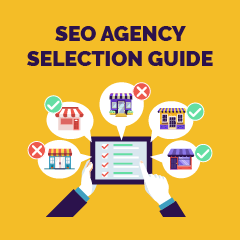
Choosing an SEO agency is one of those decisions that looks simple on the surface and then quietly decides the fate of your traffic, budget, and sanity for the next year.
Pick the right SEO agency, and you build compounding organic growth, stronger visibility across search engines, and a long-term competitive edge. Pick the wrong one, and you get vague reports, declining keyword rankings, wasted spend, and a polite explanation of why “the algorithm changed.”
In 2026, this decision matters more than ever.
Search engine optimization is no longer just about ranking a few pages in Google. It now spans technical SEO, content strategy, link building, AI-driven search visibility, user experience, and how your brand shows up across search engine results pages (SERPs), AI answers, and discovery platforms.
That means choosing an SEO agency is not a procurement task. It is a strategic business decision.
This guide is designed to help you make it with confidence. No fluff. No agency buzzwords. Just a clear framework for choosing the right SEO partner for your business goals.
Article Summary
- SEO is a long-term investment, not a quick fix. Any SEO company promising instant rankings is a red flag
- The right SEO agency focuses on revenue, visibility, and business outcomes, not vanity metrics
- Transparent reporting, clear communication, and tailored SEO strategies matter more than big brand names
- A strong SEO agency should cover technical SEO, on-page SEO, off-page SEO, and content strategy in-house
- Cheap SEO services often rely on risky tactics that hurt long-term search engine rankings
- Ask hard questions about process, tools, reporting, and how success is measured
- The best SEO agencies position themselves as long-term partners, not set-and-forget vendors
Why Choosing the Right SEO Agency Matters
SEO has a funny way of looking harmless while quietly doing a lot of damage when it’s done badly.
On paper, hiring an SEO agency sounds straightforward. You want more organic traffic. Better search engine rankings. Increased visibility in search results. Simple, right?
Except that search engine optimization sits at the intersection of your website, your content, your technical infrastructure, your brand reputation, and how search engines interpret trust. When any one of those pieces is mishandled, the impact compounds fast.
A poor SEO services company doesn’t just fail to deliver results. It can actively hinder your business.
Bad technical SEO can prevent search engines from crawling or indexing your web pages properly. Weak on-page SEO can dilute relevance and confuse search intent. Low-quality link building can damage domain authority and trigger penalties. Thin content strategies can waste months producing pages that never rank or convert.
And the worst part? You often don’t see the consequences immediately. SEO problems tend to surface slowly, usually right when leadership asks why traffic has flatlined despite months of “SEO work.”
That’s why choosing the right SEO agency matters.
Good SEO is a long-term investment. It compounds. Strong foundations lead to stronger rankings, more organic search results, better website traffic, and improved online visibility over time. The wrong agency focuses on shortcuts, quick wins, or outdated tactics that collapse under the weight of modern search algorithms.
In 2026, search engines prioritise user experience, intent satisfaction, technical performance, and content quality more than ever. Add AI-driven search, evolving SERPs, and increased competition across every vertical, and the margin for error disappears.
The right SEO agency understands this landscape. They don’t just chase keyword rankings. They align SEO efforts with your overall marketing strategy, business model, and long-term growth goals.
That difference is what separates sustainable SEO success from expensive lessons learned the hard way.

Red Flags to Watch Out For
If choosing the right SEO agency is about finding a long-term partner, this section is about spotting the ones you should quietly back away from while nodding politely on the Zoom call.
Some red flags are obvious. Others are wrapped up in very confident sales decks and suspiciously cheap pricing.
Here’s what to watch for.
Guaranteed Rankings
If an SEO agency guarantees rankings, run.
Search engines don’t work on promises. They work on algorithms that change constantly. No SEO company, no matter how experienced, controls Google’s search results pages, other search engines, or how rankings shift week to week.
Guaranteed rankings usually mean one of three things:
- They’re planning risky, black-hat tactics
- They’re guaranteeing irrelevant keywords that won’t drive organic traffic
- They don’t actually understand modern SEO
In 2026, SEO success is about improving search engine visibility, user experience, and long-term performance. Anyone promising page one rankings on a fixed timeline is selling certainty in an environment that simply doesn’t allow it.
Good SEO agencies talk about probability, direction, and measurable progress. Not guarantees.

Lack of Transparency
If an agency can’t clearly explain what they’re doing, how they’re doing it, and why it matters, that’s a problem.
SEO work should never feel like a black box. You should know:
- What SEO services are included
- How keyword research is done
- What technical SEO issues are being addressed
- How link building is approached
- How performance is measured and reported
Vague answers like “we optimize everything” or “our team handles it” usually hide weak processes or heavy outsourcing. Transparent SEO agencies are comfortable walking you through their SEO strategy, tools, reporting cadence, and decision-making logic.
If you feel confused during the sales process, it won’t get clearer after onboarding.
Cheap Pricing Models That Sound Too Good to Be True
SEO isn’t cheap to do properly.
Strong SEO efforts require experienced professionals, technical expertise, content strategy, tools, and ongoing optimisation. Ultra-low pricing often means corners are being cut somewhere, usually in content quality, link building, or technical depth.
Cheap SEO packages tend to rely on:
- Automated link building
- Low-quality content creation
- One-size-fits-all strategies
- Minimal human oversight
The result is usually stalled SEO performance, wasted budget, or worse, long-term damage to your website’s rankings and domain authority.
A good SEO agency doesn’t try to be the cheapest option. They try to be the most effective one for your business goals.
If the pricing feels wildly disconnected from the work required, trust that instinct.
Qualities of a Great SEO Agency
Once you know what to avoid, choosing the right SEO agency gets a lot easier. The best SEO companies tend to look very similar under the hood, even if their branding and pitch decks are wildly different.
Here’s what actually matters.
Proven Case Studies and a Track Record You Can Verify
Any SEO company can talk about search engine optimization in theory. A great SEO agency can show you what they’ve done in practice.
Look for case studies that go beyond vague claims like “improved online visibility” or “boosted search engine rankings.” You want to see:
- Clear starting points
- Specific SEO services delivered
- Tangible outcomes like organic traffic growth, keyword rankings, or improved SERP visibility
Strong SEO results usually span months, not weeks. Agencies with a proven track record are comfortable sharing realistic timelines, explaining why SEO success compounds over time, and tying performance back to business impact, not just charts.
If they can’t show how their SEO efforts moved the needle for real websites, be cautious.
A Tailored SEO Strategy
The right SEO agency doesn’t sell one SEO strategy to every business.
A solid SEO company starts with understanding your business model, market, and goals, then builds a strategy around that context. That might include technical SEO fixes, content strategy, on-page SEO improvements, off-page SEO and link building, or local SEO, depending on what will actually improve search engine visibility.
Cookie-cutter SEO packages typically focus on activity rather than outcomes. A tailored approach focuses on:
- Your target audience and relevant keywords
- How search engines currently view your site
- Where your biggest SEO performance gaps really are
If an agency proposes a plan before asking meaningful questions about your website traffic, industry, or competitors, they’re guessing.
Clear Communication and Reporting You Can Understand
Great SEO agencies are obsessed with clarity.
You should know what your SEO team is working on, how progress is measured, and how results are reported. Whether it’s Google Analytics, keyword rankings, or domain authority trends, reporting should tie back to SEO success and overall marketing strategy.
Transparency builds trust. Confusion kills it.
Technical and Content Capabilities Under One Roof
Modern search engine optimization is not just about content or technical fixes. It’s both.
The best SEO agencies have technical SEO experts who understand site speed, crawlability, and technical SEO issues, alongside strategists who can guide content strategy, page SEO, and link building.
When technical SEO and content live in silos, performance suffers. When they work together, organic search results follow.
Questions to Ask Before Hiring an SEO Company
By the time you’re speaking to an SEO company, most of them will sound competent on the surface. This is where good questions do the heavy lifting for you.
The goal here isn’t to catch an agency out. It’s to understand how they think, how they work, and whether their approach to search engine optimization actually aligns with your business.
Here are the questions that separate a polished sales pitch from a genuinely strong SEO partner.
What SEO Areas Will You Actually Optimize?
A serious SEO company should be able to clearly explain which parts of SEO they’ll focus on and why. That might include technical SEO, on-page SEO, content strategy, link building, or local SEO, depending on your site.
If the answer is vague or stuffed with buzzwords, that’s a red flag. You’re looking for clarity around priorities, not a shopping list of SEO services.
How Do You Define SEO Success?
This question tells you almost everything.
Some SEO agencies define success as keyword rankings. Others focus on organic traffic, conversions, or overall online visibility. The right SEO company will align SEO performance with your business goals, not just search engine results page movement.
If success isn’t tied back to revenue, leads, or meaningful growth, you’re paying for activity instead of impact.
What Does Your SEO Reporting Look Like?
You should know exactly what you’ll see every month.
Ask what SEO tools they use, whether reporting includes Google Analytics, search engine rankings, organic traffic trends, and explanations you can actually understand.
Great SEO professionals don’t hide behind dashboards. They explain what changed, why it matters, and what happens next.
Who Will Be Working on My Account?
This is where many SEO companies quietly fall apart.
You want to know whether you’re getting access to an experienced SEO team or being handed off to junior staff while the senior strategist disappears after the sales call.
Ask who handles technical SEO, who owns content strategy, and who you’ll speak to regularly. Consistency matters for SEO success.
Do You Have Experience in My Industry or Market?
Search engine optimization strategies vary significantly by industry, level of competition, and geography.
A strong SEO provider understands how search algorithms behave in your space and can show relevant experience. That’s especially important for ecommerce SEO, international SEO, or competitive niches where generic tactics won’t move the needle.
How Do You Integrate SEO Into a Broader Marketing Strategy?
SEO doesn’t exist in isolation anymore.
Ask how the agency works alongside paid search, content marketing, PR, or other digital marketing efforts. The best SEO companies think in systems, not silos.
How Much of My Time Will This Require?
SEO requires collaboration.
You should understand what the agency needs from you, how often input is required, and what happens if your internal team is stretched. Honest answers here usually signal a healthier partnership.
Can You Share References or Recent Results?
Case studies are great. Conversations are better.
Reputable SEO agencies are comfortable connecting you with clients or sharing recent SEO results that reflect real-world performance.
If an agency avoids this question, that tells you more than any slide deck ever could.
How Much Should SEO Services Cost in 2026?
This is usually the quietest part of the sales call. And the most awkward.
Not because SEO pricing is mysterious, but because good SEO is contextual. The cost depends on your market, competition, goals, and the maturity of your website. Any SEO company offering a flat price without first auditing your site is guessing. Or worse, templating.
Here’s how to think about SEO pricing without getting burned.
Typical SEO Pricing Ranges (and What They Mean)
Most professional SEO services are billed on a monthly retainer rather than as one-off fees. In 2026, realistic pricing generally looks like this:
- Small businesses or local SEO: Lower monthly retainers focused on foundational technical SEO, on-page SEO, Google Business Profile optimization, and local search visibility
- Mid-size companies and competitive niches: Higher retainers covering technical SEO, content strategy, link building, and continuous optimization
- Enterprise or international SEO: Custom pricing tied to scale, complexity, multiple markets, and advanced reporting
If the price feels cheap, something is missing. Usually depth, time, or senior expertise.
What a Monthly SEO Retainer Should Include
A strong SEO agency should clearly explain how your budget is allocated. That often includes:
- Technical SEO audits and fixes to improve crawlability, site speed, and mobile performance
- Keyword research aligned to real search intent, not vanity terms
- On-page optimization across key web pages, including title tags and meta descriptions
- Content strategy focused on relevance, authority, and user intent
- Off-page SEO and link building using ethical, white-hat methods
- Ongoing reporting tied to organic traffic, search engine rankings, and business outcomes
If an agency can’t map cost to effort, you’re not buying a strategy. You’re buying noise.
Ask About the Pricing Model, Not Just the Price
Before signing anything, ask how the SEO company charges.
Is it a fixed monthly retainer? Project-based? Performance-linked? How does the scope change if your business grows? How much of your time will be required to make the SEO work effectively?
Transparent pricing models signal mature agencies. Vague ones usually hide resourcing issues.
Where AI SEO Fits Into Pricing (and Where It Doesn’t)
You’ll hear a lot about AI SEO agencies right now. Some of it is justified. Some of it is marketing.
The best SEO agencies use AI tools to analyze large datasets, automate repetitive technical SEO tasks, and identify opportunities more quickly. Machine learning helps predict search behavior, identify trends earlier, and improve content discoverability at scale.
But AI doesn’t replace strategy.
Strong agencies combine AI-driven efficiency with human insight. They still audit manually. They still tailor SEO strategies. They still think critically about algorithm changes and user behavior. If AI is positioned as a shortcut rather than an accelerator, that’s a warning sign.
Where Search Everywhere Optimization™ Fits (and Why It Costs More)
This is the part most pricing conversations still miss.
Traditional SEO pricing assumes one primary battleground: Google SERPs. Rankings, organic traffic, and maybe some link building. Clean. Contained. Predictable.
That is no longer the reality.
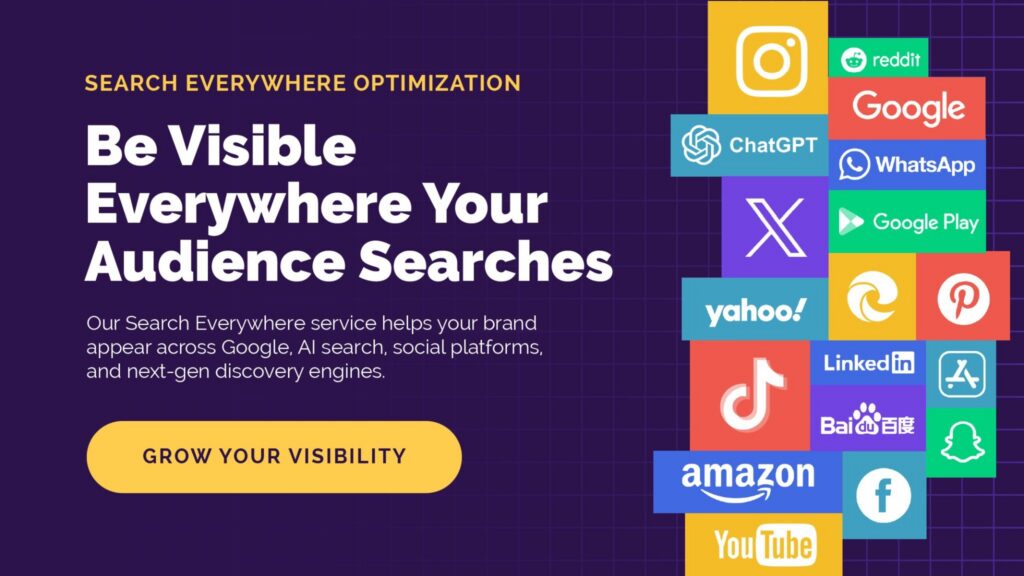
Search Everywhere Optimization™ reflects how people actually discover brands now. Not just through Google, but through AI answers, social platforms, creator content, media coverage, forums, and recommendation engines. Visibility is fragmented. Authority is distributed. Trust is built in layers.
That changes the scope of the service entirely.
Search Everywhere Optimization™ typically encompasses:
- Traditional technical SEO and on-page SEO foundations
- Generative Engine Optimization (GEO) for AI-driven answers and LLM visibility
- Social SEO across platforms where discovery now happens before search
- Digital PR and authority building to influence brand perception and citations
- Content strategy designed for humans and machines
- Cross-channel measurement and interpretation, not siloed reports
This is not a bolt-on service. It is cross-functional by design.
You’re coordinating SEO specialists, content strategists, PR teams, data analysts, and often social and brand stakeholders. You’re aligning keyword research with narrative positioning. You’re managing velocity across platforms that move at very different speeds.
That level of orchestration costs more because it requires:
- Senior strategy oversight, not junior execution
- Longer planning horizons and tighter feedback loops
- More tooling, more data pipelines, and more interpretation
- More time spent aligning teams, priorities, and expectations
Put simply: Search Everywhere Optimization™ is not “SEO plus a few extras.” It is the operating system for modern visibility.
And as we move into 2026, it is increasingly the minimum viable approach for brands that want to be discoverable, where decisions are actually made.
If an agency prices this like traditional SEO, they either don’t fully understand it yet or they’re dramatically under-resourcing it.
That’s why pricing looks higher. Not because agencies are charging more for the same thing, but because the thing itself has fundamentally changed.
Why Cheap SEO Is Almost Always Expensive Later
Short-term pricing often encourages short-term tactics.
Agencies under pricing pressure tend to chase quick wins, reuse templates, or rely on risky link-building strategies. That might briefly move keyword rankings, but it rarely drives sustainable organic traffic or long-term SEO success.
Real SEO impact takes 3–6 months to show and compounds from there. Any SEO provider promising instant results is likely trading longevity for optics.
Next, we’ll look at local vs global SEO agencies, when each makes sense, and how to choose the right structure for your business.
Local vs Global SEO Agencies
When businesses start looking for an SEO agency, one of the first forks in the road is whether to hire local or go global.
On the surface, local SEO agencies feel like the safer choice. Same time zone. Same city. Maybe even face-to-face meetings. There’s comfort in knowing you can sit in a room together, point at a screen, and talk through search engine optimization in real time. For some businesses, especially those heavily reliant on local SEO or Google Business Profile performance, that proximity can be genuinely useful.
Local agencies also tend to have strong brand familiarity with regional markets. They understand how people search locally, how competitors position themselves, and how SERPs behave in a specific geography. For businesses whose primary goal is to dominate one city or region, that context matters.
That said, proximity doesn’t automatically equal expertise.
One limitation we see with some local SEO agencies is their scale. Smaller teams can struggle to cover technical SEO, content strategy, link building, analytics, and ongoing optimization at the same depth as larger or more specialized SEO companies. SEO is no longer a single-discipline service. It’s technical, content-led, data-heavy, and increasingly intertwined with broader digital marketing and brand visibility.
This is where global SEO agencies come into play.
Global and international SEO agencies typically operate with distributed teams, deeper specializations, and exposure to a broader range of industries, markets, and search behaviors. Working across multiple search engines, regions, and business models forces stronger processes, better tooling, and sharper strategy.
A global SEO agency is more likely to have dedicated technical SEO experts, content strategists, digital PR specialists, and analysts working together. That depth becomes especially important when you’re dealing with complex sites, ecommerce SEO, international SEO, or aggressive growth targets where how your company ranks on search engines alone is not the end goal.
The trade-off, of course, is that you don’t always get the face-to-face experience. Time zones differ. Communication needs to be structured. Without strong processes, things can feel distant fast.
Which is why the best option for many businesses in 2026 is a hybrid approach.
Hybrid SEO models combine the strategic depth and specialist talent of a global SEO agency with clear communication, regular reporting, and defined points of contact. Done well, this gives you the best of both worlds: broad expertise without feeling disconnected from your SEO team.
The key isn’t whether an agency is local or global. It’s whether they have the systems, experience, and communication standards to support your SEO strategy long term.
How to Evaluate Proposals and Pitches
By the time SEO proposals land in your inbox, everything starts to sound… impressive. Everyone has a framework. Everyone has a process. Everyone promises growth.
This is where most businesses get stuck.
Not because they don’t understand search engine optimization, but because proposals are designed to sell confidence, not clarity. Your job here is to know substance when you see it.
A strong SEO proposal should feel boring in the best possible way. Clear scope. Clear priorities. Clear logic. If you finish reading it and think, “I can see exactly what happens in month one, month three, and month six,” you’re on the right track.
Start by looking for alignment. The proposal should tie SEO efforts directly to your business goals, not just rankings. Traffic is nice. Organic traffic that supports revenue, leads, or pipeline is better. If success is defined only by keyword rankings or vague improvements in online visibility, that’s a warning sign.
You should also see evidence of a tailored SEO strategy. One-size-fits-all packages are a relic of traditional SEO marketing agency models. In 2026, any serious SEO company should be referencing your site structure, your market, your competitors, and your current SEO performance. A proposal that looks copy-pasted is likely backed by a copy-pasted execution plan as well.
Pay close attention to how the agency talks about reporting. You want specifics. What gets tracked. How often reports are delivered. How insights are explained. Tools like Google Analytics and Search Console should be standard, but what matters more is how data is interpreted. SEO success isn’t only about numbers on a dashboard. It’s understanding why performance changed and what happens next.
Now, the red flags.
If you see phrases like “guaranteed rankings,” stop reading. No SEO company controls search engines. Anyone claiming certainty is either inexperienced or willing to take risks that won’t age well.
“Secret sauce” is another classic. Good SEO isn’t a secret. It’s methodical, transparent, and constantly evolving with search algorithms. If an agency can’t explain what they do in plain language, it’s time to run.
Be especially cautious with terms like “automated link building” or “instant authority boosts.” Quality backlinks come from relationships, content quality, and relevance. Automation in link building often means shortcuts, and shortcuts are how sites end up cleaning up penalties instead of growing.
Finally, watch how proposals talk about time. Real SEO results take months, not weeks. A credible proposal will set expectations, explain timelines, and acknowledge that search engine optimization is a long-term investment.
The best pitches don’t try to impress you with jargon. They help you understand the work, the risks, and the roadmap. If a proposal makes SEO feel clearer instead of more confusing, you’re probably looking at the right SEO agency.
Choosing an SEO Agency Is a Strategic Decision, Not a Vendor Pick
If there’s one takeaway from this entire guide, it’s this: Choosing an SEO agency is not about finding someone to “do SEO.” It’s about choosing a long-term partner who understands how search engines work, how your business grows, and how those two things intersect over time.
The right SEO company will never sell search engine optimization services as a checklist. They will discuss technical SEO, on-page SEO, off-page SEO, content strategy, and link building as interconnected systems. They will explain how keyword research informs content creation. How page optimization supports search engine rankings. How quality backlinks build domain authority. And how all of this ladders up to organic traffic, website traffic, and real SEO success.
They will also be honest about timelines. Real SEO results take time. Improving search engine rankings, increasing online visibility, and driving organic search results is the outcome of consistent SEO efforts, not shortcuts. Any SEO company that promises instant wins or guarantees top positions on SERPs is not being realistic about search algorithms or long-term performance.
In 2026 and beyond, this matters even more.
Search engine optimization has expanded far beyond traditional SEO. The best SEO agencies now think in terms of AI SEO, Search Everywhere Optimization™, international SEO, local SEO, ecommerce SEO, and how search behavior spans search engines, social platforms, and AI-driven discovery. That breadth requires deeper technical SEO expertise, stronger content strategy, better SEO tools, and more collaboration across digital marketing and overall marketing strategy. Naturally, that also impacts pricing. More scope, more systems, more specialists.
So when you choose an SEO agency, ask yourself these questions:
- Do they understand your business model?
- Do they align SEO strategy with revenue, not just keyword rankings?
- Can they explain their SEO services clearly?
- Do they have a proven track record across industries, platforms, and search results?
- Do they act like an extension of your SEO team, not a disconnected SEO provider?
The right SEO agency won’t just improve search engine rankings. They’ll help you build a resilient, scalable search presence that compounds over time and supports every part of your business.
If you’re evaluating SEO agencies and want an honest conversation about what SEO success looks like for your company, we’d love to help.
Book a free discovery call, and we’ll walk through your current SEO performance, technical SEO issues, content opportunities, and what a realistic SEO strategy should look like for your goals. No pressure. No sales fluff. Just clarity.




















Leave a Reply