

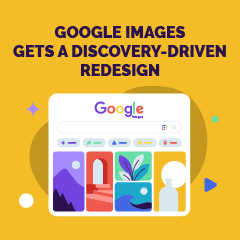
Google Images is 25 years old, and to celebrate, Google has given it the one thing every quarter-century-old product apparently needs: a personality transplant that makes it look like Pinterest.
The redesigned experience introduces a “For You” page, the ability to create collections, and real-time updates.
It will roll out to US desktop users in the coming weeks.
In short, Google Images is shifting from a tool you use to find one specific picture into a surface you browse for inspiration. Which is a bigger change than it first appears.
Article Summary
- Google Images is getting a redesigned, discovery-driven homepage.
- The new UI includes a personalized “For You” page and real-time updates.
- Users can create collections, similar to Pinterest boards.
- The redesign will roll out to US desktop users in the coming weeks.
- Image search is moving from pure retrieval toward browsing and inspiration.
- Visual content strategy now matters for discovery, not just image SEO.
Google Images Is Becoming a Place to Browse
The core change here is behavioral, not cosmetic.
Traditional image search was transactional. You wanted a picture of a specific thing, you searched, you found it, you left. The interface existed to get you out as quickly as possible.
The redesign flips that intention.
A personalized gallery that refreshes in real time and adapts to your interests is not built for quick exits. It is built for lingering, scrolling, and discovering things you were not specifically looking for.
That is the Pinterest playbook, and the comparison is not accidental. Google is turning a search utility into a discovery feed.
For users, this makes visual browsing more engaging. For brands, it introduces a new question that image SEO never really had to answer before.
It is no longer only “can people find my image when they search for it.” It is now “does my visual content earn a place in a feed people browse for inspiration.”

Collections Change How People Save and Return
The ability to create collections is the feature most likely to be underestimated.
Saving images into boards seems minor. In practice, it changes the relationship between the user and the content.
When someone saves your product, design, or visual into a collection, you are no longer competing for a single moment of attention. You have earned a place in something the user will deliberately return to, often while in a planning or buying mindset.
Think about how people use Pinterest for renovations, weddings, outfits, or recipes.
They collect first, then act. The brands that appear in those collections are positioned at exactly the point where inspiration turns into intent.
If Google Images becomes a place where people build these collections, the visuals that get saved gain a quiet but real advantage. They stay in the consideration set long after the original search is forgotten.
This rewards distinctive, high-quality, genuinely useful imagery over generic stock filler that nobody would ever choose to save.
What This Means for Search Everywhere Optimization™
Here is the thing most teams miss about visual search.
Images are no longer just a ranking asset. They are a discovery asset that travels across Google Images, Lens, AI Overviews, Pinterest, social platforms, and increasingly AI-generated results.
A discovery-driven Google Images fits directly into that pattern. It treats visuals as content to be surfaced and browsed, not just files to be retrieved.
That means visual strategy has to think beyond alt text and filenames, even though those image SEO fundamentals still matter. It has to consider whether the imagery is original, recognizable, and consistent enough to build visual identity across every platform where it might appear.
When Google or an AI system repeatedly encounters your brand attached to particular products, styles, and settings, it builds a clearer association. That visual consistency is what makes a brand recognizable in a feed, memorable in a collection, and identifiable inside an AI answer.
The brands that win visual discovery will be the ones with a coherent visual footprint, not a random assortment of pretty pictures uploaded and forgotten.
Make Your Visuals Worth Discovering
Google Images turning 25 with a Pinterest-style redesign is more than a nostalgic facelift. It signals that visual search is becoming a discovery experience, where imagery is browsed, saved, and returned to rather than simply found and abandoned.
For brands, that raises the bar. Generic visuals get scrolled past. Distinctive, original, recognizable imagery gets discovered, saved, and associated with your brand across platforms.
SEO Sherpa helps brands build connected visual visibility across image search, AI results, social platforms, and the wider discovery ecosystem. Book a free discovery call to explore how we can make your visual content easier to discover, save, and recognize wherever your audience is looking.





















Leave a Reply