

Summarize This Article With AI
 Try with ChatGPT
 Try with Claude
 Try with AI Mode
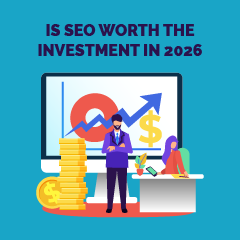
Every year, without fail, someone confidently declares, “SEO is dead.” Usually on LinkedIn. Usually, while trying to sell ads.
Meanwhile, millions of people open Google, TikTok, YouTube, Maps, ChatGPT, or Reddit every single day and type something that starts with: “best,” “how to,” “near me,” “what is,” or “should I buy.” In other words, they search. A lot. Constantly. Often, while standing in a store aisle comparing two products they are about to buy.
So when people ask, “Is SEO worth the investment in 2026?” what they are often really asking is: “Is it still worth showing up when people are actively looking for what we sell?”
Yes. Painfully yes.
What has changed is the playing field. Visibility is no longer controlled by a single search engine. Discovery is now fragmented across search engines, AI-driven search, social platforms, marketplaces, review sites, and AI-generated answers that summarize content before users ever click. If your brand appears in only one of those places, you are competing with businesses that appear in all of them.
That is why modern search engine optimization is no longer just about rankings. It is about orchestrating discoverability across the entire ecosystem of search moments. Businesses that understand this are not debating whether SEO works or not. They are investing in integrated visibility strategies that combine technical SEO, content marketing, AI search optimization, local SEO, digital PR, and multi-platform search presence so they can capture demand wherever it happens.
Because in 2026, the brands that win are not the ones shouting the loudest. They are the ones that show up everywhere customers look.
Article Summary
- Why the real question is no longer “Is SEO worth it?” but “Is visibility worth it?”
- How discovery has fragmented across search engines, AI search, social platforms, and marketplaces
- Why search engine optimization still delivers compounding ROI through organic traffic and reduced acquisition costs
- The shift from traditional SEO to integrated Search Everywhere Optimization™
- What happens when businesses rely only on paid ads instead of building organic visibility
- How multi-channel SEO strategies generate ROI across the entire funnel
- Why SEO remains the infrastructure of modern digital marketing strategy in 2026
The Real Question: Is Visibility Worth the Investment?
If you strip away the acronyms, dashboards, and marketing jargon, SEO has always been about one simple thing: being found when someone is looking for you.
The difference today is that “being found” does not happen in a single place anymore. Search engines are still critical, but they now exist alongside AI-driven search engines, voice search, social discovery, and platform-native search behavior where users jump between channels without thinking twice.
Someone might discover your brand through an AI-generated answer, verify you on Google, watch a short video about you on YouTube, check reviews on Maps, and finally convert through a branded search query.
That entire journey might take 20 minutes, or three months. Either way, search engine optimization plays a role at nearly every step, quietly shaping how your business appears in search results, how trustworthy you look, and whether your brand becomes the obvious choice.
That is why the better question for 2026 is not “Is SEO worth it?” but “Is consistent visibility across the moments that influence buying decisions worth it?”
Because once you understand that SEO is not a tactic but the infrastructure behind discoverability, the investment stops feeling optional and starts looking like the cost of admission.
The Real Question: Is Visibility Worth the Investment?
When businesses ask, “Is SEO worth the investment in 2026?” they are usually asking the wrong question. The real question is far simpler, and far more strategic: Is being visible where your customers search worth the investment?
Because that is what search engine optimization actually delivers. It is not just rankings on traditional search engines. It is the ability to appear when your audience is actively searching, comparing, researching, and deciding.
Search behavior is no longer limited to Google. Today, discovery happens across search engines, AI-driven search systems, social platforms, marketplaces, maps, and industry publications. Users move fluidly between traditional search, AI search, video search, local search, and social search depending on what they want to find. A product search might begin on TikTok, move to Google search results, continue through Reddit discussions, and end on a brand website. A B2B buying journey might include LinkedIn posts, blog content, YouTube explainers, and AI-generated answers before a single form is submitted.
Visibility, in other words, is now fragmented across dozens of discovery environments, and businesses that only optimize for one channel are effectively invisible in the others.
This is why modern search engine optimization has evolved beyond optimizing web pages for traditional search engine results pages. In 2026, SEO investment means building discoverability across the entire digital ecosystem.
It includes technical SEO that ensures search engines can crawl and understand your website, content strategies that answer real user queries, link building that strengthens authority, local SEO that captures intent-driven local searches, and optimization strategies designed to support AI-driven search engines that synthesize information into direct answers. Each of these layers contributes to one outcome: consistent search visibility wherever your audience is actively searching.
Seen through this lens, the debate about whether SEO is “worth it” becomes less about marketing tactics and more about business fundamentals.
Companies that invest in search visibility position themselves to capture qualified demand at the exact moment users are looking for solutions, while companies that delay investment often find themselves paying increasingly higher acquisition costs through paid ads just to remain visible. In a fragmented discovery landscape, SEO is no longer simply a traffic channel. It is the infrastructure that ensures your brand shows up wherever buying decisions begin.

Why Traditional SEO ROI Still Holds, And Why It’s Now Just the Starting Point
Despite everything changing in the search landscape, one thing has not changed: search engine optimization still delivers some of the strongest long-term ROI in digital marketing. The difference is that in 2026, traditional SEO is no longer the finish line. It is the foundation. Businesses that still debate whether SEO is worth the investment in 2026 often underestimate how much of their digital marketing strategy quietly depends on strong SEO performance already, from search visibility and organic traffic to content marketing distribution and brand authority signals used by AI-driven search systems.
Compounding Returns Over Time
Paid media behaves like a tap. Turn the budget on and traffic flows. Turn it off, and everything stops. SEO behaves more like building a reservoir. Every piece of optimized website content, every link-building effort, every improvement in technical SEO, and every upgrade to site structure increases your long-term ability to capture search traffic from users actively searching across search engines. That is why organic search continues to deliver results long after the initial SEO investment has been made.
This compounding effect is what makes traditional SEO such a powerful growth engine. A well-executed SEO strategy creates assets that appreciate over time. Articles continue ranking in search engine results pages. Pages accumulate quality backlinks that strengthen domain authority. On-page optimization improvements increase conversion rates even when traffic levels stay the same. Over months and years, these gains stack together, turning SEO into an owned visibility channel rather than rented traffic from paid ads or short-lived campaigns.
Most importantly, strong SEO contributes to brand equity, not just clicks. When users repeatedly encounter your brand in organic search results, in AI-generated answers, and across reputable sites that reference your content, credibility grows automatically. Search engine rankings may fluctuate, but a consistent presence builds trust, recognition, and preference. That is something no ad budget can buy permanently.
Lower CAC Compared to Ads
Customer acquisition costs across paid media continue to rise as competition intensifies across Google Ads, social ads, and programmatic placements.
Many business owners now find themselves spending more each quarter just to maintain the same level of traffic. SEO changes that equation by lowering long-term acquisition costs once search engine optimization efforts mature.
Organic traffic generated through effective SEO strategies often converts at higher rates because the users arriving are already actively searching for solutions, products, or services.
Another overlooked advantage is that SEO fuels performance across multiple marketing channels simultaneously. Keyword research shapes messaging for paid campaigns. Content marketing assets created for SEO improve engagement across social platforms. Link-building campaigns generate referral traffic and PR visibility. Structured data improves how search engines understand website content, increasing exposure in search results, local search features, and AI search experiences. In practice, this means SEO supports search, social, email, PR, and even paid campaigns, making it one of the few marketing investments that strengthens every other marketing channel at the same time.
The Evolution: From Google SEO to Search Everywhere Optimization
Traditional SEO still matters. But search behavior has evolved faster than most companies realize. Today, discovery does not begin and end on Google. Users interact with AI search tools, social platforms, marketplaces, voice search systems, and vertical search engines depending on what they want to learn or buy.
That shift has expanded the role of SEO from optimizing pages for search engines to orchestrating visibility across the entire digital ecosystem.
SEO ≠ Just Google Anymore
For years, SEO strategies focused primarily on improving rankings in traditional search engine results pages. That model assumed users would search on Google, scan blue links, and click through to websites. Now, users discover information through TikTok search, YouTube tutorials, Reddit discussions, AI-generated answers, local search features, and even in-app search results inside marketplaces and social platforms. Many Gen Z users already treat short-form video platforms as search engines, while AI search systems increasingly synthesize information from blogs, LinkedIn posts, news articles, and forums before a user ever clicks a link.
The implication is simple: search visibility now exists across dozens of environments, not just traditional search engines.
Brands that optimize only for classic SEO risk missing entire segments of their audience whose search behavior happens elsewhere.
Modern SEO performance, therefore, depends not only on rankings but also on brand mentions, structured data, authority signals, and content that is discoverable across AI-driven search, social discovery, and organic search simultaneously.
Search Everywhere Optimization Explained
Search Everywhere Optimization represents the evolution of search engine optimization into a unified visibility strategy. Instead of treating SEO, generative engine optimization, social search, and digital PR as separate initiatives, Search Everywhere Optimization integrates them into one coordinated system designed to capture demand wherever search queries originate. Technical SEO ensures accessibility and crawlability. Content strategy ensures relevance for both traditional and AI search systems. Link building strengthens authority across reputable sites. Social and PR visibility increases brand mentions that feed both search engines and AI systems with credibility signals.
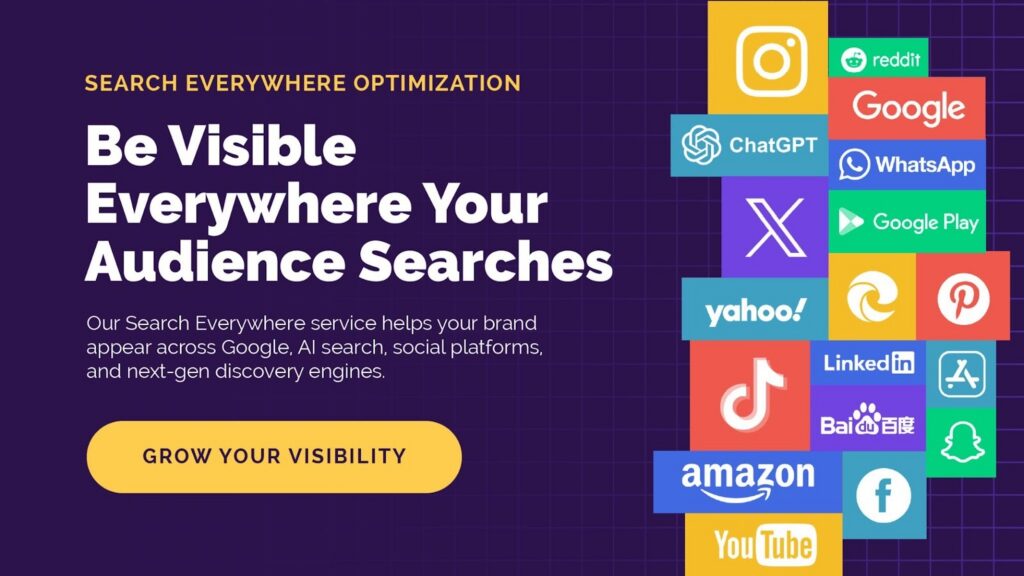
The result is a unified brand presence across all search moments, from organic search results and local listings to AI-generated answers and social discovery feeds.
Rather than chasing rankings in a single environment, businesses build authority across the entire ecosystem, strengthening domain authority, improving organic search results, increasing qualified traffic, and ensuring consistent online visibility wherever users are actively searching.
In 2026, this integrated approach is what transforms traditional SEO from a single-channel tactic into a long-term growth infrastructure.
What Happens If You Don’t Invest?
Let’s talk about the uncomfortable reality most marketing decks politely avoid.
Not investing in SEO is not a neutral decision.
It is an active decision to rely on rented attention. And rented attention is expensive, fragile, and completely dependent on continuous spend. Businesses that delay investing in search engine optimization often believe they are “saving budget” in the short term, when in reality they are quietly increasing long-term acquisition costs while competitors build permanent visibility assets.
Because here is the truth:
Search engines, AI search systems, and social discovery platforms do not pause while you wait for the “right time” to start. Visibility compounds for the companies that invest early and consistently, and it becomes progressively harder for late adopters to catch up.
You Rent Forever (and Keep Paying)
Paid ads are useful. Paid media absolutely has a place in a smart digital marketing strategy. But relying exclusively on paid traffic is like leasing your entire customer pipeline month to month. The moment the ad spend stops, the traffic stops. The leads stop. The growth curve flattens overnight. Meanwhile, the cost of paid ads across major marketing channels continues to rise, forcing many businesses to increase their budget simply to maintain the same performance.
PR without SEO integration faces a similar problem. Media coverage generates short bursts of visibility, but if those mentions are not supported by optimized website content, strong technical SEO, structured data, and a clear content strategy, the long-term search value fades quickly. Press attention disappears from the news cycle, and the brand fails to capture sustained organic search results or ongoing search traffic from users who continue searching for the topic months later.

Without SEO foundations in place, brands also struggle to appear in new discovery environments powered by AI-driven search, generative answers, and conversational search queries. These systems rely heavily on authority signals, structured website content, and consistent brand mentions across reputable sites. Businesses that neglect SEO optimization often discover that they are effectively invisible in these new search experiences, even when their products or services are highly relevant.
Competitors Get the Compound Advantage
While one company delays, another quietly builds. They publish optimized content. They earn quality backlinks. They strengthen domain authority. They improve site structure, technical SEO performance, and search visibility. Week by week, their organic search presence expands across search engine results pages, AI search citations, and organic discovery channels.
This is the compounding advantage of SEO. Every link-building effort, every piece of high-quality content, every improvement to technical SEO and mobile usability strengthens long-term ranking potential. The longer a competitor invests consistently, the more difficult it becomes to displace them from high-value search terms and high-intent search queries. Businesses that wait six to 12 months to begin SEO often discover that they are not starting from zero. They are starting from behind, competing against organizations that already have a year of accumulated authority, organic traffic, and search performance momentum working in their favor.
In other words, the decision to delay SEO investment is not just about waiting. It is about giving your competitors a head start in building the very visibility you will later have to fight much harder to earn.
Final Verdict: SEO Is the Investment You Can’t Afford Not to Make
By 2026, asking whether SEO is worth the investment is a bit like asking whether being visible to your customers is optional. Businesses no longer compete only on product, pricing, or advertising budgets. They compete on discoverability. And discoverability now spans traditional search engines, AI-driven search platforms, local search results, voice search, and social discovery environments where users actively search for recommendations, reviews, and solutions before ever speaking to sales.
Modern search engine optimization is no longer just about rankings on search engine results pages. It is about building a durable visibility engine that captures qualified traffic, reinforces brand authority, and reduces long-term acquisition costs across marketing channels. Strong SEO strategies improve site structure, technical SEO performance, and content strategy while supporting paid media efficiency, digital PR performance, and broader digital marketing strategy outcomes. When executed correctly, SEO becomes infrastructure. It quietly supports everything else you do, from content marketing and link building to local SEO, search visibility, and conversion growth.
Businesses that invest in SEO today are not simply chasing search results. They are building an asset that continues generating organic traffic, strengthening domain authority, and driving SEO results long after individual campaigns end. Those that delay often discover that competitors have already secured the search visibility, authority signals, and search rankings that are significantly harder to displace later.
If the real question is whether SEO is worth it, the better answer is this: modern SEO remains one of the few marketing investments that compounds, scales, and supports every other channel simultaneously. And in a world where customers are constantly searching, learning, and comparing across platforms, not investing in search visibility is rarely a cost-saving strategy. It is usually a growth-limiting one.
Want to See What SEO Could Deliver for Your Business?
If you want a clear picture of where your brand stands across traditional search, AI search, and emerging discovery platforms, book a free discovery call with our strategists. We will assess your current visibility, identify missed growth opportunities, and outline a Search Everywhere Optimization™ roadmap designed to drive measurable ROI across the channels that matter most.






















Leave a Reply