

Summarize This Article With AI
 Try with ChatGPT
 Try with Claude
 Try with AI Mode

There’s a moment every business owner eventually reaches. It usually happens after receiving their third SEO proposal, each quoting somewhere between a used car and a small kitchen renovation.
The immediate reaction is predictable: “Why does this cost so much?” followed quickly by “Is this actually worth it?”
Fair question.
SEO is not a one-click ad campaign or a short-term promotion. It is an infrastructure investment.
Done properly, it builds visibility, trust, and demand-capture systems that continue to work long after the initial work is completed. Done poorly, it becomes an expensive monthly invoice with very little to show for it.
The reality in 2026 is that SEO has evolved beyond ranking blue links.
Businesses now compete for visibility across traditional search results, AI Overviews, generative search engines, and AI citation layers. That means the investment conversation is no longer limited to rankings. It’s about discoverability everywhere customers search, including platforms where clicks may never even happen.
So, is SEO worth the investment?
Yes.
But understanding why requires understanding how pricing works, what businesses are actually paying for, how long results take, and how AI search is reshaping the equation.
Article Summary
- Most businesses invest between $1,500 and $5,000 per month in SEO, with costs influenced by competition, website complexity, and service scope
- Competitive industries often pay 30–50% more due to higher effort requirements and content demands
- SEO pricing is based on effort and expertise, not guaranteed outcomes, because algorithms and competitive landscapes constantly change
- Meaningful SEO results typically appear within 3–6 months, with compounding traffic and lead growth over time
- SEO delivers long-term ROI often ranging from 250% to 1,000%, significantly outperforming short-term paid traffic in sustained returns
- Modern SEO now includes Generative Engine Optimization (GEO) to secure visibility in AI search environments and AI citations
- Consistent investment reduces cost per lead over time, while stopping SEO efforts often leads to a ranking decline
- The real question is not whether SEO is worth the investment, but how much visibility your business can afford to lose without it
The Short Answer: You’re Paying for Visibility Everywhere
If SEO still feels like a checklist of keywords, backlinks, and technical fixes, it’s time for a mental reset.
In 2026, SEO is no longer a collection of isolated tactics. It’s a growth system designed to make your business discoverable wherever your audience searches, compares, asks questions, or validates purchasing decisions.
Search behavior has fragmented. Customers now discover brands through Google search results, AI-generated answers, social platform search bars, map listings, video platforms, and even AI assistants recommending companies directly.
Visibility in only one of these environments is no longer enough to sustain growth. Businesses that appear consistently across multiple discovery layers build familiarity faster, earn more trust, and win more conversions, often without prospects even realizing how many touchpoints influenced the decision.
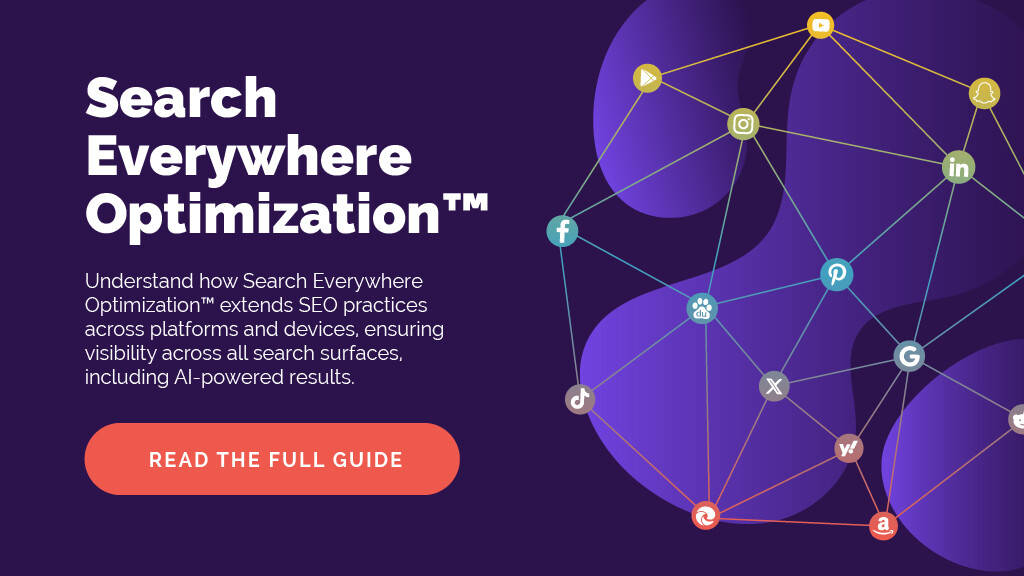
This is why modern SEO is best understood as Search Everywhere Optimization™. Instead of optimizing only for rankings, the focus is on creating structured visibility across traditional search engines, AI results, generative platforms, social search, local discovery systems, and authoritative media mentions.
The investment businesses make in SEO today funds a coordinated visibility engine that ensures they show up wherever buying decisions begin, evolve, and are finalized.
When viewed through this lens, SEO pricing starts to make more sense. You’re not paying for a few rankings. You’re paying for sustained presence across the entire digital discovery ecosystem.
The Strategy Layer (The Part You Don’t See)
Here’s something I’ve learned after years of working inside large SEO teams and agencies. The most important work in any search engine optimization campaign usually happens before a single page is optimized, before any link building begins, and definitely before the first report lands in your inbox.
And yes, this is also the part clients almost never see.
When businesses ask, “What are we paying for with SEO?” they usually imagine someone tweaking search results rankings directly, as if rankings were knobs you could turn. In reality, experienced SEO experts spend a significant portion of the early engagement building the strategic foundation that determines whether all future SEO efforts will actually work. Skip this stage, and your entire SEO investment becomes guesswork dressed up as activity.
Let me explain.

Market and Competitor Research
The first thing a serious SEO company does is step back and study the battlefield. Who currently owns Google search results? Which competitors dominate organic search visibility? Where are the gaps that can realistically be captured within your timeline and SEO budget?
This is where real keyword research happens. Not just pulling lists of terms, but analyzing search intent, search volume, and the commercial value behind specific relevant keywords. We map where customers search, how they compare vendors across search engines, and which opportunities can drive meaningful organic traffic instead of vanity clicks that never convert.
In many industries, this research also shapes local SEO visibility, Google Business Profile positioning, and even international SEO expansion strategies. Because if customers are discovering your competitors in local searches while your brand is invisible, no amount of later optimization will make up for the lost demand.
And this is the part most people underestimate. Research alone can take weeks. Building a roadmap that captures organic search traffic reliably requires understanding both your market and the pace at which competitors are investing in their own SEO services.

SEO Roadmapping and Prioritization
Once the opportunity map is clear, the next step is deciding what actually matters first. Not everything needs to be fixed at once. Not every page deserves immediate attention. And not every shiny SEO tool recommendation will move the needle on revenue.
A strong SEO strategy prioritizes initiatives that strengthen technical SEO, confirm that on-page and page-level optimization align with real demand, and ensure the entire website is structured to compete effectively in search results. That might mean resolving crawl issues before scaling content creation, improving domain authority before expanding topic coverage, or aligning digital marketing and search engine marketing initiatives so marketing efforts work together instead of competing for budget.
Here’s the honest reality. This planning phase is why professional SEO agencies and experienced SEO teams rarely offer cheap SEO packages. Strategy takes time. It requires advanced SEO tools, data from Google Analytics and Google Search Console, competitive modeling, and specialists who understand how search engine algorithms reward sustained authority building.
But when this layer is done correctly, everything that follows becomes dramatically more efficient. Every optimization compounds. Every page contributes to stronger organic search visibility. And the business begins to see what real SEO success looks like: steady growth in website traffic, improved organic search results, and a system that continues to generate visibility long after the initial SEO campaign is launched.
The Execution Layer (The Work That Actually Happens)
Once the strategy is clear, the visible work begins. And this is also where many businesses suddenly understand why SEO services require a serious SEO budget. Because at this stage, you are no longer talking about ideas. You are talking about specialists across technical, content, UX, and analytics working together to improve how your entire website performs across search engines.
Think of the strategy layer as architectural plans. The execution layer is the construction crew. Without it, nothing moves. With the wrong one, things collapse quietly in the background while search engine results slip further away.
Technical SEO
Technical SEO is the foundation that most companies don’t notice until something breaks. Crawling and indexing problems, slow load speeds, poor mobile optimization, messy site structures, or broken redirects can quietly block organic search visibility, no matter how strong your content is. If search engine algorithms cannot properly crawl or understand your site, your pages simply will not compete in organic search results, no matter how much content you publish.
This is also where complex initiatives live. Site migrations, international SEO implementations, structured data and schema deployment, and deep technical optimization projects that require coordination between developers and the SEO team. These are not small tasks, and they often determine whether a brand’s SEO efforts accelerate or stall.
When businesses ask how much SEO costs, a large portion of the answer lies right here. Technical fixes often require specialized expertise, advanced SEO tools, and continuous monitoring with platforms like Google Search Console and Google Analytics to ensure website performance improves rather than regresses.
On-Page Optimization
Once the technical foundation is stable, attention shifts to how individual pages compete inside the search engine results page. On-page optimization and page optimization ensure that titles, headers, internal structure, and metadata clearly communicate to search engines what each page should rank for, while also improving the experience for real users.
This includes refining titles and meta descriptions to improve click-through performance in Google search results, adding internal links strategically to distribute authority across the site, and improving layout, readability, and navigation so visitors stay longer and engage more deeply. These seemingly small changes have a measurable impact on organic search traffic because better engagement signals reinforce stronger organic rankings over time.
And unlike paid ads, where performance stops the moment budgets pause, these optimizations continue generating website traffic long after they are implemented.
Content Strategy and Creation
Then comes the layer most people recognize: content creation. But effective content marketing in modern search engine optimization is not about publishing generic blog posts at scale. It begins with structured SEO briefs that focus on search intent, search volume, and competitive analysis to ensure each piece supports the broader SEO strategy.
From there, experienced writers produce expert-driven articles designed to earn visibility in organic search, citations in AI-driven discovery environments, and authority signals that strengthen overall domain authority. Existing content is also continuously improved through updates, pruning outdated pages, and expanding high-performing topics so the site keeps compounding organic search traffic rather than stagnating.
This ongoing execution is what separates real SEO agencies from providers selling static SEO packages. Effective SEO work is never “set and forget.” It’s a continuous process of optimizing pages, strengthening authority, and refining performance so businesses continue to capture demand across search engines as competitors increase their marketing efforts.
The Authority Layer (Why Rankings Actually Happen)
Here’s something most SEO proposals don’t explain clearly enough.
You don’t rank just because your pages are optimized well.
You rank because search engines trust your brand more than competing brands in the same space.
Optimization gets you into the race. Authority is what lets you win it.
Think about it like this. If ten companies publish similar content, search engines need a way to decide who deserves the top position. That decision is heavily influenced by who the rest of the internet is referencing, citing, and talking about. That’s the authority layer. And yes, this is one of the biggest reasons serious SEO campaigns cost more than surface-level packages.
Link Building
Modern link building is essentially reputation building at scale.
It includes outreach to publishers, editorial placements, industry mentions, partnerships, and getting your brand referenced on websites that search engines already trust. Every credible mention strengthens your site’s authority signals, which makes it easier for your pages to compete across organic search results over time.
Here’s the part people rarely realize: this is relationship work. It involves outreach specialists, PR-style pitching, content collaborations, and long-term relationships with publishers. It’s not something that happens automatically, and it definitely isn’t something that can be done well through automated “cheap SEO” tactics. When agencies invest heavily in this layer, they’re not buying links. They’re building credibility that compounds.
Digital PR for SEO
Now, this is where authority-building becomes a growth engine.
Instead of asking “Where can we get a link?”, strong SEO teams ask, “What can we create that people naturally want to reference?” That leads to research reports, industry benchmarks, expert commentary campaigns, tools, calculators, and data-led insights that publications actually want to feature.
When these campaigns land, they don’t just generate links. They generate brand recognition, thought leadership positioning, and repeated mentions across the web. Over time, this makes your company easier to trust, easier to recommend, and much harder for competitors to outrank, because search engines begin to see your brand as one of the authoritative voices in the category.
And once that happens, rankings stop being a constant uphill battle. They start compounding.
The Search Everywhere Layer (Modern SEO)
For years, SEO meant one thing: ranking in Google. That was the whole game.
Today? Not even close.
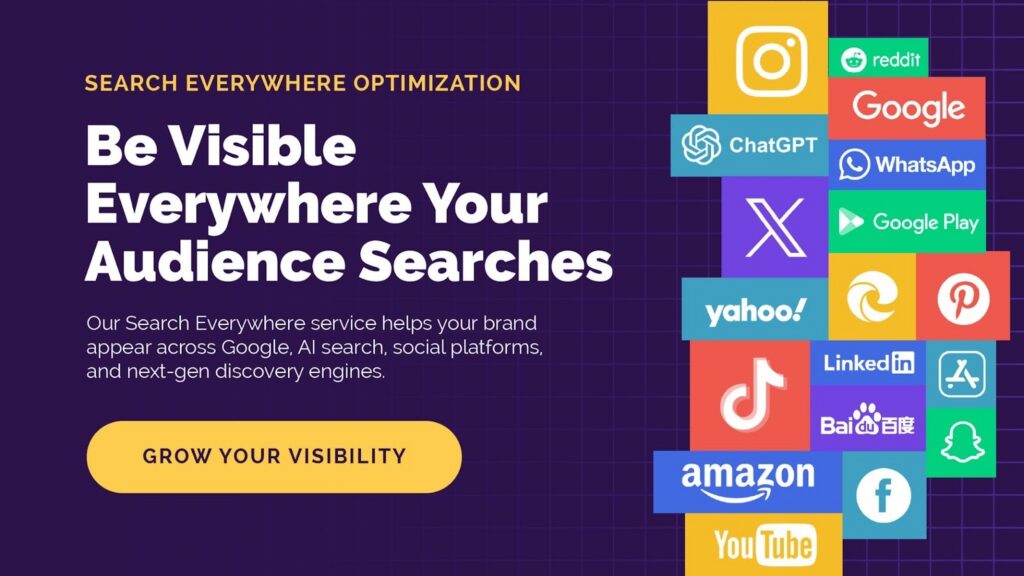
Customers discover businesses through Google Maps, TikTok search, YouTube tutorials, LinkedIn posts, AI-generated answers, and recommendation engines that never send a click to your website at all. Which means modern search engine optimization is no longer about optimizing for a single search engine results page. It’s about showing up consistently wherever discovery happens.
This is what we call the Search Everywhere Optimization™ layer. And it’s one of the biggest reasons SEO services look very different in 2026 than they did just a few years ago.
Local SEO
Let’s start with the simplest but most overlooked reality: a huge percentage of buying decisions begin with local searches. Someone searches for a service, checks the map results, reads reviews, and makes a decision before ever clicking a website. If your Google Business Profile is not optimized, your brand may never even enter the consideration set.
Strong local SEO focuses on structured profile optimization, local landing pages aligned with geographic search intent, consistent citations across directories, and active reputation management through review acquisition and response strategies. These signals help local businesses appear more prominently in map and search results, especially on mobile-driven discovery journeys where proximity and credibility matter most.
And here’s the key point: For many service-based companies, improvements in local searches can generate revenue faster than traditional organic search rankings because the buying intent is already extremely high.
Social Search Optimization
Now add another layer. Millions of users no longer start their discovery journey on Google at all. They search directly inside TikTok, YouTube, LinkedIn, Pinterest, or Instagram when researching products, services, and industry experts. Each of these platforms has its own search algorithm, ranking factors, and discoverability signals.
Social search optimization ensures profiles are fully structured, platform keywords are naturally integrated into content, and posts are designed to surface in internal platform search results rather than relying solely on feed distribution. When done well, this increases discoverability, strengthens brand familiarity across multiple channels, and reinforces visibility that later improves performance across traditional search engines as well.
Because here’s the thing: When customers keep seeing your brand everywhere, trust builds faster than any single ranking could accomplish.

AI Search and Brand Entity Optimization
Then comes the newest layer: AI-driven discovery. Platforms like AI Overviews and conversational search engines increasingly recommend brands directly, often without users clicking through to organic search results. If your brand is not recognized as a trusted entity within these systems, competitors will be recommended in your place.
This is where entity building becomes critical. Structured data implementation, consistent brand signals across the web, authoritative mentions, and knowledge graph alignment help AI systems understand who your company is, what it specializes in, and when it should be cited as a source. Optimizing for AI discovery does not replace traditional SEO efforts. It expands them, ensuring your brand is visible not just in rankings, but also in recommendations, summaries, and AI-generated answers shaping modern customer decisions.
And this is exactly why SEO in 2026 is no longer just SEO. It is a coordinated visibility strategy designed to ensure your business shows up wherever customers search, compare, and decide.
The Management Layer (Why It’s Not “Just Some Tasks”)
Here’s a part of SEO that almost never gets talked about when people ask about SEO pricing. The management layer. The coordination, monitoring, reporting, and decision-making that keep an SEO strategy moving in the right direction instead of drifting into “set it and forget it” territory.
Because SEO is not a one-time project. It is an ongoing system that needs constant adjustment as competitors increase their own SEO efforts, search engine algorithms evolve, and performance signals shift across search engines. Without active management, even strong campaigns slowly lose momentum, which is why professional SEO services always include structured oversight rather than just a list of deliverables.
Account Management and Reporting
Behind every successful SEO campaign is a rhythm. Weekly reviews, monthly reporting, and regular strategy calls where the SEO team evaluates what is working, what is slowing down growth, and what needs to change next. Performance is analyzed across organic search metrics, including organic traffic, rankings, conversion performance, and competitive visibility, to ensure the campaign continues to support revenue-focused SEO goals.
This is also where strategic pivots happen. Maybe new search results trends create fresh opportunities. Maybe competitors launch aggressive paid advertising campaigns that shift the competitive landscape. Maybe certain content begins outperforming expectations and deserves expansion. Continuous analysis allows SEO experts to refine the roadmap so SEO work stays aligned with business outcomes rather than becoming a routine activity.
Tools and Infrastructure
Then there is the infrastructure layer most businesses never see but rely on heavily. Professional SEO agencies invest in enterprise-grade SEO tools such as Ahrefs, Semrush, and Screaming Frog, as well as outreach platforms, analytics systems, and data integrations via Google Analytics and Google Search Console. These platforms track search engine results, competitor movement, backlink growth, technical performance, and organic search traffic patterns across thousands of keywords.
Individually, many of these tools cost hundreds or even thousands per month. Combined, they represent a significant portion of the real SEO cost required to run high-performance campaigns at scale. But they provide the data infrastructure that enables teams to make informed decisions, measure SEO performance, and continuously improve website performance across search engines.
When people ask why SEO is priced as a recurring investment instead of a one-time project, this management layer is a big part of the answer. Maintaining visibility requires ongoing monitoring, ongoing optimization, and ongoing strategy adjustments long after the first improvements go live.
What You’re Really Paying For: Expertise
When businesses evaluate SEO pricing, the first instinct is often to compare hours, deliverables, or the size of the SEO package. How many articles? How many links? How many technical fixes? It feels logical, but it misses the real point.
You are not paying for the activity. You are paying for decisions.
Experienced SEO experts know which opportunities will actually move revenue, which tactics are outdated, and which shortcuts could damage long-term performance. That kind of judgment dramatically reduces wasted time, prevents expensive mistakes, and accelerates the impact of every SEO effort. In other words, expertise compresses timelines while increasing the probability of success. That is why two campaigns with the same scope can produce completely different outcomes depending on who is running them.
At SEO Sherpa, for example, campaigns are not delivered by generalists following a checklist.
They are executed by specialists.
Bilingual writers with more than a decade of experience producing high-quality content for competitive industries. Technical specialists focused solely on technical SEO and site architecture. Strategists who have managed enterprise-level search engine optimization programs across multiple regions and markets. Many members of the team are award-winning professionals recognized for solving complex visibility challenges that typical teams never encounter.
That depth of experience changes the economics of SEO investment. When experienced specialists execute the work, fewer cycles are wasted on trial-and-error experimentation. Risks such as poor migrations, ineffective link building, or misaligned content-creation strategies are dramatically reduced. And because execution is more precise, results tend to compound faster, improving organic search performance while strengthening long-term authority.
So when businesses ask what they are really paying for, the answer is not simply SEO services or time allocation. They are investing in the experience, judgment, and strategic precision that turns SEO work into sustained growth rather than unpredictable experimentation.
Why Cheap SEO Feels Easier (But Costs More Long-Term)
Cheap SEO always looks appealing at the beginning. Lower monthly fees, faster promises, and neat deliverable lists that make it sound like results are just around the corner. But here’s the reality most businesses discover six months later: low-cost SEO rarely reduces spending. It usually delays real growth while competitors continue investing properly.
In 2026, most legitimate SEO services fall somewhere between $1,500 and $5,000 per month, with many businesses investing around $2,500 to $3,500 per month, depending on competition, website size, geographic targeting, and the complexity of the work required. When pricing drops significantly below that range, it often signals reduced strategy, reduced expertise, or automated execution that cannot compete in modern search engines. If an agency is offering full-service SEO for under $1,500 per month, that is typically a red flag rather than a bargain.
Here’s why.
Low-cost providers often rely on generic content production, bulk link placements, and checklist-style optimizations without a real SEO strategy guiding the work. Content is frequently generated at scale without expert oversight, which creates shallow pages that struggle to perform, especially now that search engine algorithms are increasingly effective at identifying low-value material. Google’s continued emphasis on helpful, experience-driven content means human-led, AI-assisted writing consistently outperforms fully automated production, particularly in competitive industries where authority signals matter.
The contrast becomes clear when comparing this approach to high-quality campaigns. Experienced specialists focus on keyword research, technical stability, authority-building, and structured content creation to capture real demand. Instead of chasing quick rankings, they build the systems that allow organic traffic to compound over time. Because SEO is fundamentally a long-term acquisition channel, meaningful performance improvements typically begin appearing within three to six months, with early foundation work in the first two months, initial ranking movement around months three and four, and stronger lead flow momentum by months five and six.
That patience is also why SEO continues to deliver some of the strongest returns in digital marketing. Well-executed campaigns frequently generate 300% to 500% ROI within two years, and many organizations report even higher long-term returns as organic search visibility compounds. Unlike paid advertising, where traffic disappears the moment spending stops, a properly optimized site can continue generating qualified visitors for months or even years after the initial work is completed.
So yes, cheaper SEO may feel easier to approve in the short term. But in most cases, the real cost comes later, when businesses realize they must reinvest to fix ineffective work, rebuild authority, and recover lost time, while competitors who invested correctly from the start continue to expand their visibility.
So… What Are You Paying For With SEO?
At this point, the answer should feel clearer.
You’re not paying for “a few blogs” or “some backlinks.” You are investing in a coordinated growth system that combines strategy, execution, authority building, and multi-channel visibility, all delivered by people who know how to make those layers work together. When these components operate in isolation, results are inconsistent. When they are aligned, SEO becomes one of the most predictable long-term acquisition channels in digital marketing.
Think about everything we’ve covered. The strategic research that identifies where real demand exists. The technical SEO and on-page optimization work that allows pages to compete in search engine results. The authority campaigns that strengthen organic search trust signals. The Search Everywhere Optimization™ layer ensures your brand appears across maps, social discovery, and AI-driven recommendations. And finally, the management and reporting infrastructure that continuously refines the SEO strategy as markets evolve.
That is what your SEO investment funds.
Because the reality is simple. Businesses that treat SEO as a collection of isolated tasks usually see isolated results. Businesses that treat it as a structured visibility system build compounding organic traffic, stronger brand credibility, and acquisition channels that continue generating demand long after initial SEO efforts begin.
Want to See What Your SEO Investment Would Actually Look Like?
Every business is different. Competition levels vary, websites start from different points, and SEO goals range from local growth to international expansion. That’s why meaningful SEO pricing cannot be estimated from a generic package list. It needs to be mapped to your market opportunity, your competitive landscape, and the level of visibility required to win in your category.
During a discovery call, our team reviews your current performance across search engines, identifies where competitors are capturing organic search demand, and outlines the specific SEO strategy required to generate measurable growth. You’ll leave with a clear understanding of what work would be prioritized first, what kind of timeline to expect, and how your SEO investment translates into long-term acquisition potential.
If you want to understand what high-impact SEO services would actually look like for your business, schedule a free discovery call with the SEO Sherpa team and let’s map out the opportunities together.




















Leave a Reply