
Summarize This Article With AI
 Try with ChatGPT
 Try with Claude
 Try with AI Mode
Choosing an SEO agency is rarely a simple decision.
Most businesses don’t just ask “Can you do SEO?” — they ask harder questions first. Why isn’t our website ranking? How long will this actually take? Why do prices vary so much? What are we really paying for? And what happens if Google changes everything again?
This SEO knowledge base exists to answer those questions honestly.
It brings together clear, practical explanations for the most common SEO concerns we hear during discovery calls, evaluations, and internal discussions. Each section below addresses a real question businesses ask before committing to SEO, with straightforward context and links to deeper resources where more detail is needed.
This page is not designed to sell SEO.
It’s designed to remove confusion, set realistic expectations, and help you make informed decisions — whether you work with us or not.
Use it as a reference, a learning resource, or a way to understand how SEO actually works in practice, beyond the headlines and hype.
Article Summary
- Pricing, Cost & Value
- Timelines & Expectations
- Website Readiness & Technical Concerns
- Rankings, Drops & Performance Changes
- Trust, Risk & Google Updates
- SEO Strategy & What’s Actually Being Done
- In-House vs Agency & Decision-Making
- SEO vs Other Marketing Channels
- Long-Term SEO Value & Sustainability
Pricing, Cost & Value
Why Is SEO So Expensive?
SEO can feel expensive because it involves far more than a single task or tool. Search engine optimization requires ongoing strategy, technical SEO, keyword research, content creation, and link building, all designed to help search engines understand, crawl, and index web pages correctly.
Unlike paid channels such as Google Ads, SEO work compounds over time. The cost usually reflects the expertise, processes, and resources required to improve visibility across search engines, search results, and other search environments. When pricing is low, it often means less research, weaker execution, or duplicated content that limits long-term performance.

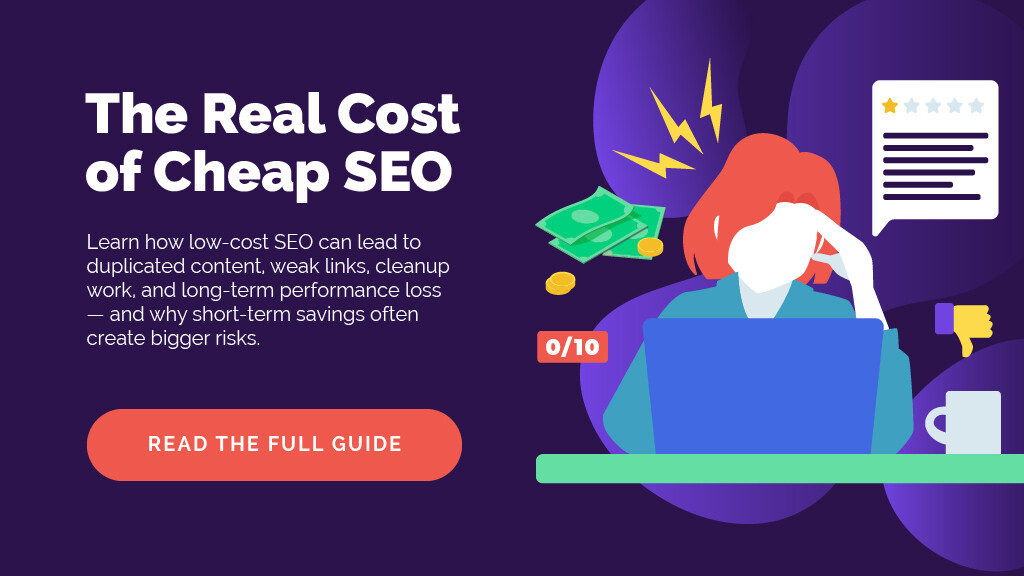
The Real Cost of Cheap SEO
Cheap SEO often focuses on volume rather than quality. This can include duplicate pages, low-quality links, or automated content that search engines struggle to understand or trust.
While lower pricing may seem attractive, the real cost often appears later. Poor practices can lead to wasted time, stalled organic traffic, or the need for recovery work. In some cases, cleaning up low-quality SEO can cost more than doing it properly from the start.
Read the full breakdown: The Real Cost of Cheap SEO
What Are We Actually Paying For With SEO?
SEO pricing covers a combination of strategic and technical work rather than a single deliverable. This typically includes keyword research, on-page SEO, technical SEO improvements, content SEO, internal links, and performance tracking using tools like Google Search Console and Google Analytics.
What businesses are paying for is structured, ongoing work designed to improve how search engines crawl, index, and display a particular page in search results. This approach supports organic traffic growth, better user experience, and stronger long-term visibility across search engines.
Is SEO Worth the Investment in 2026?
SEO continues to be valuable, but it now works across more than just traditional search results. Users search through search bars, voice search, visual search, and AI-powered results, meaning SEO strategies must support visibility beyond a single ranking.
When done well, SEO helps build sustainable organic traffic, improves user satisfaction, and supports customer self-service through SEO-friendly knowledge base content. The value comes from consistent improvements over time rather than short-term spikes.
How Do You Measure SEO ROI?
SEO ROI is measured through a combination of analytics data and performance trends rather than immediate attribution. Common metrics include organic traffic growth, search visibility, engagement metrics, and conversions tied to search intent.
Clear KPIs, defined goals, and regular reporting through tools like Google Analytics and Search Console help connect SEO performance to business outcomes. Without this context, SEO progress can be difficult to evaluate accurately.
Read the full breakdown: How Do You Measure SEO ROI?
What Results Should I Expect for My SEO Budget?
SEO results depend on factors such as competition, search volume, starting position, and the quality of existing content. Higher budgets allow for broader coverage, faster implementation, and deeper optimization across web pages and internal links.
Rather than instant results, SEO typically delivers gradual improvements in search engine rankings, organic traffic, and visibility. Setting realistic expectations helps ensure long-term success and avoids misalignment between effort and outcomes.
Timelines & Expectations
How Long Does SEO Take to Work?
SEO does not deliver instant results because search engines need time to crawl, index, and evaluate changes made to a website. Improvements to technical SEO, content, and internal links must first be processed before they can influence search engine results.
In most cases, early signals such as improved indexing, crawl behavior, or impressions appear before meaningful ranking or traffic changes. SEO timelines vary depending on competition, search volume, existing content quality, and how frequently search engines crawl a particular page.
Read the full breakdown: How Long Does SEO Take to Work?
How Long Does It Take to Rank on Google?
Ranking on Google depends on how competitive a keyword phrase is, how relevant the content is, and how well the page aligns with search intent. Search engines like Google also assess factors such as internal links, content quality, and authority from other reputable websites.
New or updated pages must be crawled and indexed before they can appear in Google search results. Even then, rankings often improve gradually rather than appearing at the top immediately, especially for high search volume terms.
Read the full breakdown: How Long Does It Take to Rank on Google?
Why SEO Takes Longer Than Paid Ads
Paid ads such as Google AdWords can appear in search results as soon as campaigns are launched. SEO, by contrast, focuses on earning visibility organically by improving relevance, usability, and authority over time.
SEO strategies are designed to support sustainable growth rather than short-term exposure. While slower initially, organic search traffic does not disappear the moment spending stops, making SEO a long-term investment rather than a temporary traffic source.
What Happens If SEO Doesn’t Work After 6 Months?
Six months is often enough time to see early progress, but not always enough to judge long-term performance. SEO work may still be in the stages of technical cleanup, content creation, or authority building, all of which can take time to influence rankings.
Evaluating SEO at this point should focus on leading indicators such as improved crawlability, indexed pages, engagement metrics, and visibility trends rather than final outcomes alone. These signals often precede stronger performance later.
Is SEO a One-Time Project or Ongoing Work?
SEO is an ongoing process rather than a one-time task. Search engines continuously update algorithms, competitors publish new content, and user search behavior evolves over time.
Regular updates, keyword research, technical audits, and content improvements help maintain performance and prevent declines. Treating SEO as a one-off project often leads to stalled growth or lost visibility as conditions change.
Website Readiness & Technical Concerns
Why Isn’t My Website Ranking?
When a website isn’t ranking, it’s rarely due to a single issue. Search engines evaluate many signals, including technical SEO, content quality, internal links, and how well a web page matches a user’s search query.
Common causes include poor crawlability, weak on-page SEO, duplicate content, low relevance to target keywords, or pages that search engines struggle to index. Technical issues such as slow load times, missing meta tags, or unclear site structure can also limit visibility in search results.
Read the full breakdown: Why Isn’t My Website Ranking?
Our Website Isn’t Ready for SEO — Is That a Problem?
A website does not need to be “perfect” before SEO can begin. In fact, SEO often identifies the exact issues preventing search engines from crawling, indexing, and understanding content correctly.
SEO work frequently runs alongside technical fixes, content improvements, and UX updates. Addressing these issues as part of an SEO strategy helps improve usability, customer satisfaction, and long-term organic traffic without delaying progress.
Do I Need a Website Redesign for SEO to Work?
A full redesign is not always necessary for SEO to be effective. In many cases, targeted improvements to page structure, internal links, content SEO, and technical elements can deliver meaningful results without rebuilding the entire site.
However, if a website has serious structural issues, poor mobile responsiveness, or outdated UX, a redesign may support SEO by improving crawlability, page speed, and user experience. The decision depends on how search engines currently interpret and index the site.
Can SEO Work on a New Website?
SEO can work on a new website, but expectations should be adjusted. New sites often lack authority, indexed pages, and historical data, which means search engines need more time to evaluate trust and relevance.
Early SEO efforts typically focus on technical foundations, keyword research, clean URL paths, XML sitemaps, and clear internal linking. These steps help search engines crawl and index new pages efficiently, laying the groundwork for future growth.
Will SEO Break My Website?
SEO should not break a website when implemented correctly. Best practices focus on improving structure, performance, and clarity rather than introducing risk.
Problems usually arise when changes are made without proper testing, documentation, or technical oversight. A structured SEO approach prioritizes stability, uses analytics data to validate changes, and avoids actions that could negatively impact users or search engine visibility.
Should We Pause SEO During a Website Redesign or Migration?
Pausing SEO during a redesign or migration often increases risk rather than reducing it. Website changes affect URL paths, internal links, indexed pages, and how search engines interpret content.
Involving SEO throughout the process helps preserve rankings, manage redirects correctly, and ensure search engines can crawl and index new pages efficiently. Continuous SEO oversight reduces traffic loss and supports a smoother transition.
Rankings, Drops & Performance Changes
Why Did My Rankings Drop?
Ranking drops are a common concern and do not always indicate that SEO has failed. Search engines constantly update how they evaluate web pages, and changes in search results can occur even when no changes have been made to a particular page.
Drops may be caused by algorithm updates, increased competition, technical SEO issues, duplicate content, or shifts in how users search. Monitoring analytics data in tools like Google Analytics and Search Console helps identify whether the issue is isolated to a particular page, keyword phrase, or broader SEO performance trend.
Do Rankings Fluctuate Even When SEO Is Working?
Yes, ranking fluctuations are normal, even when SEO strategies are effective. Search engines regularly test different results to better understand which pages best satisfy users’ search intent.
As users search, interact, and engage with content, search engines collect signals that influence rankings over time. Temporary movement in search engine results does not necessarily mean visibility or organic traffic is declining long-term, especially when overall trends remain positive.
Why Can Traffic Drop Before It Improves?
Traffic drops can occur during SEO improvements, particularly when changes affect content structure, internal links, or how search engines index pages. For example, resolving duplicate pages or consolidating existing content may temporarily reduce visibility while search engines reprocess updates.
These short-term declines are often part of a broader optimization process. As search engines crawl, index, and reassess content SEO improvements, stronger alignment with relevant keywords and search intent typically lead to more stable organic traffic growth.
What Metrics Actually Matter in SEO (and Which Don’t)?
Not all SEO metrics are equally meaningful. Vanity metrics may look impressive, but they do not always reflect real performance or business impact.
Meaningful SEO measurement focuses on organic traffic, search visibility, engagement metrics, conversions, and how users interact with content. Evaluating analytics data across Google Analytics and Search Console helps distinguish between surface-level fluctuations and genuine performance improvements.
How to Tell If SEO Performance Is Improving
SEO progress is best measured through trends rather than single data points. Improvements in impressions, indexed pages, engagement metrics, and keyword coverage often appear before significant ranking or traffic gains.
A well-structured SEO knowledge base supports this evaluation by centralizing reporting, tracking, and documentation. Reviewing SEO performance regularly helps ensure strategies remain aligned with user behavior, search engine updates, and long-term growth goals.
Trust, Risk & Google Updates
Can SEO Get My Website Penalized?
SEO itself does not cause penalties, but certain practices can. Search engines penalize websites that violate their webmaster guidelines through tactics like keyword stuffing, low-quality link schemes, or duplicate content created purely to manipulate search results.
A responsible SEO strategy focuses on technical SEO, content quality, and relevance rather than shortcuts. When SEO is aligned with best practices, it helps search engines understand and index content correctly instead of triggering risk.
What Happens When Google Updates Its Algorithm?
Google updates its search engine algorithms frequently, ranging from small adjustments to broad core updates. These changes are designed to improve how Google evaluates relevance, content quality, and user satisfaction in search results.
Algorithm updates can cause short-term ranking fluctuations as Google reassesses web pages across its index. Monitoring analytics data, search console insights, and organic traffic trends helps distinguish normal volatility from issues that require action.
Is SEO Still Worth It With AI, SGE, and AI Overviews?
AI-driven features such as Search Generative Experience and AI Overviews change how Google displays information, but they do not remove the need for SEO. These systems still rely on high-quality, structured content that search engines can crawl, index, and trust.
SEO now supports visibility across traditional search results, AI-generated answers, and other search surfaces. Well-structured content, internal links, and clear information architecture help search engines and AI tools surface reliable information.
Will AI Replace SEO Agencies?
AI tools can support SEO by assisting with keyword research, analytics analysis, and content creation, but they do not replace strategy, experience, or accountability. Search engines still prioritize relevance, trustworthiness, and user satisfaction, which require human judgment.
SEO agencies increasingly use AI tools to improve efficiency, not to replace expertise. Strategy, technical oversight, and decision-making remain critical to long-term SEO performance.
How Do You Do SEO Without Violating Google’s Guidelines?
Safe SEO starts with understanding how search engines evaluate content and following published best practices. This includes creating original content, optimizing pages for users rather than algorithms, and avoiding tactics designed solely to manipulate rankings.
Regular audits, clear documentation, and adherence to technical SEO standards help ensure compliance as guidelines evolve. This approach reduces risk while supporting sustainable growth across search engines and search results.
SEO Strategy & What’s Actually Being Done
What Does an SEO Strategy Actually Include?
An SEO strategy is a structured plan designed to improve how search engines crawl, index, and rank web pages over time. It typically combines keyword research, technical SEO, on-page SEO, content SEO, and internal linking into a coordinated approach.
Rather than focusing on isolated tactics, an effective strategy aligns content creation, optimization, and performance tracking around clear goals. This helps search engines understand which pages are most relevant for specific search terms and how they relate to one another.
Why SEO Isn’t Just Keywords and Blog Posts
Keywords and blog posts are only part of SEO. Search engines also evaluate technical structure, internal links, page performance, and how users interact with content once they land on a site.
Without strong technical foundations and clear information architecture, even well-written content can struggle to appear in search results. SEO works best when content, structure, and usability are optimized together rather than treated as separate efforts.
Do Backlinks Still Matter?
Backlinks remain an important signal because they help search engines assess trust and authority. Links from reputable websites indicate that content is credible and worth surfacing in search engine results.
However, link quality matters far more than quantity. Modern SEO strategies focus on earning relevant, contextual links that support content quality rather than building links purely for rankings.
What’s the Difference Between SEO, Content, and Digital PR?
SEO, content, and digital PR are closely related but serve different purposes. SEO focuses on visibility and discoverability in search engines, content focuses on answering user questions, and digital PR supports authority and reach through external mentions and links.
When aligned properly, these disciplines reinforce each other. Content provides substance, digital PR builds credibility, and SEO ensures everything is structured so search engines can understand and rank it effectively.
How SEO Supports Long-Term Growth (Not Just Rankings)
SEO supports long-term growth by building assets that continue to attract users over time. Well-optimized content, clear internal links, and a structured knowledge base help generate ongoing organic traffic without constant reinvestment.
Rather than chasing short-term ranking wins, SEO strategies focus on compounding value. This approach improves visibility, user satisfaction, and overall performance across search engines as behavior and algorithms evolve.
In-House vs Agency & Decision-Making
In-House SEO vs Agency: What’s the Right Choice?
Choosing between in-house SEO and an agency depends on resources, goals, and scale. An in-house team offers proximity and context, while an agency brings broader experience across industries, search engines, and SEO strategies.
Many businesses find value in agency support for technical SEO, content SEO, and complex initiatives, especially when speed, tooling, and cross-functional expertise are required. The right choice aligns capability with outcomes rather than headcount alone.
Read the full breakdown: In-House SEO vs Agency: What’s the Right Choice?
How to Choose the Right SEO Agency
Not all SEO agencies operate the same way. Evaluating an agency should go beyond promises and pricing to include strategy clarity, communication, and how success is measured.
Look for evidence of sound keyword research, technical competence, transparent reporting, and a clear plan for improving search engine visibility over time. An agency should explain how it helps search engines understand your site, not just where it hopes to rank.
Read the full breakdown: How to Choose the Right SEO Agency
What Questions Should I Ask Before Hiring an SEO Agency?
Asking the right questions helps avoid misalignment later. Useful questions cover strategy, timelines, reporting, ownership of work, and how risks are managed as search engines evolve.
Clear answers should reference specific processes, tools, and metrics rather than vague outcomes. This approach supports informed decision-making and sets realistic expectations from the start.
What Does a Good SEO Partner Actually Look Like?
A strong SEO partner focuses on long-term value rather than quick wins. This includes structured planning, ongoing optimization, and consistent use of analytics data to guide decisions.
Good partners communicate clearly, adapt to changes in search engines, and align SEO work with broader business goals. The relationship should feel collaborative and transparent, not transactional.
Who Owns the SEO Work and Data?
SEO involves shared responsibility across teams, tools, and platforms. It’s important to clarify who owns deliverables such as content, analytics access, and reporting dashboards.
Clear ownership ensures continuity if priorities change and helps marketing teams maintain visibility into performance across search results and organic traffic channels.

SEO vs Other Marketing Channels
SEO vs PPC: Which One Is Better?
SEO and PPC are often framed as opposites, but in reality, they solve different problems. PPC delivers immediate visibility in search results, while SEO builds long-term organic traffic by improving how search engines understand and rank your web pages.
The key difference is durability. Paid traffic stops the moment spend stops. SEO continues to generate traffic long after the work is done, especially when content, internal links, and technical SEO are maintained properly.
Read the full breakdown: SEO vs PPC: Which One Is Better?
SEO vs Paid Social
Paid social is excellent for demand generation and audience targeting, but it relies on interrupting users rather than capturing intent. SEO works when users actively search for solutions, products, or comparisons.
While paid social can drive awareness quickly, SEO compounds over time and supports users across the full funnel, particularly when content is aligned with real search terms and long-tail keywords.
Read the full breakdown: SEO vs Paid Social
SEO vs Content Marketing
Content marketing and SEO are closely linked, but they are not the same thing. Content without SEO often fails to reach search engines effectively, while SEO without strong content lacks relevance.
SEO ensures content is discoverable in search engine results, structured properly for indexing, and aligned with how users search. Content marketing brings the depth, authority, and clarity that search engines reward over time.
Read the full breakdown: SEO vs Content Marketing
SEO vs Digital PR
Digital PR focuses on brand mentions, authority, and backlinks from reputable websites. SEO leverages those signals to improve search engine rankings and organic search visibility.
The strongest strategies combine both. Digital PR builds authority externally, while SEO ensures internal linking, content structure, and technical foundations allow that authority to flow through the site.
Read the full breakdown: SEO vs Digital PR

When SEO Works Best Alongside Other Channels
SEO performs best when integrated with PPC, paid social, and content distribution. Data from ads can inform keyword research, while SEO insights can reduce wasted ad spend by clarifying real user intent.
Together, these channels create stronger visibility across search engines, social platforms, and the full customer journey.
Long-Term SEO Value & Sustainability
Why SEO Is a Long-Term Growth Channel (Not a Quick Win)
Search engine optimization works best when it’s treated like building an asset, not running a campaign. Over time, improvements to technical SEO, on-page SEO, content SEO, and internal links help search engines understand your site better, which supports more stable visibility in search results.
This is how SEO becomes sustainable: content keeps attracting users who search for solutions, even when you are not actively promoting a particular page. That compounding effect is what makes long-term SEO value different from short-term traffic spikes.
What “Sustainable SEO” Actually Means
Sustainable SEO means growth that does not depend on shortcuts or constant paid spend. It relies on best practices that help search engines index web pages consistently, understand your content structure, and trust your site over time.
It also means avoiding fragile tactics that can collapse after an algorithm update. The goal is durable organic traffic and visibility that holds up across changes in search engines, including new SERP layouts and AI-driven results.
Why Evergreen Content Keeps Paying Off
Evergreen content is content that stays relevant for a long time. In a knowledge base, these are the “always asked” topics people type into a search bar, often as long tail keywords tied to real problems.
When evergreen knowledge base articles are updated regularly, use clear headings, and include helpful internal links, they can bring in a steady stream of organic traffic. They also support user satisfaction by making it easier for people to find answers quickly.
How Internal Linking Builds Long-Term SEO Value
Internal linking is one of the simplest ways to make your knowledge base more useful for users and for search engines. Internal links help distribute authority across pages and improve site navigation, which helps search engines crawl the site more effectively.
In practical terms, interlinking knowledge base content increases discoverability. It also reduces bounce rates because users can “dig deeper” instead of hitting a dead end after reading one article.
How Technical SEO Protects SEO Performance Over Time
Technical SEO is the behind-the-scenes work that helps search engines crawl and index your site reliably. That includes crawlability and indexability fundamentals like XML sitemap management, robots.txt rules, and clean URL path structures.
Long-term sustainability also depends on performance. Core Web Vitals measure load time, interactivity, and visual stability, all of which impact user experience and rankings. If pages load fast and work well on mobile, you protect both SEO performance and user satisfaction.
If These Questions Sound Familiar, You’re Not Alone
If you’ve found yourself nodding along while reading this, you’re not doing anything wrong. Most businesses come to SEO with the same questions, doubts, and frustrations. Why rankings fluctuate. Why timelines feel vague. Why pricing varies so wildly between agencies. And why it’s often hard to tell what’s actually moving the needle.
SEO isn’t simple. It touches technical SEO, on-page SEO, content, internal links, authority building, and long-term strategy across multiple search engines. When it’s explained poorly, it feels confusing. When it’s done poorly, it feels like a gamble.
The goal of this knowledge base is to give you clarity before you commit. So you can make informed decisions, avoid shortcuts that damage performance long term, and understand what sustainable search engine optimization really looks like.
If you’re currently evaluating SEO, dealing with stagnant organic traffic, or trying to figure out whether your website is actually ready to compete in search results, a conversation can help cut through the noise.
Book a free discovery call, and we’ll look at your site, your goals, and your current setup to give you an honest view of what’s possible, what’s holding you back, and what a realistic SEO strategy would look like for your business.
No pressure. No generic pitch. Just clarity.



















Leave a Reply