
Summarize This Article With AI
 Try with ChatGPT
 Try with Claude
 Try with AI Mode

At some point in a company’s growth, this question always comes up:
“Should we just hire SEO in-house?”
It’s a fair question. On paper, building an internal SEO team feels like the logical next step. More control. More visibility. Deeper brand knowledge. No agency retainer to explain to finance every month.
And for a long time, that logic held up.
But here’s the uncomfortable truth in 2026.
SEO is no longer a single discipline you can fully “own” inside four walls. Search is fractured across Google, AI answers, social platforms, marketplaces, video, and brand-driven discovery. What used to be search engine optimization has quietly become Search Everywhere Optimization™.
That shift doesn’t make in-house SEO obsolete.
It’s just incomplete on its own.
This article isn’t here to bash internal teams or sell agencies as saviors. In fact, the strongest SEO programs we see today are built by excellent in-house teams.
They just don’t do it alone.
Article Summary
- The real differences between in-house SEO teams and agency models
- Why building an internal marketing team makes sense and where it shines
- The hidden limitations most in-house SEO teams eventually hit
- How Search Everywhere Optimization™ changes the resourcing conversation
- Why hybrid models are becoming the default for serious brands
- Clear signs your internal team needs outside SEO expertise
- How agencies support, not replace, in-house teams
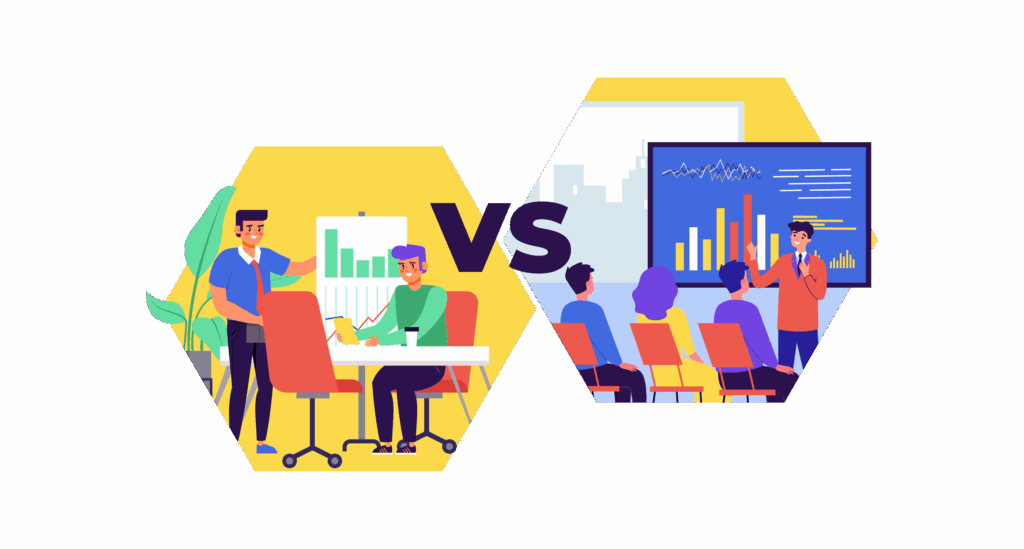
The Core Debate: In-House vs Agency
The in-house vs agency conversation usually starts with a simple goal. Build a stronger digital marketing strategy without wasting budget or losing control.
On one side, you have the in-house marketing team. This is the group sitting inside your organization, fully embedded in company culture, brand familiarity, and internal workflows. An internal marketing team understands the nuances of your business online because they are part of it. They collaborate closely with the marketing department, product teams, web development, sales, and leadership. They can move quickly, align marketing initiatives with business strategy, and maintain complete control over messaging, data, and priorities.
For established businesses, this model makes a lot of sense. In-house marketing involves consistency, long-term thinking, and deep ownership. A strong in-house team can manage content marketing, search engine optimization, social media management, email marketing, and even paid advertising under one roof. There is no onboarding curve. No context switching. No external agency needing to learn the brand from scratch.
On the other side are marketing agencies and the broader agency marketing model. An external marketing agency, or online marketing agency, brings experience working with multiple clients across different industries, platforms, and marketing trends. Agency teams are exposed to a broad range of marketing strategies, campaign types, and performance patterns. They test ideas at scale. They see what breaks, what works, and what changes across search engines, social media marketing, and digital marketing channels long before a single internal team ever could.
This is where the classic agency vs in-house framing begins to wobble.
Because the question is not really “which is better?”
It is “what does each model realistically cover?”
Internal teams excel at brand consistency, speed of internal communication, and alignment with company data and goals. Agencies excel at breadth, specialist expertise, tooling, and pattern recognition across diverse clients and competitive landscapes. Internal teams focus on one business. Agencies juggle multiple clients, which is often framed as a downside, but that exposure is also where innovative ideas and industry best practices tend to emerge.
The mistake most businesses make is treating this as a binary decision.
Modern digital marketing is too fragmented for that. Between SEO strategy, social media campaigns, paid advertising, inbound marketing, external link building, analytics, and now AI-driven search environments, no single team realistically covers it all without support.
The strongest brands are no longer choosing between in-house marketing and agency work.
They are designing systems that bring internal teams and external partners together, each doing what they do best.
Common Arguments for Building In-House SEO Teams
When companies lean toward in-house marketing, it is rarely an impulsive decision. In most cases, it comes from very real operational and financial logic.
The first argument is control. An in-house team sits inside the business, works the same hours, attends the same meetings, and has full visibility into priorities, product roadmaps, and internal constraints. For leadership teams, this feels safer. There is complete oversight of marketing efforts, messaging, and company data. Nothing is filtered through an external agency. Nothing is delayed by contracts or queues. If something needs changing, it happens now.
Then there’s brand familiarity. An in-house marketing team is part of the company culture. They understand the tone, the politics, the risk tolerance, and the nuances that never make it into a brief. This is especially valuable for established brands where consistency matters more than experimentation. In-house marketing involves long-term brand building, not short campaign wins. Over time, that depth of understanding can lead to more authentic content marketing, stronger messaging, and tighter alignment with the target audience.
Cost is another major driver. On the surface, agency marketing looks expensive. Retainers, project management costs, and add-ons can add up over time. By contrast, hiring internally feels like a one-time investment. The average salary for a marketing professional may sit around $52,000, but once you add benefits, training, tools, and overhead, that number often climbs above $70,000 per year. For a small-to-medium house marketing team, annual costs can easily exceed $200,000. Still, for companies with ongoing marketing needs, that fixed cost can feel more predictable and more justifiable than variable agency fees.
Speed of collaboration also matters. Internal teams benefit from proximity. An internal marketing team can collaborate closely with web development, product, sales, and leadership without formal handovers. Decisions happen faster. Feedback loops are shorter. Marketing managers do not need to translate context for external partners. This can significantly accelerate workflows, especially for time-sensitive marketing campaigns or reactive business changes.
There is also a strategic argument. Many businesses prefer digital marketing in-house because it aligns with long-term stability. In-house management allows for complete control over brand voice, SEO strategy, and marketing processes. For organizations focused on consistency rather than rapid experimentation, this approach makes sense. It reduces reliance on external partners and builds institutional knowledge over time.
All of these arguments are valid.
But they also assume something important.
They assume the problem space is stable.
In reality, modern digital marketing, especially search engine optimization, is anything but stable. And that is where the in-house model, on its own, begins to feel the strain.
Where In-House SEO Teams Fall Short
None of this means that in-house SEO teams are doing a bad job. Most of the time, they are doing exactly what they were hired to do.
The problem is not talent or effort. It is scope, exposure, and scale.
As search becomes more fragmented and technical, even strong internal teams hit very predictable limits.
Limited Exposure to Broader SEO Trends
Working in-house creates focus. But it also creates an echo chamber.
An in-house team works inside one business, one market, one set of competitors, and one internal worldview. Over time, this can quietly lead to tunnel vision. SEO trends are interpreted through a single lens. Experiments are limited by risk tolerance. What feels like best practice internally may already be outdated elsewhere.
Marketing agencies live in a very different reality. They see algorithm shifts across multiple clients. They spot patterns early because they are watching dozens of sites respond to the same changes simultaneously. Internal teams, especially internal marketing teams focused on day-to-day delivery, simply do not get that level of comparative insight.
This matters more now than ever. Between core updates, SERP feature expansion, AI answers, and social search behavior, industry best practices are changing faster than internal documentation can keep up.
Resource Bottlenecks and Burnout
In-house marketing teams are finite. Time, headcount, and energy are always capped.
Even a well-staffed marketing department eventually runs into bandwidth issues. Technical SEO tasks compete with content marketing. SEO strategy competes with reporting. New initiatives compete with legacy maintenance. Add social media management, paid advertising, email marketing, and web development dependencies, and suddenly the team is juggling far more than just SEO alone.
Hiring helps, but it is slow. Finding the right talent, onboarding them, and getting them productive takes months. Meanwhile, marketing needs do not pause. Growth targets do not soften. Search engines do not wait.
Agencies can scale marketing efforts up or down quickly. In-house teams usually cannot. That gap becomes especially painful during periods of business growth, seasonal demand, or platform disruption.
Gaps in Technical and Strategic Depth
Most internal teams are generalists by necessity.
They are excellent at running core marketing processes. They understand the business deeply. But they often lack specialist experience in niche areas like large-scale migrations, advanced technical SEO, external link building at scale, AI search visibility, or complex analytics pipelines.
Agencies build those skills because they have to. Working across multiple clients forces specialization. One agency team may include technical SEO specialists, content strategists, digital PR experts, analytics leads, and automation engineers. Those roles are hard to justify inside a single company unless SEO is the entire business.
As Search Everywhere Optimization™ expands across traditional search, AI platforms, and social discovery, these gaps become more visible. Internal teams are not failing. They are simply being asked to cover too much ground with too few tools.
And that is exactly why the conversation is shifting toward something else entirely.
The Rise of the Hybrid SEO Model
As SEO has become more complex, something interesting has happened.
Companies have quietly stopped choosing sides.
Instead of debating agency vs in-house, more businesses are building hybrid models that combine internal ownership with external expertise. Not because it sounds good on a slide deck, but because it works in practice.
The hybrid SEO model acknowledges a simple truth. In-house teams and agencies are good at different things. When those strengths are combined intentionally, performance improves and pressure drops.
What It Looks Like in Practice
In a hybrid setup, the in-house marketing team remains the strategic anchor. They own the brand voice, priorities, internal alignment, and business context. They decide what matters, what can wait, and how SEO supports broader marketing strategies and business growth.
The agency becomes an extension of that team, not a replacement for it.
External partners handle areas that are hard to scale internally. Technical SEO audits. Complex migrations. External link building. AI search visibility. Large-scale content execution. Advanced reporting and experimentation. This allows internal teams to stay focused on strategy, stakeholder alignment, and execution quality without drowning in operational overload.
Communication tends to be tighter, not looser. Clear project management workflows replace long briefing cycles. Internal teams provide direction. Agencies execute with speed and specialist depth. The result is fewer bottlenecks and more momentum.
Why This Approach Wins
Hybrid models solve the biggest weaknesses on both sides.
In-house teams avoid burnout and tunnel vision. They gain access to broader expertise, advanced marketing tools, and up-to-date industry insight without hiring for every niche skill. Agencies, in turn, work with clearer direction, stronger brand familiarity, and faster decision-making.
From a cost perspective, this model is also more flexible. Agencies can scale quickly when needed and step back when workloads stabilize. Businesses avoid locking themselves into permanent headcount for short-term needs, while still investing in internal capability for long-term stability.
Most importantly, hybrid models are built for how search works now.
Search engine optimization is no longer a single channel. It intersects with social media marketing, digital PR, content marketing, paid advertising, and AI-driven discovery. No single team can realistically master everything on its own. But together, internal teams and external agencies can.
And that is exactly why this approach is becoming the default for serious brands navigating modern search.
Why Search Everywhere Optimization™ Demands Outside Help
This is where the in-house vs agency debate really starts to break down.
Because the biggest shift in the last few years is not tactical.
It is structural.
Search is no longer one place.
Your audience is discovering brands through Google search results, AI answers, social platforms, video feeds, marketplaces, and recommendation engines all at once. Visibility is fragmented across search engines, AI platforms, social media, and brand-driven discovery. What ranks, what surfaces, and what influences decisions change depending on where and how the search happens.
This is the reality of Search Everywhere Optimization™.
And it fundamentally changes what “SEO” actually requires.
For internal marketing teams, this creates a tough situation. They are no longer just optimizing web pages. They are expected to understand AI search behavior, entity recognition, social search signals, content distribution, digital PR, and the technical infrastructure that feeds multiple discovery environments. That is a massive expansion of scope.
Agencies, by design, are better positioned to absorb this complexity. They test across multiple clients, platforms, and use cases simultaneously. They invest in specialized tools, data pipelines, and experimentation because they can amortize those costs across accounts. They spot patterns in AI search visibility, social discovery shifts, and SERP changes long before they are obvious from a single site’s data.
This is not about internal teams being behind.
It is about the surface area expanding faster than any one team can realistically cover.
Search Everywhere Optimization™ also demands faster iteration. AI answers change. Social algorithms shift. SERP layouts evolve. What worked six months ago may quietly stop working next quarter. Agencies are built to monitor these changes continuously because their survival depends on it. Internal teams are often pulled in too many directions to do the same level of external monitoring and testing.
That is why even the strongest in-house SEO teams are pairing with outside specialists. Not to give up control, but to extend capability. To reduce blind spots. To move faster without burning out internal teams.
If your internal team is strong but stretched, or if you are feeling the pressure of search fragmenting across platforms, this is exactly where external support makes the biggest difference.
If you want to see how Search Everywhere Optimization™ works in practice, explore our Search Everywhere Optimization™ services and learn how we support in-house teams without replacing them.
Pros and Cons of In-House vs Agency SEO
By the time most businesses reach this decision point, they are not choosing blindly. They already feel the trade-offs in their day-to-day marketing efforts.
The Strengths of In-House Marketing Teams
An in-house marketing team offers something agencies simply cannot replicate: proximity.
Internal teams are immersed in company culture, products, customers, and internal data. They work closely with the marketing department, sales, product, and web development teams. This proximity enables faster feedback loops, tighter collaboration, and real-time adjustments to marketing campaigns. For brand managers and marketing managers, this level of control is invaluable.
In-house marketing also supports long-term brand building. When marketing needs are consistent, investing in a house marketing team can become more cost-effective over time. Internal teams build deep brand familiarity, maintain full control over messaging, and align SEO strategy directly with business strategy and growth goals.
There’s also a trust factor. Internal teams maintain absolute oversight of sensitive first-party data, internal processes, and proprietary insights. For established businesses focused on stability, consistency, and governance, this makes digital marketing in-house feel like the safer option.
The Limitations of In-House Teams
The downside is rarely performance. It is capacity.
Even strong internal teams face resource constraints. Headcount is finite. Budgets are fixed. Hiring takes time. Specialized skills are hard to justify for edge-case needs such as external link building, large-scale technical SEO, or advanced automation.
In-house teams also tend to experience innovation drag over time. Working in one business, one market, and one competitive set can quietly narrow perspective. Marketing trends evolve quickly, especially in social media marketing, paid advertising, and search engine optimization. Internal teams often struggle to stay ahead of changes that are only visible when you work across multiple clients and industries.
Scaling is another pressure point. Agencies can quickly scale marketing efforts up or down as business needs change. In-house teams cannot do that without hiring, training, and restructuring. During periods of rapid business growth or seasonal demand, this becomes a real bottleneck.
The Strengths of Agency Marketing
A good external marketing agency brings range.
Marketing agencies work across diverse clients, platforms, and marketing strategies. That exposure creates broad expertise, faster pattern recognition, and earlier insight into algorithm shifts, marketing trends, and platform changes. Agency teams often have access to advanced marketing tools, software, and data sources that are cost-prohibitive for a single in-house marketing department.
Agencies are also built for flexibility. They can scale quickly, support short-term initiatives, and execute complex projects without long-term hiring commitments. For startups, SMEs, and fast-growing companies, this makes agency marketing an efficient way to move quickly without a high overhead.
The Limitations of Agencies
Agencies are not perfect either.
They juggle multiple clients. That can introduce communication friction, slower ramp-up, and less brand immersion. Even the best agency work requires structured collaboration to avoid misalignment with company culture, priorities, or tone.
Long-term retainers can also add up. While agency costs are predictable, they can feel expensive over time if expectations are not clearly defined. And agencies, by nature, require some level of relinquished control over day-to-day execution.
Which is exactly why the smartest businesses are no longer choosing one model over the other.
5 Signs Your In-House Team Needs an Agency Partner
Needing an agency partner is not a failure of your in-house marketing team. In most cases, it is actually a sign that the business has grown faster than the marketing structure supporting it.
Here are the most common signals we see.
1. Your In-House Team Is Constantly at Capacity
If your internal marketing team is always busy but never quite ahead, that is a red flag.
When SEO, content marketing, social media marketing, paid advertising, web development requests, reporting, and stakeholder updates are all competing for the same limited bandwidth, strategy starts to suffer. SEO work becomes reactive. Technical debt piles up. Experiments get postponed indefinitely.
Agencies exist to absorb pressure. An external agency can take execution-heavy or specialist work off your team’s plate, allowing your in-house team to focus on direction, prioritization, and quality instead of firefighting.
2. You’re Avoiding Certain SEO Problems Because They Feel “Too Big”
Every in-house team has a mental list of things they know should be done, but keep pushing back.
Large-scale technical SEO issues. External link building. Complex migrations. AI search visibility. International SEO. Automation. Advanced analytics. These are not skill gaps so much as exposure gaps.
Marketing agencies work on these problems across multiple clients. They have seen the risks before. They know where things break. Internal teams often avoid these initiatives because the margin for error feels too high when you only get one shot.
That is exactly when outside expertise is most valuable.
3. Your SEO Strategy Feels Stuck in One Channel
If SEO still means “Google rankings and blog posts” inside your organization, you are already behind the curve.
Search now spans traditional search engines, AI answers, social platforms, and brand-led discovery. Search Everywhere Optimization™ requires coordination across content, PR, social media management, and technical infrastructure.
Especially internal marketing teams often struggle here, not because they lack ability, but because their scope was never designed for this level of fragmentation. Agencies bring cross-channel visibility and can connect dots your internal team does not have time to track.
4. You Rely Heavily on Tools but Struggle to Turn Data Into Action
Many in-house marketing departments have excellent tools. Dashboards are full. Reports look impressive.
But if insights are not translating into execution, tools are not the problem. Interpretation is.
Agencies live inside data all day, across multiple clients and industries. That context helps them spot patterns faster and distinguish noise from signal. External partners can help internal teams make sense of data, prioritize actions, and move faster without second-guessing every decision.
5. Growth or Change Is Outpacing Your Team Structure
Business growth changes everything.
New markets. New products. Seasonal spikes. Mergers. Platform shifts. Suddenly, what worked six months ago no longer scales. In-house teams are not designed to grow or shrink overnight. Hiring takes time. Training takes longer.
Agencies can scale marketing efforts up or down quickly. That flexibility is critical during periods of transition. It allows businesses to adapt without committing to permanent headcount or burning out a dedicated team.
If more than one of these signs feels familiar, it does not mean your internal team is failing. It usually means they have outgrown a solo model.
And that is exactly where the right agency partnership makes the biggest impact.
Final Thoughts: You Don’t Have to Choose
The real answer to the agency vs in-house debate is not a side.
It is a system.
In-house teams provide ownership, brand familiarity, speed of internal decision-making, and strategic alignment. Agencies provide scale, specialization, external perspective, and the ability to move quickly across fragmented digital landscapes.
Search has outgrown single-team ownership. Between SEO strategy, social media management, paid advertising, content marketing, external link building, and now Search Everywhere Optimization™, the surface area is simply too large.
That is why hybrid models are becoming the default.
Internal teams keep control. External partners extend capability. Together, they create marketing processes that scale, adapt, and perform without burning people out or locking businesses into rigid structures.
If you are having trouble deciding between building in-house and partnering with an agency, the answer is usually not either-or. It is how.
If you want help designing a hybrid SEO and Search Everywhere Optimization™ model that supports your internal teams instead of replacing them, book a free discovery call. We’ll help you map the right balance for your marketing needs, growth stage, and business strategy.

















Leave a Reply