
Summarize This Article With AI
 Try with ChatGPT
 Try with Claude
 Try with AI Mode
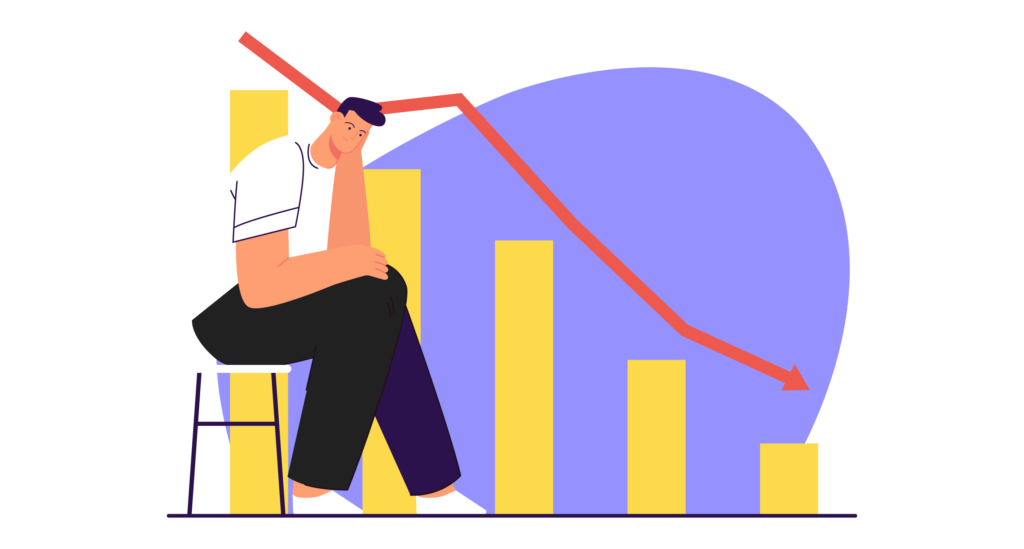
Few things in SEO ruin a perfectly good morning faster than opening your dashboard and seeing your rankings have dropped.
Yesterday, your page was sitting comfortably in position three, enjoying its little slice of Google’s prime real estate. Today, it’s sliding down the search results like it tripped on a loose shoelace.
And naturally, your brain goes straight to the worst-case scenario.
Was it a Google update?
Did a competitor overtake you?
Did something break on the site?
Did Google suddenly decide it hates your content, your backlink profile, and possibly your personality?
The truth is, a Google ranking drop can happen for many reasons. Some are minor and temporary. Others point to deeper issues with technical SEO, content quality, search intent, or site authority.
The important thing is not to panic.
While ranking fluctuations are normal, a meaningful drop in keyword rankings, organic traffic, or average position usually signals that something has changed. Your job is to figure out what changed, how serious it is, and what to do next.
In this guide, we’ll break down the most common causes of ranking losses, how to diagnose them properly, and what recovery strategies actually make sense when your rankings suddenly drop.
Article Summary
- A rankings drop can mean a fall in keyword positions, a loss of organic traffic, or both.
- Common causes include Google algorithm updates, technical SEO issues, content quality problems, backlink losses, indexing errors, and shifts in search intent.
- The first step is diagnosis, not guesswork. Use Google Search Console, Google Analytics, rank tracking tools, and visibility data to understand what dropped and where.
- Not every drop is a penalty. Sometimes competitors improve, SERP layouts change, or featured snippets steal clicks, without much change to your raw rankings.
- Recovery usually involves fixing technical errors, improving underperforming content, rebuilding authority, and aligning pages with what Google now expects.
- The best long-term defense is ongoing monitoring, high-quality content, strong E-E-A-T signals, and diversified traffic beyond Google.
What Is a Rankings Drop in SEO?
A rankings drop occurs when a page or website loses position in Google search results, which often leads to a decline in organic traffic.
Sometimes this means a keyword falls from position three to position eight. Other times, it means your rankings suddenly dropped dramatically across dozens of keywords overnight.
Both scenarios count — but they’re not equally serious.
Here’s the thing about SEO rankings: they move. Constantly.
Search engines adjust results based on new content, algorithm changes, user behavior signals, and competitor improvements. A position change of one or two spots for a particular keyword is often just a normal ranking fluctuation.
But when multiple pages lose visibility, your average position drops significantly, or your search traffic falls sharply, that’s when it’s time to dig deeper.
Because rankings rarely drop for no reason.
Something changed.
Your job is to figure out what.

Position Drops vs Traffic Loss
One of the biggest mistakes site owners make is assuming that a drop in traffic automatically means a drop in rankings.
Sometimes that’s true. Often it isn’t.
You might see website traffic decline even if your rankings stayed relatively stable.
Why?
Because the search results themselves changed.
Google constantly adjusts SERP features like:
- Featured snippets
- People Also Ask boxes
- Video carousels
- Shopping results
- Local packs
If a SERP suddenly adds new features, the traditional organic results get pushed further down the page.
Your ranking may remain the same, but your click-through rate may drop because your listing is less visible.
This is why diagnosing a drop in rankings requires examining both keyword ranking data and traffic trends.
The Importance of Monitoring Keyword Movements
The sooner you detect ranking changes, the easier they are to diagnose.
The most serious SEO teams monitor keyword rankings regularly using rank-tracking tools that record historical position data.
These tools make it easier to answer critical questions like:
- Which keywords lost rankings?
- Did the drop affect one page or multiple pages?
- Did it happen gradually or suddenly?
- Did competitors gain the positions you lost?
Without historical ranking data, diagnosing ranking drops becomes much harder.
Instead of analyzing what changed, you’re left guessing.
And in SEO, guessing is rarely a winning strategy.
Common Causes of Google Rankings Drops
If SEO had a horror movie genre, rankings drops would be the jump scare.
One moment, everything looks healthy; the next moment, your keyword rankings have slipped, and traffic graphs look like they just fell off a cliff.
But here’s the reassuring part: ranking drops usually have logical explanations.
In most cases, something changed in one of the following areas.
Algorithm Updates
Google releases algorithm updates constantly.
Some are small adjustments. Others are large core updates that significantly change how search results are ranked.
When Google updates its algorithms, the factors that influence rankings can shift. Pages that previously performed well may lose visibility if they no longer align with Google’s updated quality signals.
Core updates often evaluate things like:
- Content quality
- E-E-A-T signals
- Page experience
- Search intent alignment
- Link quality
If rankings drop across your entire site shortly after a known Google algorithm update, the update may be the cause.
Technical SEO Issues
Sometimes rankings drop because something on the website itself breaks.
Technical SEO issues can prevent search engines from crawling, indexing, or properly evaluating your pages.
Common technical causes include:
- Slow site speed or slow loading times
- Broken internal links
- Indexing errors
- Incorrect canonical tags
- Robots.txt blocks
- Core Web Vitals problems
- Server errors
Even small technical issues can affect how search engines crawl and interpret your site.
Which is why technical SEO audits are often one of the first steps in diagnosing ranking drops.

Content Quality Problems
Content that once ranked well can lose visibility if it no longer meets Google’s expectations.
Search engines continuously evaluate content quality signals such as:
- Relevance to search intent
- Depth of information
- User engagement
- Accuracy and freshness
- Demonstrated expertise
If competitors publish stronger content targeting the same keywords, your pages may gradually lose rankings.
Content decay is a very real phenomenon in SEO.
Pages that perform well today may need updates in six months or a year to maintain visibility.

Backlink Profile Changes
Backlinks remain one of the strongest ranking signals in search.
If your site loses links, especially high-quality backlinks, your authority may decline.
This can happen when:
- Linking pages are removed
- Websites shut down
- Links are updated or replaced
- Competitors earn stronger backlinks
On the other hand, acquiring a large number of low-quality links can also trigger ranking issues if Google interprets them as spam signals.
Monitoring changes in your link profile is an important part of diagnosing ranking drops.
Competitor Improvements
Sometimes the issue isn’t your site.
It’s someone else’s.
SEO is competitive by nature. If competitors improve their content, earn stronger backlinks, or invest more heavily in on-page optimization, they may outrank you for the same keywords.
This is especially common for competitive search queries where multiple websites are constantly optimizing their content.
When rankings drop gradually rather than suddenly, competitor improvements are often part of the explanation.
Manual Actions and Penalties
In rare cases, ranking drops occur due to manual actions by Google.
Manual penalties happen when a human reviewer determines that a site violates Google’s guidelines.
Examples include:
- Unnatural link schemes
- Spammy content
- Cloaking
- Manipulative SEO tactics
If your site receives a manual penalty, Google Search Console will notify you.
These situations require corrective action and a reconsideration request before rankings can recover.
Indexing or Crawling Errors
If Google cannot properly crawl or index your pages, rankings will eventually drop.
Common causes include:
- Pages accidentally set to noindex
- Blocked resources in robots.txt
- Incorrect canonical tags
- Redirect errors
- Broken pages
These technical issues often appear in Google Search Console indexing reports and should be addressed quickly.
Changes in Search Intent or SERP Layout
Sometimes rankings drop because Google’s interpretation of search intent changes.
For example, a keyword that once returned informational blog posts may begin showing product pages or videos instead.
When that happens, your page may lose relevance for the query even if the content hasn’t changed.
Similarly, new SERP features—like featured snippets or video results—can alter how users interact with search results.
This can lead to traffic drops without significant changes in rankings.
How to Diagnose a Rankings Drop
The worst way to respond to a ranking drop is to start making random changes.
SEO recovery begins with diagnosis.
Before fixing anything, you need to understand:
- What dropped
- When it dropped
- Where the drop occurred
- Why it likely happened
That requires data.
Start With Google Search Console
Google Search Console is usually the first place to look when investigating a ranking drop.
The Performance report shows:
- Changes in average position
- Changes in click-through rate
- Changes in search traffic
- Which queries and pages lost visibility
Filtering this data by page or keyword helps identify exactly where the drop occurred.
If only a few pages were affected, the issue is likely localized. If the entire site lost visibility, the cause may be broader.
Check Traffic in Google Analytics
Next, review your Google Analytics (GA4) data.
Look for changes in:
- Organic traffic trends
- Device segments
- Landing pages
- Geographic traffic sources
Segmenting traffic helps determine whether the ranking drop affected specific pages, keywords, or user segments.
For example:
- A drop in mobile devices only may indicate mobile usability issues.
- A drop affecting only certain pages may indicate content or indexing issues.
Review Keyword Rankings and Visibility Trends
Rank tracking tools like Ahrefs, Semrush, or other SEO tools provide historical ranking data that helps identify when keyword positions changed.
Look for patterns:
- Did rankings drop suddenly or gradually?
- Did multiple keywords decline together?
- Did competitors gain the rankings you lost?
Visibility graphs can reveal whether the issue affects the entire site or just specific pages.
Analyze Technical Data
If rankings dropped suddenly across many pages, it’s often worth reviewing technical signals such as:
- Server logs
- Crawl errors
- Indexing issues
- Page speed performance
Server logs can show whether search engine bots experienced problems crawling your site.
Technical errors often create site-wide ranking impacts, so they should always be investigated early in the diagnosis process.

Google Algorithm Updates and Ranking Loss
If SEO had weather forecasts, Google algorithm updates would be the sudden thunderstorms.
You wake up, check your ranking data, and suddenly your keyword rankings look like they just went through turbulence.
Algorithm updates are one of the most common causes of ranking drops, and they can affect anything from a single page to an entire site.
Google releases updates constantly, but the most impactful ones tend to fall into two categories: core updates and spam updates.
Core Updates
Core updates are large adjustments to Google’s ranking systems.
They don’t target specific websites or industries. Instead, they adjust how Google evaluates content quality, authority, and relevance across the entire web.
When a core update rolls out, Google essentially re-evaluates which pages deserve the prime real estate in search results.
This often affects signals such as:
- Content quality and depth
- Search intent alignment
- E-E-A-T signals (experience, expertise, authority, trust)
- Backlink profile quality
- User engagement signals
If your rankings drop after a core update, it doesn’t necessarily mean your content is bad.
It may simply mean that Google now believes other pages better satisfy the search intent.
Spam Updates
Spam updates focus on identifying and reducing manipulative SEO practices.
These updates typically target signals like:
- Low-quality backlinks
- Artificial link schemes
- Automatically generated content
- Thin or spammy pages
If rankings drop dramatically after a spam update, it may indicate that Google has devalued certain links or content signals your site previously relied on.
In those cases, recovery often involves cleaning up the link profile and improving content quality.
How to Know If an Algorithm Update Affected You
Diagnosing an algorithm-related ranking drop usually involves comparing timelines.
Ask yourself:
- Did rankings drop on the same day as a confirmed Google update?
- Did the drop affect multiple pages across the site?
- Did competitors gain visibility at the same time?
SEO tools that track search volatility often show spikes during algorithm updates.
If your rankings dropped during one of those spikes, it’s a strong signal that the update played a role.
Side Note: Google rarely announces exactly what changed in an update. Which means that recovering from algorithm updates often involves improving overall site quality rather than fixing a single issue.
Recovery Strategies and Fixes
Once you understand why rankings dropped, the next step is developing a recovery plan.
And this is where many site owners make a critical mistake.
They start changing everything at once.
New titles. New content. New links. New internal linking structure.
Suddenly, the site looks like someone tried to fix a watch using a hammer.
Instead, recovery should be methodical and strategic.
Fix the most likely issues first, monitor the results, and adjust accordingly.
Audit and Fix Technical SEO Issues
Technical problems are often the fastest issues to resolve.
Start by checking for:
- Broken pages
- Redirect chains
- Indexing errors
- Core Web Vitals problems
- Slow loading times
- Structured data issues
Technical errors can prevent search engines from properly crawling or interpreting your pages.
Once those issues are fixed, search engines can re-evaluate the site more accurately.
Improve or Remove Underperforming Content
Content decay is one of the most common reasons pages lose rankings.
Over time, search engines may determine that other pages provide more relevant or higher-quality information for a query.
Updating content can help restore rankings.
This might include:
- Expanding outdated sections
- Improving clarity and structure
- Updating statistics or examples
- Better aligning with search intent
In some cases, removing or consolidating thin pages can also strengthen the overall quality of the site.
Rebuild Lost Links or Disavow Spam
If your backlink profile has weakened, rebuilding authority can help restore rankings.
This may involve:
- Recovering lost backlinks
- Building new high-quality backlinks
- Cleaning up low-quality or spammy links
Links remain one of the strongest signals search engines use to evaluate a site’s authority.
Improving link quality often improves ranking potential.
Re-Align Pages With Search Intent
Sometimes rankings drop because the search results themselves have changed.
Google continuously refines how it interprets user intent.
For example, a keyword that once returned informational blog posts may now favor product pages or comparison guides.
When that happens, your page may no longer match what Google thinks users want.
Updating content to better match current search intent can often restore visibility.
Submit for Reindexing and Monitor
After making improvements, you can request reindexing through Google Search Console.
This encourages search engines to revisit updated pages sooner.
However, recovery rarely happens overnight.
Search engines need time to re-crawl pages, re-evaluate signals, and update rankings.
Monitoring performance over several weeks is often necessary before results become clear.
Pro Tip: The biggest mistake during ranking recovery is overreacting. If you change too many variables at once, it becomes impossible to determine what actually fixed the problem.
How to Future-Proof Against Ranking Drops
The best defense against ranking drops isn’t reacting quickly.
It’s building an SEO strategy resilient enough to weather them.
Because ranking fluctuations will always happen.
Google evolves. Competitors improve. Search behavior changes.
What matters is whether your site is built to adapt.

Monitor Performance Regularly
Regular monitoring allows you to catch ranking changes early.
This usually involves tracking:
- Keyword rankings
- Organic traffic trends
- Visibility scores
- Technical SEO health
The sooner issues are detected, the easier they are to fix.
Maintain Strong Content Quality
Google consistently rewards sites that demonstrate strong E-E-A-T signals.
That means publishing content that reflects:
- Real expertise
- Clear authority
- Trustworthy information
- Strong user value
Content should be written with both users and search engines in mind.
Pages that genuinely help users tend to perform better over the long term.
Strengthen Your Site Authority
Authority remains a major ranking factor.
Sites with strong authority signals — such as high-quality backlinks, strong brand recognition, and consistent content publishing — tend to recover from ranking fluctuations more easily.
Investing in authority building helps protect long-term SEO performance.
Diversify Traffic Sources
Perhaps the most important lesson many businesses learn after a rankings drop is this:
Never rely entirely on one traffic source.
Search traffic is powerful, but it shouldn’t be the only way users find your business.
Strong digital strategies also include:
- Email marketing
- Social media traffic
- Direct brand searches
- Referral traffic
Diversifying traffic sources makes businesses far more resilient to algorithm changes.

Don’t Panic, Act Strategically
Ranking drops feel dramatic in the moment.
But they’re also a normal part of SEO.
Search engines constantly refine how they evaluate websites. Competitors improve their content. New pages enter the search results.
The important thing is not the drop itself.
It’s how you respond.
Carefully diagnosing the issue, understanding what changed, and implementing the right recovery strategy often restore lost rankings over time.
In many cases, ranking drops even become opportunities—forcing websites to improve their content, strengthen their authority, and build more resilient SEO strategies.
Because SEO success isn’t about never losing rankings.
It’s about building a site strong enough to earn them back.
Need Help Recovering From a Rankings Drop?
Diagnosing a Google ranking drop requires careful analysis of ranking data, technical SEO signals, and changes in search behavior.
At SEO Sherpa, our team specializes in identifying the root causes of ranking losses and developing recovery strategies to restore visibility and organic traffic.
If your rankings have suddenly dropped or your organic traffic has declined, we can help.
Book a free discovery call, and our SEO specialists will review your site, analyze the drop, and outline the best path to recovery.



















Leave a Reply