


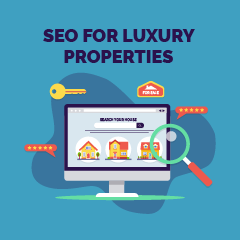
Selling luxury real estate is not the same as selling standard properties. You are not competing for casual browsers. You are competing for high-net-worth individuals who expect perfection, privacy, credibility, and a flawless digital experience from the very first click.
And in 2026, when affluent buyers begin their property search online long before ever speaking to an agent, your SEO strategy can be the difference between attracting qualified leads or disappearing behind agents with stronger digital visibility.
Luxury real estate SEO is not just about ranking higher on search engines. It’s about positioning yourself as the obvious choice in a competitive market where trust, exclusivity, and first impressions determine everything.
The goal is not more traffic, but the right traffic. That means potential buyers who are serious, financially qualified, and actively looking for luxury homes in premium locations.
If you want to dominate the luxury market, your SEO strategy must go far beyond basic real estate SEO. It needs to match the sophistication of your listings and the expectations of your target audience.
Article Summary
If you want the fast version before we dive in, here is what you will learn:
- Why luxury real estate SEO is essential for standing out in an increasingly competitive digital landscape
- How SEO for luxury properties differs from traditional real estate SEO, especially regarding buyer behavior and keyword targeting
- What on-page SEO, local SEO, and listing optimization look like for high-end markets
- How to build a content strategy that attracts high-net-worth individuals and speaks to their lifestyle, not just their search queries
- Why technical SEO, site speed, IDX optimization, and mobile UX matter more than ever for luxury real estate websites
- How link building and luxury PR elevate your authority and improve search engine rankings in competitive markets
- What to measure when evaluating SEO performance for high-ticket listings, including qualified leads and search engine visibility
- How to position your real estate business as the go-to agent for luxury properties using a long-term SEO strategy
Why SEO Is Critical in the Luxury Real Estate Market
If there is one industry where first impressions matter more than anywhere else, it’s luxury real estate. You are not selling starter homes. You are selling uniqueness, privacy, lifestyle, and status. And the buyers searching for these properties do not browse casually. They arrive with intent, expectations, and extremely refined search behavior. That is exactly why luxury real estate SEO has become one of the most powerful differentiators for premium agents and brokers.
The competition online has exploded. Luxury buyers are no longer strolling into a local office or waiting for a glossy brochure. They are starting their property search on search engines, often from across the country or even across the world.
If your real estate website is not ranking in search engine results for high-intent phrases like “luxury homes in Scottsdale” or “oceanfront estates in Miami,” then you are invisible at the very moment serious buyers are ready to take action.
And visibility alone is not enough.
Luxury real estate refers to a category where trust and exclusivity determine everything. When a high-net-worth individual lands on your site, they evaluate you in seconds.
Is this a brand they can trust? Is the presentation at the level they expect? Do the listings feel curated or generic?
This is the psychological layer of luxury real estate marketing, and SEO plays a huge role in controlling these first touchpoints.
The luxury market also behaves differently from traditional real estate. The audience is smaller, more discerning, and more demanding. They notice details the average buyer ignores. Your SEO strategy must reflect that. Basic keyword stuffing, generic real estate listings, and outdated real estate SEO strategies will not get you in front of the right audience.
To attract affluent buyers, you need an SEO strategy that blends search visibility with brand positioning, digital trust signals, and a seamless luxury-level user experience.
Luxury real estate SEO is also something most agents underestimate until they see the numbers. When your property listings rank higher in search results, you are not just increasing traffic. You are increasing qualified leads.
More inquiries. More viewing requests. More international interest. More repeat visibility.
In a competitive market where every seller wants the agent who can “get in front of more buyers,” this becomes a major selling point and a significant advantage in listing appointments.
And let’s be honest.
Luxury agents are no longer just competing with local peers. You are competing with national brands, global real estate professionals, attractively packaged boutique firms, and third-party platforms that have poured millions into dominating organic traffic for property search queries. The only agents consistently winning at the top are the ones who treat search engine optimization as a core part of their real estate business, not an afterthought.
If your digital presence does not match the caliber of your luxury properties, potential buyers and sellers will notice. And they will move on to someone who gets it.
How Luxury Real Estate SEO Differs from Traditional SEO
Most agents assume luxury real estate SEO is just “regular real estate SEO, but with nicer photos.” It is not. The luxury market operates on completely different rules, different buyer psychology, and a very different digital landscape.
If you try to optimize for luxury properties using traditional SEO tactics, you will struggle to rank, struggle to attract qualified leads, and struggle to earn the trust of high-net-worth individuals who expect a premium digital experience from the very first click.
Luxury SEO is a Search Everywhere discipline.
Buyers are no longer discovering listings in one place.
They are moving across Google Search results, Google Business Profile, AI-powered results, TikTok, Instagram Reels, Pinterest boards, YouTube property tours, local search results, and even voice or AI-driven property search tools.
If your SEO strategy is only built for Google, you are missing half the buyer journey and most of the visual discovery moments that influence early decision-making.
Buyer Behavior: HNWIs and Digital Habits
High-net-worth individuals do not browse the way the average home buyer does.
They are more private, more research-driven, and more selective. They also spend far more time on visual platforms before ever reaching out to an agent.
TikTok and Instagram have become massive search engines for luxury real estate. Pinterest has become a destination for researching neighborhoods, architectural styles, and interior design concepts. YouTube has become the go-to place for lifestyle previews and long-form tours.
This means luxury SEO must incorporate social SEO, in which your social content is strategically optimized with relevant keywords, location tags, hashtags, audio trends, and visual cues to make your listings discoverable across all major social platforms.
When someone searches “modern waterfront penthouse Miami” on TikTok, they should find you. When they save “Beverly Hills mansion kitchen ideas” on Pinterest, your listings should appear in related pins.
Luxury buyers also have higher expectations. They judge professionalism based on photography, page speed, mobile optimization, structured data, and even the tone of your property descriptions. If your UX feels outdated or clunky, they assume the service will be too.
Keyword Targeting for Luxury Listings
Traditional real estate SEO focuses on high-volume terms like “homes for sale in Dallas.” Luxury SEO focuses on low-volume, high-intent long tail keywords that attract fewer people but the right people.
The buyer searching “oceanfront estates in Miami,” “Bel Air gated properties,” or “Dubai luxury penthouses with private pool” is not browsing.
They are evaluating. They know what they want. And they are likely qualified to buy.
These long-tail luxury keywords rarely generate large search volumes, but they produce better search engine rankings, stronger engagement, and significantly more qualified leads. That is why targeting generic real estate SEO keywords will hurt your visibility in luxury markets. Not all keywords are created equal, and in this space, specificity is your superpower.
This is also where Search Everywhere becomes essential. Social SEO, Pinterest keywords, YouTube descriptions, and even AI assistant prompts influence discovery. Luxury buyers often search visually first, then move to Google for the deeper research. If you only optimize for one, you break the buyer journey.
Luxury real estate SEO also requires deeper keyword research than the standard MLS-driven approach. You need to analyze trends using Google Trends, understand international buyer behavior, and track what affluent buyers are actually searching across social platforms. Sometimes the keyword is not “luxury real estate in Miami.” Sometimes it is “best Miami neighborhoods for waterfront living,” “celebrity homes in Los Angeles,” or “Bali eco-luxury villas.”
Luxury SEO does not just target what people search.
It targets how they decide.
On-Page SEO for High-End Real Estate Websites
On-page SEO for luxury real estate is not just about adding keywords to a page and calling it a day. Your real estate website becomes the digital version of a private showing. Every element contributes to the buyer’s perception of professionalism, exclusivity, and value. When a high net worth individual lands on your page, the question they are subconsciously asking is simple: “Does this agent understand luxury?” Your on-page SEO must answer yes before they even scroll.
Luxury buyers expect smooth navigation, immediate clarity, and visual storytelling that makes them feel like they are already inside the property. At this level, your listings are not just listings. They are experiences. And your SEO should enhance that experience, not interrupt it.
Optimizing Listings for Search and Sophistication
Luxury listings need significantly more optimization than standard MLS feeds provide. Search engines need structured data, clear context, and detailed information to understand your property. Buyers need emotional cues, upscale language, and a sense of place. Balancing those two layers is the heart of luxury listing SEO.
Start with schema markup. Use structured data to help search engines understand property features like square footage, amenities, price, floor plans, and room details. When Google can instantly extract your information, your property has a better chance of appearing in enhanced search results, including rich results and premium snippets.
Your luxury-focused copywriting does double duty. It signals relevance to search engines through keyword optimization while delivering narrative sophistication to your target audience.
Generic descriptions like “beautiful home with spacious kitchen” do not speak to buyers searching for “waterfront modern home with chef’s kitchen,” “Beverly Hills estate with panoramic city views,” or “Dubai Marina penthouse with private elevator.” Use real estate SEO keywords, but elevate them through refined storytelling.
Visual storytelling plays an even bigger role. High-resolution photography, branded video tours, drone footage, and architectural detail shots should be embedded with optimized filenames, alt text, and transcripts. Luxury buyers often search visually on mobile devices and social platforms long before typing a query into Google. Optimizing every image and video ensures you show up in discovery experiences across Google Images, YouTube, TikTok, and Instagram.
Local SEO for High-Ticket Areas
Luxury real estate is hyper-local. Buyers do not simply search for “luxury home in Chicago.” They search for prestige-driven micro-locations: specific neighborhoods, gated communities, beaches, districts, zip codes, and even landmark-adjacent pockets that carry status.
Your local SEO strategy must reflect this. Focus on location-specific keywords like “Coconut Grove waterfront homes,” “Tribeca luxury lofts,” or “Palm Jumeirah villas.” These terms have lower monthly search volume, but the intent is exceptionally strong. These buyers already know where they want to live, and your presence in their search engine results makes you part of the decision.
Your Google Business Profile must be fully optimized, especially if you operate in competitive high-ticket markets. High-quality images, reviews from luxury clients, service areas, and neighborhood expertise all help provide search engines with the trust signals needed to rank locally for premium real estate searches.
Rich snippets and map results matter, too. A well-optimized GBP combined with a strong local SEO strategy ensures your brand shows up when affluent buyers research neighborhoods on their phones, especially when they are physically driving through them.
Luxury local SEO also extends to social SEO. When someone searches a neighborhood on TikTok or Instagram, real estate agents with optimized captions, relevant keywords, and location tags dominate the discovery feed. If you want your digital presence to reflect your luxury brand, you must be discoverable everywhere high-end buyers search.
Content Strategy That Attracts High-End Buyers
Luxury buyers do not choose an agent because they saw one good listing. They choose an agent because they believe that agent understands the lifestyle, expectations, financial considerations, and emotional motivators that come with buying high-end real estate. Your content strategy is where that trust is built. And in luxury markets, content does far more than drive organic traffic. It shapes perception.
Luxury real estate SEO is not about volume. It is about relevance, authority, and presence. The right content positions you as the go-to advisor. The wrong content makes you look like every other agent posting generic blogs written for search engines, not buyers. High-net-worth individuals see through that instantly.
Your content needs to speak to lifestyle, prestige, investment value, and insider knowledge. It needs to help buyers imagine their life in the property, not just understand the square footage. And because modern buyers research across multiple platforms, your content must perform everywhere: on your website, on Google, on TikTok, on Instagram, on Pinterest, on YouTube, and even inside AI-driven search experiences.

Blogging for Lifestyle and Intent
Luxury blogs are not the same as standard real estate blogs. An article about “10 tips for buying a home” will never attract someone searching for a $7M penthouse. Luxury buyers want depth. They want insider context. They want to understand what makes a neighborhood desirable, how future developments impact property value, how local tax regulations affect investment returns, and where the luxury market is trending globally.
This is where long tail keywords shine. Instead of chasing high-volume, generic terms, you create content for low-volume, high-intent queries that affluent buyers actually search for. Examples include:
- “Best waterfront neighborhoods in Miami for luxury living”
- “Property tax considerations for high-end buyers in Texas”
- “Top international school districts near luxury communities in Dubai”
- “Investment potential of modern architectural homes in Los Angeles”
These topics do not bring millions of visitors. They bring qualified buyers.
Lifestyle-driven content also builds brand trust. Area spotlights, architectural deep dives, interviews with interior designers, and investment insights all tell luxury buyers one thing: you understand their world. This positions your brand not as a salesperson, but as an expert advisor worth contacting.
Search Everywhere matters here, too. These blogs are not only for Google’s search engine results pages. They fuel Pinterest pins, TikTok educational clips, carousel posts on Instagram, and long-form YouTube videos. When your content ecosystem works together, your authority becomes unavoidable.
Video and Virtual Tour Optimization
Video is no longer optional in luxury real estate. It is expected.
Affluent buyers rely on YouTube for neighborhood previews, Instagram for visual snippets, TikTok for quick lifestyle glimpses, and embedded videos on your website for full tour experiences. This is how they evaluate properties before ever setting foot inside.
But a video without SEO is just content. Video with SEO is a discovery engine.
Start by optimizing YouTube titles, descriptions, and tags using relevant keywords like “luxury properties,” “oceanfront estates,” “modern penthouses,” or location-specific terms. Include transcripts so search engines can fully understand your content. Add structured data to your website to help Google interpret property video embeds.
High-end buyers also care about quality. The pacing, cinematography, voiceover, and visual branding all communicate whether your agency operates at a premium level. If your videos feel outdated or rushed, your listings will be perceived the same way.
And remember, video is your biggest Search Everywhere ammunition. A luxury buyer might discover your property on YouTube, save the kitchen to a Pinterest board, search the neighborhood on Google, and finally find your agent bio on Instagram. That entire journey starts with a strong video presence optimized across all platforms.
When your SEO and video strategy work together, your listings stop blending in and start becoming destinations.
Technical SEO and Site Architecture
When you operate in the luxury market, your real estate website is not just a marketing tool. It’s a digital showroom. It must communicate exclusivity, precision, and trust the same way a luxury property does. That is why technical SEO becomes one of the most influential parts of your entire luxury real estate SEO strategy. A slow, clunky, or poorly structured website can cost you high-net-worth individuals before they ever explore your property listings.
Search engines judge luxury real estate websites the same way buyers do. They evaluate site speed, mobile optimization, structured data, URL structure, image performance, and internal linking to determine whether your content deserves visibility in search engine results pages. And in a competitive market where every click could come from an international or out-of-state buyer, you cannot afford to overlook technical details.
Technical SEO is what provides search engines with the clarity they need to understand your real estate listings, your location-specific keywords, and your unique property features. And it is one of the main reasons luxury real estate SEO differs so dramatically from standard estate SEO.
Mobile-First and Luxury-Level UX
We now live in a world where even affluent buyers browse listings on mobile devices. They might start their property search on their phone while traveling, researching neighborhoods, or responding to a recommendation from a friend or advisor. If your mobile UX is not flawless, your potential buyers bounce instantly. And when they bounce, your SEO performance declines across the board.
This is why mobile optimization is no longer optional. It is a core requirement for ranking higher in luxury markets. Page speed must be instant. Navigation must be intuitive. Visuals must load in high resolution without sacrificing performance. Your meta descriptions, headings, and keyword optimization should adapt perfectly to smaller screens. And every element should reinforce professionalism.
Luxury buyers judge the presentation of your digital experience the same way they judge an interior finish. They expect refinement. They expect smoothness. They expect a site that feels premium, as luxury real estate refers to more than just property value. It reflects an entire lifestyle.
IDX Integration Best Practices
Before we go further, let’s clear up one thing most agents never get a straight answer on.
What is IDX?
IDX stands for Internet Data Exchange. It is the system that pulls property listings from your MLS and displays them on your real estate website. In simple terms, IDX lets buyers browse available homes directly on your site instead of having to leave your site for Zillow, Realtor, or other platforms.
Sounds helpful, right? It is.
But here is the part no one tells you.
Standard IDX feeds are not built with SEO in mind.
They often:
- Generate duplicate content across thousands of real estate websites
- Create slow-loading, template-heavy pages
- Use URLs and page structures that search engines struggle to index
- Provide little flexibility for adding luxury-focused keywords or unique property features
And in luxury markets, that becomes a real problem.
High-net-worth individuals expect a premium digital experience. If your IDX feed creates pages that feel generic, cluttered, or slow, you will lose prospective buyers long before they ever contact you.
Worse, search engines may not index or rank your listings properly, making your organic traffic disappear in competitive areas.
A properly optimized IDX setup allows your site to:
- Load faster
- Serve unique, structured data for each property
- Support rich snippets for property details
- Reinforce your niche SEO strategy for luxury real estate
- Create indexable landing pages for neighborhoods, property types, and zip codes
- Strengthen your internal linking and long tail keyword targeting
This is what separates a high-performing real estate website from one that blends into the crowd. IDX should elevate your luxury real estate SEO, not undermine it.
IDX is where most real estate agents lose their SEO advantage. Standard IDX feeds often create duplicate content, slow load times, and bloated pages that confuse search engines. For luxury real estate SEO, that is a major problem. You cannot expect to rank in search engine results for competitive market keywords if your IDX integration is not optimized.
A strong IDX setup should support structured data, fast rendering, clear property search paths, and unique landing pages for neighborhoods, zip codes, and luxury property categories. It should help generate leads, not just display data. It should enhance the user experience rather than overwhelm it.
Optimized IDX integration allows your real estate website to serve both search engines and prospective buyers. It creates opportunities for internal linking, improves your keyword research strategy, and helps your SEO efforts scale as your luxury market grows. More importantly, it ensures your property listings remain discoverable in search results even as your inventory changes.
And because many luxury buyers search across a global buyer pool, IDX pages must also load flawlessly for international users. Google Analytics can help track these patterns, making it clear where you need to improve site speed, hosting performance, or location-specific content.
Technical SEO is never glamorous, but in luxury real estate marketing, it is the backbone of your digital presence. If your site architecture is pristine, your SEO strategy becomes unstoppable. If it is neglected, even the most beautiful luxury homes fall behind agents with stronger technical foundations.
Link Building and PR for Premium Presence
In the luxury real estate market, your digital reputation is currency. High-net-worth individuals might spend days researching a single neighborhood, but they will spend only seconds deciding whether your brand feels trustworthy, credible, and established. That judgment is shaped long before they land on your website. It starts with what the internet says about you.
This is where link building and digital PR step into the spotlight. And not the outdated version of link building you hear about in SEO forums. We are talking about authority-driven, brand-building, reputation-enhancing signals that influence search engines, social platforms, and even AI-driven search experiences.
Luxury real estate SEO demands more than chasing backlinks. It requires building a premium presence across the entire Search Everywhere ecosystem.
Traditional Link Building for Google Search Results
Classic link building still matters, especially in competitive luxury markets. High-quality external links from authoritative websites tell search engines that your real estate business deserves visibility in search engine results pages. For example, links from reputable real estate directories, local news sites, neighborhood publications, and trusted real estate professionals help your site rank higher for luxury real estate keywords and location-specific keywords.
Because luxury markets have lower search volume but higher intent, these authority signals make Google far more confident in recommending your property listings to potential buyers who are searching for luxury homes or unique property features.
But traditional link building is only half the story.
Digital PR: Luxury Visibility and Editorial Authority
Luxury real estate is built on perception. And digital PR gives you that perception at scale.
Mentions in publications such as Robb Report, Mansion Global, Architectural Digest, Forbes, or high-end lifestyle magazines instantly elevate your brand. These mentions serve as authority signals across all major platforms. They influence your search rankings, your trustworthiness, your click-through rates, and even how strongly your Google Business Profile performs.
Digital PR does more than earn links.
It builds brand equity.
High-net-worth individuals trust agents who appear in publications they already read. These features also show up when prospective buyers Google your name, giving them a powerful first impression before they ever speak to you.

Share of Voice in AI Search: The New Luxury Battleground
Here is where luxury real estate gets interesting.
AI is now part of the property search journey.
Buyers are using AI tools to ask questions like:
- “Who are the top luxury real estate agents in Miami?”
- “What is the best neighborhood for oceanfront estates in Malibu?”
- “Show me luxury properties in Dubai Marina with private pools.”
AI systems rely heavily on brand mentions, digital PR, contextual citations, and external authority signals to decide which agents to surface. Unlike Google’s traditional ranking factors, AI does not just look at links. It looks at share of voice across the web.
If you have a strong editorial presence, high-quality mentions, and a consistent brand footprint across real estate websites, social platforms, digital PR, and luxury publications, AI models are far more likely to recommend your listings and your services.
This is why luxury agents cannot afford to ignore Search Everywhere Optimization. AI does not simply rank pages. It ranks people, brands, and entities. If your brand footprint is weak, your visibility collapses across AI and Google simultaneously.
High-End Directories and Niche Authority Sites
Luxury directories and curated digital platforms provide niche authority, helping you generate leads from a more qualified audience. Sites like Luxury Portfolio, Christie’s International Real Estate, JamesEdition, Sotheby’s Global Listings, and targeted international directories can send highly motivated prospective buyers to your site.
Search engines also treat these mentions as high-value signals because they validate your position within the luxury market. When you are listed among other respected real estate professionals, Google and AI both interpret your brand as a legitimate authority.
Where Search Everywhere Meets Luxury PR
The luxury buyer journey is multidimensional. Someone may see a listing on TikTok, search your name on Google, read a neighborhood article, watch a YouTube tour, and then ask an AI assistant to “find similar penthouses.” Every one of these touchpoints is influenced by link quality, brand mentions, structured data, and digital PR.
Strong link building helps you rank higher.
Strong PR helps you get mentioned everywhere people search.
Together, they elevate your presence across every channel where affluent buyers make decisions.
Measuring SEO Success in Luxury Markets
Luxury real estate does not follow the same rules as traditional real estate SEO, and the same is true for measurement. You are not aiming for massive traffic numbers or viral social media posts. You are aiming for the right visibility in the right places for the right audience. A luxury SEO strategy succeeds when it consistently attracts high-net-worth individuals who are serious, informed, financially ready, and actively looking for luxury homes in your target market.
In most SEO campaigns, marketers obsess over impressions, traffic spikes, or keyword counts. In luxury real estate, none of those metrics matter unless they translate into qualified leads and real conversations with potential buyers and sellers. This is where your success metrics must evolve beyond the basic dashboard.
Luxury buyers behave differently. They browse across multiple platforms, revisit properties multiple times, and consume more content before deciding who to contact. This means your SEO performance must be measured holistically across Google Search results, real estate listings, local search results, social SEO, and AI-powered discovery.
Traffic Quality vs. Traffic Volume
A luxury real estate website does not need hundreds of thousands of visitors. It needs the right visitors. A single affluent buyer from Dubai, New York, London, or Hong Kong can be worth more than 10,000 casual browsers.
Instead of tracking total organic traffic, track:
- Organic traffic from high-income regions
- Visitors who view multiple luxury properties
- Traffic from location-specific keywords
- Interactions with long tail keywords tied to luxury properties
These metrics indicate intent, not curiosity. They show that your SEO efforts are drawing the buyers you want, not the noise you do not.
Conversions, Contact Form Submissions, and Viewing Requests
The strongest indicator of SEO performance in the luxury market is buyer action. You want to measure:
- Property viewing requests
- Calls from your Google Business Profile
- Inquiries through property listings
- Form submissions for high-end homes
- Messages from international buyers
- Saved searches or favorited listings
These actions tell you whether your content, real estate SEO strategies, and property search paths are successfully converting interest into revenue opportunities. They also reveal which pages, neighborhoods, and property features attract the most potential clients.
SEO Metrics That Matter in the Luxury Industry
While traditional SEO metrics still play a role, luxury real estate requires a refined lens. Focus on:
- Search engine rankings for high-intent luxury real estate SEO keywords
- SERP visibility for premium neighborhoods and affluent zip codes
- Impressions vs. clicks on luxury-specific property listings
- Google Analytics patterns that show deep engagement
- Keyword optimization trends through Google Search Console
- Search engine results pages’ footprint, especially for branded searches
- Organic traffic to your luxury category pages
- Site speed and page speed on media-heavy pages
- Local SEO performance in high-ticket areas
- Internal linking paths that guide buyers through your luxury properties
These data points provide a more accurate picture of real estate SEO performance in a competitive market.
The Rise of Share of Voice Across Search Everywhere
Share of voice is one of the biggest shifts in luxury real estate SEO.
Buyers are using AI assistants, social platforms, Pinterest search, Instagram Explore, TikTok search, and even YouTube suggestions to discover homes.
So, measuring success only within Google is no longer enough. You need to know how often your brand appears across the entire Search Everywhere ecosystem.
Share of voice tells you how frequently your brand appears compared to competitors across:
- YouTube
- TikTok
- AI search responses
- Local search results
- Luxury media publications
The more your brand appears across platforms, the more trust and familiarity you build with affluent buyers. This is how luxury agents dominate digitally. They do not just rank. They are present everywhere buyers search.
When Luxury SEO Is Working, It Feels Different
You will know your SEO strategy is succeeding when:
- Sellers begin approaching you specifically for your digital marketing
- International buyers show up already familiar with your listings
- High-value inquiries become more frequent
- Your Google Business Profile generates consistent, qualified leads
- Your luxury content gets shared across social platforms
- AI search tools begin citing your brand or referencing your market insights
- Your listings attract more viewing requests, even for off-market properties
This is what strong SEO performance looks like in a luxury market. It is not loud. It is consistent. It is strategic. And it builds momentum across your entire real estate business.
Positioning Yourself as the Go-To Agent for Luxury SEO
Luxury real estate is not an industry where you can afford to blend in. Buyers expect excellence. Sellers expect results. And both expect you to show up everywhere they search. The agents dominating luxury markets in 2026 are not just good negotiators or strong networkers.
They are masters of digital visibility, using luxury real estate SEO, social SEO, local SEO strategies, high-end content creation, and digital PR to position themselves as the trusted authority long before a conversation ever begins.
This is the real shift that many real estate professionals still overlook. You are no longer competing only in Google’s search engine results.
You are competing in TikTok search, Instagram Explore, YouTube recommendations, Pinterest boards, local search results, luxury media sites, and even AI-generated buying journeys. Luxury buyers research across platforms, across devices, and across time zones. If your marketing efforts do not reflect that reality, your competitors will capture the attention you never had a chance to win.
Great SEO in the luxury market is not about stuffing your real estate website with keywords. It is about building a premium brand presence that feels unmistakably polished. It is about curating real estate listings, crafting storytelling-driven property descriptions, using structured data strategically, refining your site speed, and delivering visual experiences that instantly communicate exclusivity. It is about presenting your unique selling points with confidence and aligning your SEO strategy with how high-net-worth individuals actually search.
When these elements come together, something powerful happens.
Your luxury homes rank higher.
Your property listings attract more qualified leads.
Your brand becomes synonymous with the luxury market you serve.
And your real estate business grows not by chance, but by design.
If you want a luxury-level search strategy that elevates your visibility, strengthens your brand authority, and attracts high-end prospective buyers across the entire Search Everywhere ecosystem, we can build it with you.

Book a free discovery call and let’s design a luxury real estate SEO strategy that positions you as the first choice for discerning buyers and sellers in your market.















Leave a Reply