

Summarize This Article With AI
 Try with ChatGPT
 Try with Claude
 Try with AI Mode
There is a certain ritual to searching.
You type something in. You scan the results. You click a few links. You refine your query. You repeat the process until you feel like you have a decent understanding of the topic.
It is not always efficient, but it gives you control.
Now imagine skipping most of that.
Google is testing a feature called “Skip digging, start guided research”, which organizes search results into structured topic pathways rather than presenting them as a simple ranked list.
At first glance, it looks like a usability improvement.
In reality, it represents a shift in how knowledge is navigated.
Article Summary
- Google tests guided research experiences in search
- Results are organized by topic rather than traditional ranking
- Users are guided through information instead of manually exploring it
- Search is becoming more structured and less open-ended
From Lists To Journeys
Traditional search results are essentially lists.
They present options and leave it to the user to decide where to go next. That approach has worked because it is flexible. It allows users to explore information in their own way.
Guided research introduces a different model.
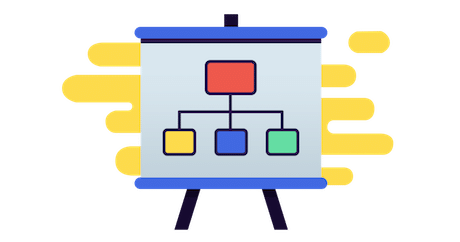
Instead of presenting a flat list, it creates a structured path. It groups information into themes, suggests directions, and helps users move through a topic more deliberately.
This is not just about convenience.
It is about influence.
Because the structure of the journey shapes what users see, what they prioritize, and ultimately what they conclude.

The Subtle Power Of Curation
When results are organized by topic, the system takes on a more active role in shaping the experience.
It decides what categories exist.
It determines which sources fit into those categories.
It influences the order in which information is consumed.
That is a different kind of power than ranking alone.
It is not just about which result appears first.
It is about how the entire landscape is framed.
And framing matters.
Because users rarely step outside the paths that are presented to them.

Why This Matters For Search Everywhere Optimization™
This shift reinforces a key principle.
Visibility is not just about ranking. It is about placement within a broader context.
In a guided research environment, being included in the right category may matter more than being the top result. Being part of the narrative becomes as important as being part of the index.
Search Everywhere Optimization™ focuses on that broader perspective.
It recognizes that discovery is shaped by how information is grouped, connected, and presented across systems.
To succeed in this environment, content needs to do more than match queries.
It needs to align with topics, themes, and conceptual groupings that AI systems use to organize knowledge.
This is where entity-based optimization, topical authority, and semantic relevance become critical.
Because these are the signals that determine where and how content is placed within structured experiences.

Google Is Becoming A Tour Guide
Search used to be a map.
You were given directions, but you chose the route.
Now it is starting to feel more like a guided tour.
The system suggests where to go, what to see, and how to move from one point to the next.
That can be incredibly helpful.
It can also be limiting.
Because when the path is predefined, exploration becomes less open.
And that makes it even more important to be part of the path that is being shown.
The Real Takeaway
Search is becoming more structured, curated, and guided.
The brands that succeed will be the ones that align with how information is organized, not just how it is ranked.
If you want to ensure your content is positioned within these evolving discovery paths, book a free discovery call with SEO Sherpa.



















Leave a Reply