
Summarize This Article With AI
 Try with ChatGPT
 Try with Claude
 Try with AI Mode

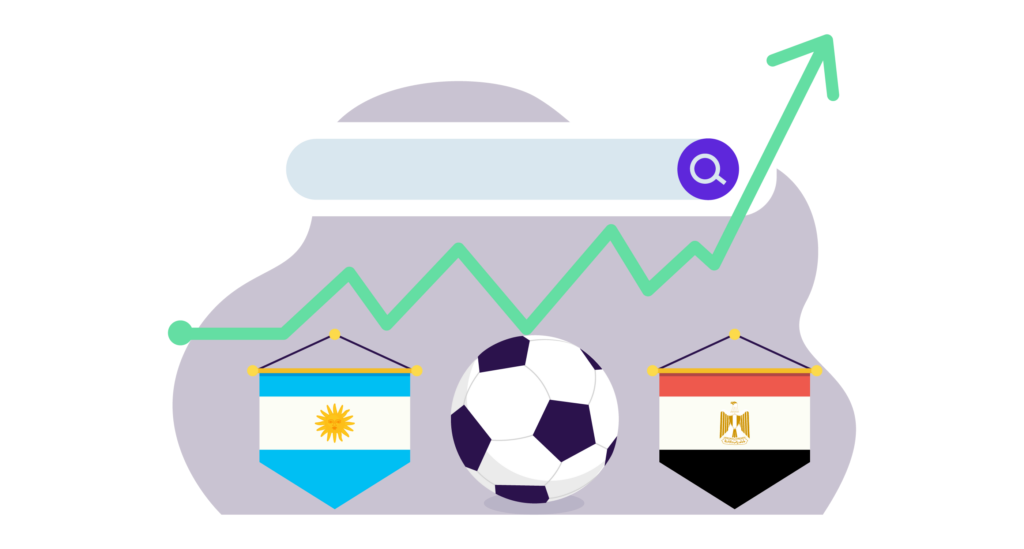
Google Search reportedly reached the highest usage level in its history during Argentina’s World Cup match against Egypt on July 7.
As an SEO, I find this genuinely fascinating. At a time when half of LinkedIn appears to have declared Google dead for approximately the 47th time, millions of people watched one major event unfold and immediately did what people have been doing for decades: they Googled it.
As someone who is both English and Egyptian, however, I would also like it formally recorded that my main takeaway from the evening was that Egypt were robbed.
We can discuss search demand, changing discovery behavior, and the future of Google in a moment. First, I just need everyone to understand that I have not emotionally moved on.
Jokes and questionable refereeing decisions aside, the data is important. AI platforms are absolutely changing how people find information, but this record suggests the shift is far more complicated than people abandoning Google and moving neatly into ChatGPT.
That is not how human behavior works. We do not select one approved discovery platform and remain loyal to it like a supermarket rewards card. We jump between Google, social media, YouTube, news sites, and AI tools depending on what has happened, what we need, and how quickly we need it.
Article Summary
- Google Search reached the highest usage level in its history immediately after Argentina’s winning goal against Egypt.
- Google did not disclose the number of searches involved or how far the record exceeded previous peaks.
- The surge challenges the overly simplistic idea that AI platforms are replacing Google outright.
- Record search activity does not necessarily mean publishers received record organic traffic.
- Major live events reveal how quickly people move between search, social media, video, news, and AI tools.
- Brands now need visibility across the wider discovery journey, not only one traditional search result.
Google Is Apparently Not Dead After All
Nick Fox, Google’s Senior Vice President of Knowledge and Information, said Google Search broke all prior usage records immediately after Argentina scored its winning goal against Egypt.
Fox did not share exact query volumes, which is mildly inconvenient when the entire story is about record-breaking query volumes. Still, Google confirmed that the surge was large enough to exceed every previous usage peak in Search’s history.
People were not only searching for the final score. They wanted to know who had scored, what had happened during the match, what the result meant for the tournament, where to find highlights, what people were saying, and presumably whether Egypt could appeal directly to the United Nations.
This is what tends to get lost in the more dramatic conversations about the death of Google.
People do not only search when they want a static answer to a carefully worded query. They search because something has just happened and their brain has immediately generated another 14 questions about it.
A live sporting event creates an entire web of demand within seconds. One goal produces searches for the scorer, the team, previous results, upcoming fixtures, controversial decisions, player statistics, video clips, and social reactions.
Google remains exceptionally useful in those moments because it acts as a gateway into all of them.

AI Has Changed Search, but It Has Not Replaced Human Instinct
There is no question that generative AI has changed how people research information.
Someone planning a trip, comparing software, or trying to understand a complicated subject may now begin with ChatGPT, Gemini, or Perplexity instead of typing a series of separate queries into Google.
But a person watching a chaotic World Cup match is unlikely to pause and compose a beautifully structured prompt requesting a nuanced tactical analysis.
They are going to type “ARGENTINA EGYPT WHAT HAPPENED” into whichever app is closest to their thumb. In fact, Google confirmed its top searched query after the game was exactly that: “argentina vs egypt”.
That distinction matters.
Different discovery platforms serve different moments and different types of intent. AI platforms are particularly useful when people want synthesis, explanation, or assistance. Traditional search remains incredibly powerful when people want speed, fresh information, multiple perspectives, and immediate access to a range of sources.
The future is not Google or AI. It is people using both, often within the same five-minute period.
Record Searches Do Not Automatically Mean Record Clicks
There is another important part of this story that SEO teams should not ignore.
Google experiencing record usage does not necessarily mean websites received record traffic. The company did not share any information about outbound clicks, publisher referrals, or how many searches ended without the user visiting another site.
That distinction is increasingly important because Google can now satisfy more immediate information needs directly within the search experience.
A user searching for the match could see live scores, news headlines, video results, social posts, knowledge panels, and other features without following a traditional organic result. Depending on the query, the result page itself may be enough.
Search demand can therefore continue growing while the way that demand is distributed changes completely.
This does not mean SEO is becoming less important. It means the definition of visibility needs to expand beyond the ten blue links.
A brand may now appear through a traditional webpage, video carousel, news result, social profile, AI-generated answer, image result, knowledge panel, or third-party mention. Ranking reports still matter, but they no longer tell the whole story.
Live Events Show How Fragmented Discovery Has Become
Major sporting events provide an unusually clear view of collective search behavior because millions of people experience the same trigger at roughly the same time.
One dramatic goal can generate dozens of connected questions:
- What was the final score?
- Who scored the winning goal?
- Was the decision controversial?
- What happens in the next round?
- Where can I watch the highlights?
- What are people saying about it?
- Has Egypt filed an official complaint written entirely in capital letters?
These are not separate customer journeys. They are different stages of the same discovery experience.
The user may begin with Google, open a news story, move to X for reactions, watch a replay on YouTube, check TikTok commentary, and then ask an AI assistant to explain the wider tournament implications.
That entire sequence can happen within minutes.
This is why it no longer makes sense to talk about search as though it begins and ends with one query and one webpage. Modern discovery is a network of connected behaviors, with users moving between platforms based on the type of information they need at that moment.
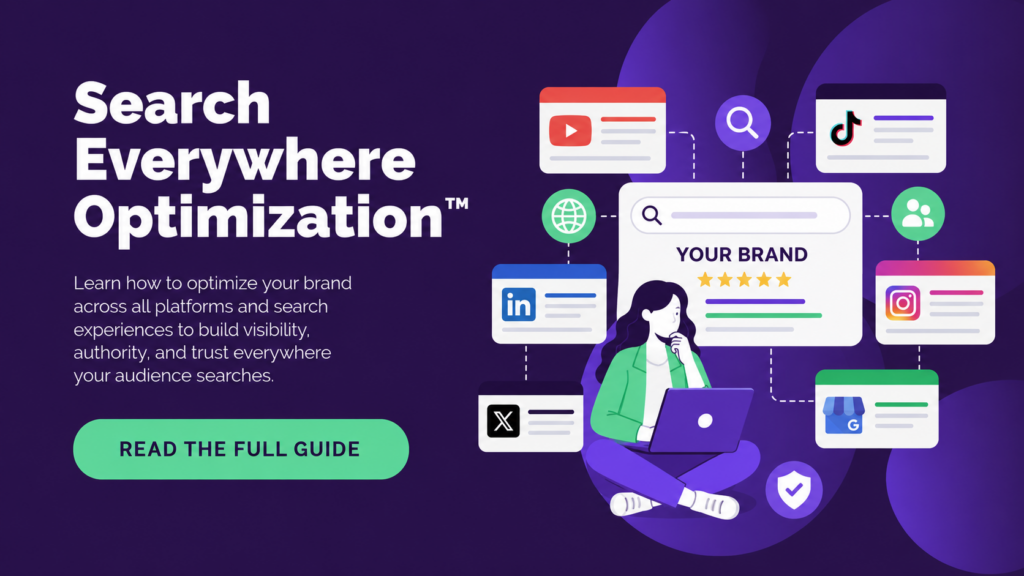
What This Means for Search Everywhere Optimization™
This record supports the central idea behind Search Everywhere Optimization™: people do not search in one place anymore, even when Google remains a major part of the journey. That matters even more given Google still dominates around 90 percent of the search market.
The point is not that every company now needs to fling content onto every available platform and slowly destroy its marketing team.
The point is that discovery behavior is fragmented, while the signals search systems use to understand brands are increasingly connected.
A news article can establish topical relevance. A LinkedIn post can provide an expert opinion. A YouTube video can answer the deeper question. Social conversation can create demand, while trusted third-party mentions reinforce authority.
Those assets do not exist in isolation. They influence how audiences recognize the brand and can also strengthen the evidence Google and AI systems find when deciding what to surface.
The opportunity is to identify the places that genuinely matter to the audience and build a coordinated presence across them.
Publishing everywhere without a strategy is just making more content. Building recognizable, connected signals across the discovery journey is something very different.
Search Is Not Dying. It Is Spreading Out.
Google breaking an all-time usage record does not mean we can ignore AI search and return to pretending blue links are the entire internet. It means the “Google is dead” conversation was always far too simplistic.
People are not abandoning one platform and moving neatly onto another. They are searching on Google, checking reactions on social media, watching clips on YouTube, reading news coverage, and asking AI tools to explain what they have just seen.
Sometimes all before the referee has even left the pitch.
The opportunity for brands is to understand how those touchpoints connect. Visibility is no longer about winning one ranking. It is about building a recognizable presence across the places people search, while ensuring those signals strengthen how the brand appears within Google and AI-generated results.
And, in this particular case, it is also about accepting that no amount of search data will persuade me Egypt were not robbed.
SEO Sherpa helps ambitious brands build visibility across traditional search, AI-generated answers, social platforms, and the wider discovery journey. Book a free discovery call to explore how Search Everywhere Optimization™ can help your brand show up wherever your audience is looking.



















Leave a Reply