
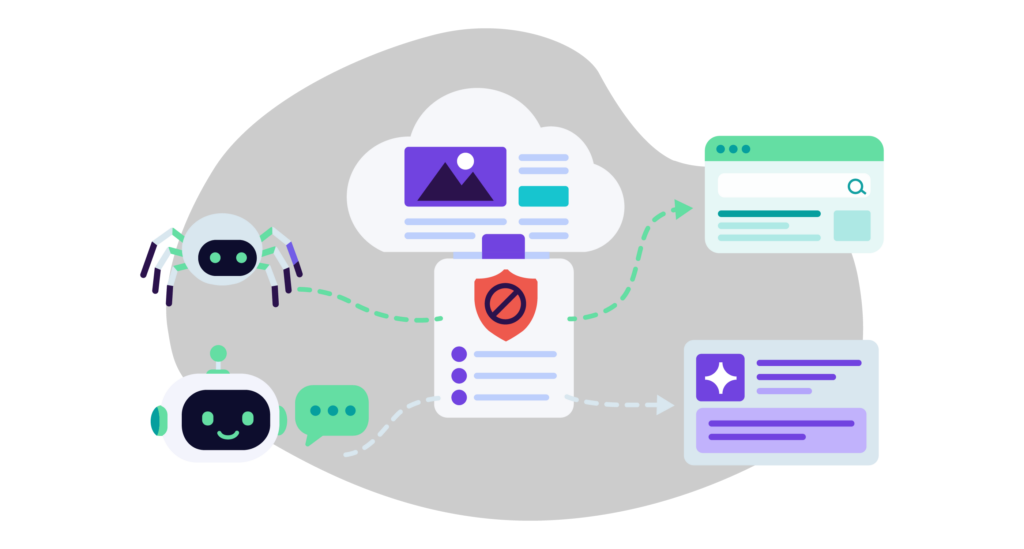
Cloudflare has been working on ways for website owners to communicate how they do—and do not—want their content used by AI systems.
Google’s John Mueller has now pointed out a fairly substantial issue with one of those methods: as far as he knows, nobody it is aimed at actually uses it.
The directive in question is Cloudflare’s Content-Signal, which can be added to robots.txt to express different permissions for search indexing, AI input, and model training.
It sounds useful. The problem is that putting an instruction in robots.txt does not automatically mean crawlers will read it, respect it, or even know what it means.
At the moment, the technical response from many of those crawlers appears to be the digital equivalent of smiling politely, saying “noted,” and carrying on.
Article Summary
- Cloudflare’s Content-Signal directive lets publishers state preferences for search, AI input, and AI training.
- Google’s John Mueller says he is unaware of crawlers or LLMs that currently honor it.
- Unsupported directives are simply ignored by systems that do not recognize them.
- A content-use preference is not the same as an enforced technical block.
- Businesses should decide what they actually want to permit or prevent before changing crawler rules.
- The debate highlights the lack of a widely adopted standard for AI content usage.
What Is Cloudflare’s Content Signals Policy?
Cloudflare introduced its Content Signals Policy as a way for website owners to express more detailed preferences about how automated systems use their content.
The policy separates content use into three categories:
- search for building a traditional search index;
- ai-input for using content in real-time AI answers or retrieval;
- ai-train for training or fine-tuning language models.
A publisher could therefore allow search crawling while stating that its content should not be used for AI training.
That distinction makes sense. A company may be perfectly happy for Google to index a page and send referral traffic while being significantly less enthusiastic about the same content disappearing into a training dataset with no direct return.
Cloudflare’s goal is to give publishers more granular control rather than treating every automated content use as though it were the same thing.
The need is real. The adoption is where things get slightly awkward.

Google Says Nobody Is Listening
Mueller said he was not aware of any crawler or large language model currently using Cloudflare’s Content-Signal directive.
From Google’s perspective, the line has no effect. It is unsupported syntax, so Google simply ignores it.
Mueller also argued that adding unused instructions creates extra bloat and future maintenance inside robots.txt files.
That assessment is blunt, but technically important.
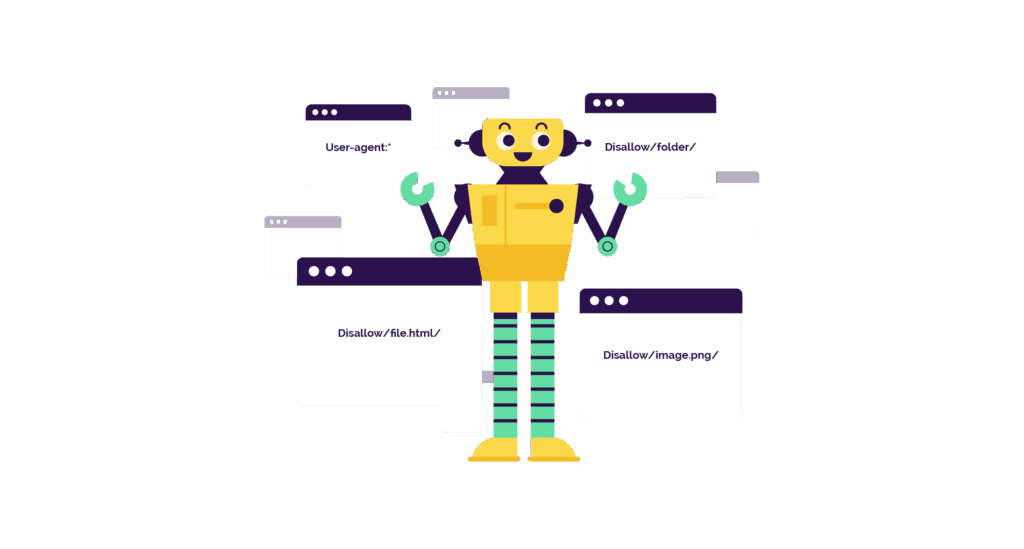
Robots.txt is not a magical contract that binds every automated system visiting a website. It works because compliant crawlers agree to recognize established instructions and act accordingly.
Cloudflare can propose a new signal. It cannot force Google, OpenAI, Anthropic, Perplexity, or anyone else to adopt it.
A directive only becomes meaningful at scale once the systems receiving it know what it means and choose to comply.
A Preference Is Not a Block
Cloudflare itself distinguishes between content-use signals and technical enforcement.
Its documentation explains that these values express the website owner’s preference rather than issuing a block directly. Cloudflare also offers separate tools that can actively control or restrict AI crawler access at the infrastructure level.
That distinction is where many businesses can become confused.
Adding ai-train=no may communicate that the publisher does not consent to AI training. But it does not physically prevent an uncooperative crawler from accessing the page.
By contrast, a server-side block can reject the request before the crawler retrieves the content.
These are not the same control.
One is a sign saying, “Please do not enter.” The other is a locked door.
Both can be useful, but only one prevents someone who has decided the sign does not apply to them from walking straight inside.
Robots.txt Was Not Designed to Become an AI Licensing Department
The wider problem is that robots.txt was built to manage crawling, not to define every possible downstream use of information.
Search indexing, AI retrieval, answer generation, agentic actions, model training, and content reproduction are all different activities.
A publisher may want to allow some while restricting others. The existing web standards were not designed with those distinctions in mind.
Cloudflare is attempting to extend the language of robots.txt to address a new reality. That is a reasonable goal, but it cannot be solved by one infrastructure company creating a directive and hoping the entire industry gets the memo.
Cloudflare’s own data illustrates why the issue has become urgent. It reported that 52% of crawler requests were related to AI training by June 2026, up from 22% in spring 2025, while mixed-use crawlers accounted for more than a third of activity.
Crawler behavior has changed faster than the standards designed to govern it.
The result is a patchwork of user-agent rules, platform-specific opt-outs, proposed policies, server-level controls, legal terms, and slightly optimistic robots.txt comments.
Should Website Owners Remove the Directive?
There is no indication that Google will punish a site for including an unsupported Content-Signal directive.
It will simply ignore it.
The greater risk is that website owners believe the line is protecting their content when it is not.
Before changing robots.txt or blocking entire crawler categories, businesses need to decide what they are trying to achieve.
Do they want to prevent search indexing? Block known training bots? Allow AI systems to cite content in real-time answers? Restrict access to premium material? Preserve visibility while protecting proprietary data?
Those are different objectives and should not be handled with one broad toggle.
The correct setup will also depend on the business model.
A subscription publisher may have a very different risk calculation from an ecommerce store, SaaS company, or lead-generation business. One may prioritize content protection, while another may see AI retrieval as an important emerging discovery channel.
There is no universal “best” configuration because there is no universal commercial goal.
What This Means for Search Everywhere Optimization™
For brands that want visibility in AI-generated answers, accessibility matters.
A system cannot reliably understand, summarize, or cite content it cannot retrieve. Blocking crawlers may protect against unwanted use, but it can also reduce the evidence AI systems can find about the brand.
That does not mean every bot should receive an all-access backstage pass.
It means crawler controls need to be aligned with the wider search strategy rather than treated as an isolated technical task.
A business should understand which systems are accessing its content, what they appear to use it for, whether they provide visibility or referral value, and what the consequences of blocking them may be.
The Search Everywhere question is not simply, “Can an AI crawler access this page?”
It is, “Does our technical setup allow the right platforms to discover and understand the information we want associated with our brand?”
That requires coordination between SEO, content, legal, security, and infrastructure teams. Which is admittedly less convenient than adding one line to robots.txt and declaring the AI governance project complete.
Build an AI Crawler Strategy That Actually Does Something
Cloudflare is right that publishers need more control over how their content is used. Google is also right that a proposed directive has limited practical value when the crawlers it targets do not recognize it.
The industry needs widely adopted standards, clearer accountability, and a better distinction between search crawling, AI retrieval, training, and agentic use.
Until then, businesses should avoid confusing a preference signal with guaranteed enforcement. They need to audit crawler access, understand which controls are active, and decide how those controls support—or obstruct—their wider visibility goals.
SEO Sherpa helps brands prepare their websites for traditional search, AI retrieval, and the emerging agentic web. Book a free discovery call to assess whether your technical setup is strengthening your visibility or quietly blocking the systems you want to reach.





















Leave a Reply