
Summarize This Article With AI
 Try with ChatGPT
 Try with Claude
 Try with AI Mode
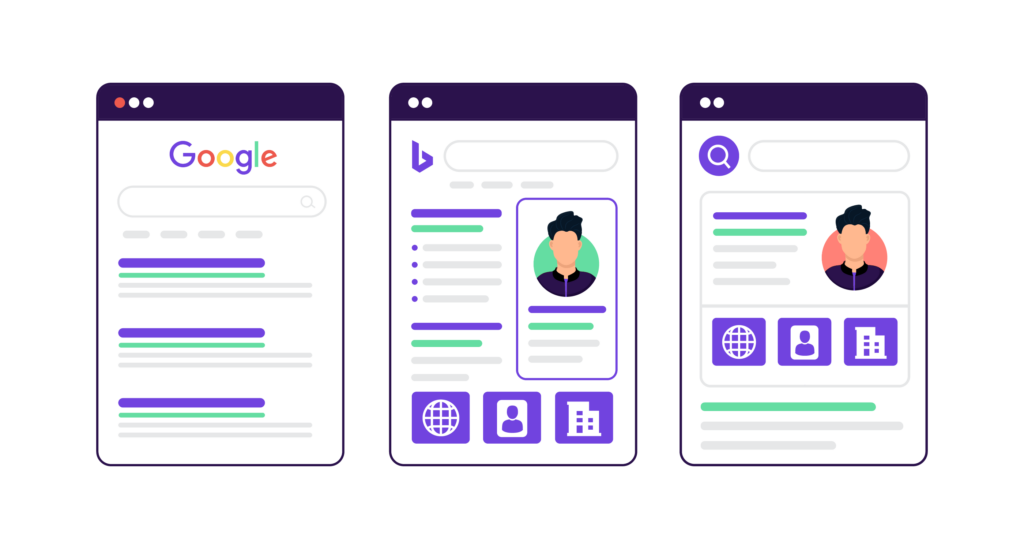
Google is experimenting again.
This time inside Knowledge Panels.
A new, more prominent button labeled “Ask [Brand Name]” is being tested, replacing the previous “Chat” and “Shop” buttons. When clicked, it directs users to the brand’s AI-powered sales assistant.
And if this rolls out widely, it changes how brand interactions begin.
Not with a click to a website.
But with a conversation.
Article Summary
- Google is testing a new “Ask [Brand Name]” button inside Knowledge Panels
- The button replaces the previous “Chat” and “Shop” options
- Clicking it directs users to the brand’s AI sales assistant
- This signals deeper integration of conversational commerce in Search
- Knowledge Panels are evolving from informational boxes to transactional gateways
- Brands must prepare for AI-native entry points into their ecosystems
From Information Hub to Conversation Gateway
Knowledge Panels have traditionally served as structured information summaries.
Location. Reviews. Social links. Product highlights.
They were designed to answer quick questions about an entity without requiring additional clicks.
Now Google appears to be transforming them into conversational launchpads.
The “Ask [Brand]” button does not simply send users to a product page.
It initiates dialogue.
That is a subtle but powerful shift.
Replacing “Chat” and “Shop” Is Not Cosmetic
Previously, “Chat” and “Shop” buttons were fairly straightforward.
One directed users to live messaging or support tools. The other to ecommerce listings.
“Ask [Brand]” reframes both.
It suggests that instead of browsing or clicking through static product pages, users can engage an AI assistant trained on that brand’s catalog, services, and FAQs.
This moves the interaction model from navigation to consultation.
And consultation often converts better.
Conversational Commerce Is Being Embedded at the SERP Level
Google has been steadily experimenting with AI across Search, but this test goes deeper.
It embeds AI-assisted sales directly into branded search experiences.
If someone searches for a specific brand, they are already in high-intent territory.
Now, instead of scanning a homepage, they may begin by asking questions:
What’s the best product for me? Is this item in stock? What’s the return policy?
All without leaving Google’s ecosystem immediately.
That changes funnel dynamics.
Knowledge Panels Are Becoming Action Engines
For years, Knowledge Panels were informational.
Then they became navigational.
Now they are becoming transactional.
The addition of a branded AI assistant inside that panel suggests Google sees branded search queries as prime ground for AI-powered commerce.
It keeps users engaged within Google’s interface longer while still routing them into brand-controlled environments.
It is controlled friction.
And it is intentional.
What This Means for Brands
If this test becomes permanent, brands will need to rethink how they approach AI assistants.
This is not just about having a chatbot buried on your site.
This is about your AI becoming the first interface a high-intent user sees.
That assistant must be accurate.
Aligned with brand voice.
Conversion-optimized.
And structurally sound.
Because if a user’s first interaction is conversational, your AI is now your frontline sales team.
No pressure.
The Visibility Layer Is Expanding Again
This test reinforces something we are seeing across Google’s ecosystem.
Search is not just listing destinations anymore.
It is orchestrating experiences.
AI Overviews summarize information.
AI Mode structures browsing.
Now Knowledge Panels are testing conversational entry points.
Each layer reduces reliance on traditional navigation and increases reliance on structured, AI-compatible content.
If your brand data is fragmented, inconsistent, or shallow, it will show.
Quickly.
The Search Everywhere Optimization™ Implication
Search Everywhere Optimization™ is about aligning brand presence across every discovery layer.
This new “Ask [Brand]” button reinforces that search visibility is no longer static.
It is interactive.
Your brand must be:
Citable inside AI summaries. Visible in citation clusters. Conversationally competent in AI assistants.
Because if Google embeds your AI assistant directly into Search, that interaction becomes part of your visibility footprint.
It is not just SEO.
It is AI interface readiness.
Is Google Keeping Users Closer?
There is another strategic angle here.
By embedding AI assistants directly inside Knowledge Panels, Google reduces the friction between discovery and action.
Users stay within Google’s environment longer.
Brands still benefit from direct interaction, but the entry point is mediated.
This mirrors what we have seen with AI Overviews and AI Mode.
Google is not eliminating websites.
It is layering itself more deeply into the journey.
And each layer adds complexity to attribution and traffic models.
The Bigger Picture
On its own, an “Ask [Brand]” button may look like a minor UI test.
It is not.
It signals Google’s continued push toward conversational commerce embedded directly within Search.
If this becomes standard, branded search queries will increasingly begin with dialogue rather than clicks.
And dialogue changes everything.
Because when a user starts by asking questions instead of browsing categories, your structured data, content depth, and AI training quality determine the outcome.
Not just your homepage layout.
The Strategic Takeaway
Google’s test of a more prominent “Ask [Brand]” button in Knowledge Panels is another step toward AI-native search experiences.
It replaces static navigation with interactive consultation.
It elevates branded AI assistants to frontline sales tools.
And it reinforces that search visibility now includes conversational readiness.
The brands that prepare for this shift will treat their AI assistants as strategic assets.
The brands that do not may discover that their first impression happens before a single page loads.
And by then, it may be too late.


















Leave a Reply