

Summarize This Article With AI
 Try with ChatGPT
 Try with Claude
 Try with AI Mode
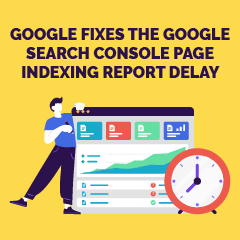
For three weeks, the most-used diagnostic report in SEO was frozen in time.
Anyone who opened Google Search Console to check their page indexing data kept seeing the same stale date staring back: June 11.
It is finally moving again. After a delay that stretched close to three weeks, Google has updated the Search Console page indexing report, which now shows data through June 29. The fix landed on Friday, July 3, ending an outage that left agencies and in-house teams squinting at outdated numbers in the middle of monthly reporting season.
It is fixed. It is also a useful reminder of how fragile our favorite dashboards really are.
Article Summary
- Google’s Search Console page indexing report was frozen at June 11 data for nearly three weeks.
- The report was fixed on July 3 and now shows data through June 29.
- John Mueller acknowledged the delay on July 1 but gave no completion estimate at the time.
- Google confirmed the delay was not related to the June 2026 spam update.
- The delay disrupted monthly client reporting and live indexing diagnostics.
- The URL Inspection Tool kept working normally and served as a reliable workaround.
- Search Everywhere Optimization reduces the risk of depending on any single reporting source.
What Actually Happened?
The page indexing report is one of the tools SEO professionals reach for most.
It shows which pages Google can find and index on a site, and it flags the specific reasons individual pages are not being indexed. When it stops updating, a core part of technical diagnosis goes dark.
That is exactly what happened here.
Starting around June 11, the report stopped refreshing. For weeks, users logging into Search Console saw indexing data that was more than two weeks old, with a last-updated timestamp stubbornly stuck on June 11. Google eventually posted a notice at the top of the report acknowledging that, due to internal issues, it had not been updated to reflect recent data.
On July 1, nearly three weeks in, Google’s John Mueller addressed it publicly.
He apologized for the delay and said the team was working to get the report back up to speed, though he had no estimated completion time to share. Two days later, on July 3, the data finally caught up, jumping forward to show indexing information through June 29.
The report was back. The three-week blind spot was over.

It Was Not the Spam Update
There is one point Google was careful to make, and it is worth repeating.
The delay had nothing to do with the June 2026 spam update.
That timing was awkward, because the spam update was rolling out during the same window, and it would have been easy to assume the two were connected. Google explicitly stated the reporting delay was unrelated to the spam update. The frozen report was a data pipeline issue on Google’s side, not a signal about your site’s health or a side effect of any algorithmic change.
This distinction matters for how you interpret the period.
If your indexing numbers looked strange in late June, the reporting delay is the more likely culprit than the spam update. The data simply was not current. Any conclusions drawn from that frozen snapshot, whether reassuring or alarming, were built on outdated information rather than a real change in how Google was treating your pages.
It is also worth noting that this was not entirely unprecedented.
A similar page indexing report delay in late 2025 ran for nearly a full month before Google resolved it. Search Console reporting hiccups are not rare, which is precisely why leaning on any single report as your only source of truth is a risk worth managing.
Why a Three-Week Delay Actually Hurts
A stale dashboard might sound like a minor inconvenience. In practice, the timing made it genuinely disruptive.
The delay landed squarely in monthly reporting season.
As June wrapped up, agencies and in-house teams were mid-cycle on client and stakeholder reports, and the single most-used diagnostic report was serving data almost three weeks out of date. That created an awkward choice: present frozen figures as if they were current, or explain to clients why the numbers could not be trusted for the period.
Live troubleshooting took a hit too.
For anyone validating a technical fix or chasing an active indexing problem, the report was effectively useless for the most recent stretch of data. If you deployed a fix in mid-June and wanted to confirm Google had recognized it, the aggregate report simply could not tell you. New indexing issues, exclusions, and updates were not surfacing, creating temporary blind spots at the worst possible moment.
The one saving grace was that not everything went dark.
The URL Inspection Tool kept working normally throughout the delay, offering fresher, page-by-page index status independent of the frozen aggregate report. Teams who knew to lean on it could still verify whether a specific URL had been crawled and indexed, which softened the impact for anyone paying attention. It was a workaround, not a full replacement, but it kept the essential checks possible.
Why This Matters for Search Everywhere Optimization
Step back from this specific outage and the lesson is bigger than one frozen report.
If your entire view of your own visibility comes from one dashboard, you are one outage away from flying blind.
Search Console is an essential tool, and nothing here changes that. But it is a single source, controlled by a single company, subject to the occasional data pipeline failure that leaves you staring at three-week-old numbers with no ETA for a fix. Building your entire understanding of your search presence on top of it creates a fragile kind of dependence.
Search Everywhere Optimization encourages a broader instrument panel.
When your visibility spans many surfaces, your measurement does too. Referral data from AI platforms, engagement on social channels, video analytics, brand search demand, third-party mention tracking, and your own server logs all become part of how you understand your presence. If one source goes dark, the others still tell you what is happening. No single outage blinds you completely.
This mirrors the core philosophy exactly.
Just as you should not build your visibility on a single platform, you should not build your measurement on a single report. The brands that see clearly are the ones triangulating across multiple data sources, so a hiccup in any one of them is an inconvenience rather than a crisis. Diversified visibility and diversified measurement go hand in hand.
The frozen report will be forgotten in a month. The habit of not depending on it entirely is worth keeping.
What Should Businesses Do Next?
First, if you paused any indexing diagnosis during the delay, now is the time to resume it.
The report is current again through June 29, so revisit anything you were troubleshooting in mid-to-late June. Validate the technical fixes you deployed during the blind spot, and check whether any new indexing issues surfaced that the frozen report was hiding. You have a clear view again, so use it.
Second, build the URL Inspection Tool into your routine as a backup.
Because it kept working when the aggregate report did not, it is your most reliable fallback during any future Search Console disruption. Get comfortable using it for page-level index verification now, so it is second nature the next time the main report stalls. And these disruptions do recur, as the late-2025 delay demonstrated.
Most importantly, widen your measurement beyond any single dashboard.
Cross-reference Search Console with your analytics, your server logs, and your visibility across other platforms, so your understanding of your search presence never rests on one report that can freeze without warning. The goal is an instrument panel broad enough that no single gauge going dark leaves you guessing.
Google fixed the report. The smarter move is to make sure the next outage matters a little less.
Ready to Build Visibility Everywhere People Search?
Relying on a single dashboard, like relying on a single platform, leaves your business exposed when something breaks. The brands that stay in control are the ones measuring and building their visibility across the whole search ecosystem.
At SEO Sherpa, we help brands build the technical foundations, content authority, and cross-platform visibility needed to be found, trusted, and chosen across the modern search journey.
Book a free discovery call with our team today to find out how Search Everywhere Optimization can help your business increase its visibility, strengthen its authority, and turn more searches into customers.


















Leave a Reply