
Summarize This Article With AI
 Try with ChatGPT
 Try with Claude
 Try with AI Mode
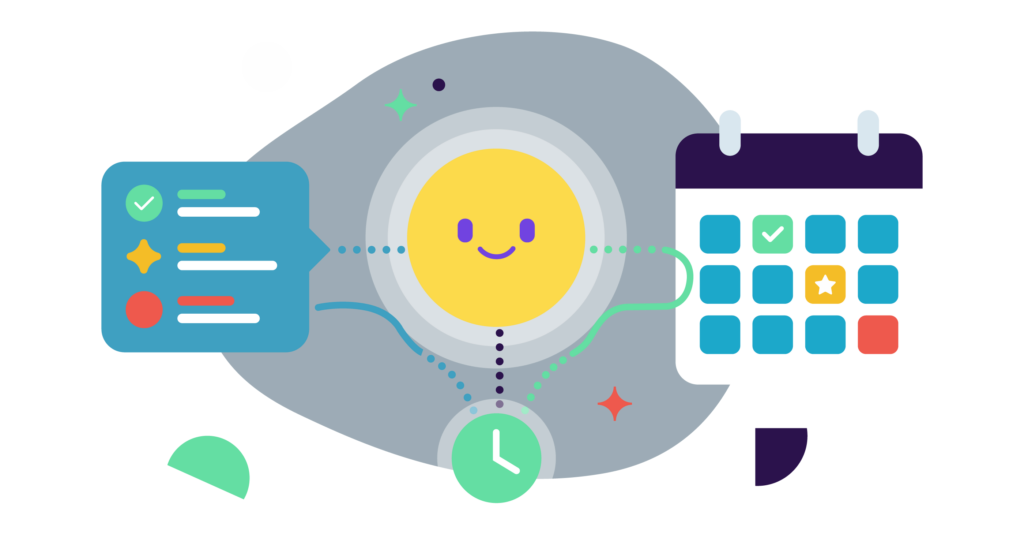
Google is connecting Calendar to Personal Intelligence in AI Mode, allowing Search to consider your schedule when answering questions and add events directly to your calendar.
On paper, this sounds like a small integration. Google already owns Search, Calendar, Gmail, Photos, Maps, YouTube, and enough information about most of us to write a moderately accurate unauthorized biography.
But connecting Calendar to AI Mode moves Google’s AI search experience another step away from simply finding information and toward actively helping users make decisions based on their own lives.
Search is no longer only answering, “What should I do?” It can increasingly answer, “What should I do, given that I have a dentist appointment at 2 p.m., dinner at 7 p.m., and apparently agreed to a meeting I have no memory of accepting?”
Article Summary
- Google Calendar can now connect to Personal Intelligence in AI Mode.
- AI Mode can factor existing plans into its recommendations and responses.
- Users will also be able to add invitations and meetings directly from Search.
- Calendar joins Gmail and Google Photos as a source of personal context.
- The update moves Google Search closer to becoming a personal, agentic assistant.
- Brands will need to optimize for situations, preferences, and decisions rather than isolated keywords.
AI Mode Can Now See What You Actually Have Time For
Google Search Vice President Robby Stein confirmed that Personal Intelligence in AI Mode can now connect to Google Calendar.
Once enabled, AI Mode can consider the user’s existing schedule when creating a response. It can also add invitations or meetings to Calendar directly from the Search experience. The rollout is beginning in the United States.
Google previewed the Calendar integration at I/O 2026, when it announced that Personal Intelligence in AI Mode was expanding more widely and would support connections to Gmail, Google Photos, and eventually Calendar.
The difference seems minor until you consider the type of answer Google can now provide.
Previously, someone asking for help planning an afternoon in New York could receive a list of attractions, restaurants, and travel suggestions.
With Calendar connected, AI Mode could theoretically see that the user lands at noon, has a meeting at 3 p.m., and needs to be at a theater by 7 p.m. It can then produce a plan that fits around those commitments rather than suggesting a delightful four-hour museum visit during the exact period the user is supposed to be presenting quarterly results.
That is not just a more detailed search result. It is a personalized decision.
Personal Intelligence Is Becoming the Real Differentiator
Generative AI platforms can all summarize information, compare options, and create itineraries.
Google’s advantage is that it already sits inside a significant portion of the user’s digital life.
Personal Intelligence was initially introduced as a way for Gemini and AI Mode to reason across connected Google services and retrieve relevant personal details. Gmail and Photos were among the first sources, with Calendar now becoming another layer of context.
This gives Google something beyond a technically capable model: history, preferences, commitments, relationships, and intent signals.
A generic AI assistant may know that a restaurant is popular. Google may know that it is near the user’s evening appointment, serves the cuisine they previously searched for, and has photos resembling places saved in their account.
That is where the shift becomes much more significant.
The answer is no longer based solely on which webpage best matches the words in the query. It may be shaped by the user’s personal context before Google even starts evaluating the available options.
Search Is Becoming an Action Layer
The ability to create Calendar events also moves AI Mode beyond recommendations.
Instead of suggesting a meeting time and leaving the user to open another app, Google can complete the next step inside the same experience.
This fits the wider direction of agentic search. Search engines are moving from retrieving information to carrying out tasks, coordinating services, and managing parts of the user journey.
The user asks a question. AI Mode reviews personal context, finds relevant information, proposes a decision, and takes action.
The traditional search funnel is quietly being replaced by something much closer to:
Ask. Decide. Do.
Potentially without visiting a website at any stage.
For businesses, that is both exciting and slightly alarming, depending on whether Google’s assistant chooses them.
Privacy and User Control Will Matter
Personalization at this level only works when users are comfortable connecting private information.
Google says Personal Intelligence connections are optional and can be managed by the user. The company has consistently framed these features as permission-based rather than automatically giving AI Mode access to every connected service.
Even so, the trade-off is becoming more obvious.
The more context users provide, the more useful and specific the AI can become. But that usefulness depends on allowing Google to combine information from services that were previously experienced as separate products.
Some users will find that incredibly convenient. Others may be less enthusiastic about Search having thoughts on their weekend plans based on an email, seven photos, and the fact that they have repeatedly searched for “quiet hotels with no children.”
The technology may work. Trust will determine how widely people use it.
What This Means for Search Everywhere Optimization™
This update changes the competitive environment for brands because recommendations may increasingly depend on context that cannot be seen in a keyword tool.
Two people can ask the same question and receive different answers because they have different locations, schedules, preferences, previous searches, emails, and travel plans.
SEO therefore becomes less about producing one universally “correct” result and more about creating enough clear, consistent information for Google to recognize when the brand fits a particular situation.
A restaurant should not only be understood as a restaurant. Google may need to understand that it is suitable for business lunches, close to a conference venue, open before a theater performance, good for large groups, or accessible for someone with particular requirements.
Those details can be reinforced through website content, Business Profile information, reviews, social content, images, videos, local citations, and third-party mentions.
This is where Search Everywhere Optimization™ becomes practical. The stronger and more consistent the brand’s footprint, the easier it becomes for Google to confidently match it to the right user at the right moment.
Get Ready for Search That Knows the User
Connecting Calendar to AI Mode may look like another Google product integration, but it represents a larger shift.
Google Search is becoming personal, contextual, and capable of taking action. The winning result may not be the page that best matches a broad keyword. It may be the business Google believes best fits that individual user’s plans, preferences, and immediate needs.
Brands need to become clear enough, credible enough, and visible enough across the wider search ecosystem to be selected when that decision happens.
SEO Sherpa helps ambitious brands build connected visibility across organic search, AI-generated answers, local results, and the platforms shaping modern discovery. Book a free discovery call to explore how we can prepare your brand for personalized and agentic search.
















Leave a Reply