
Summarize This Article With AI
 Try with ChatGPT
 Try with Claude
 Try with AI Mode

Google has spent the last two decades teaching businesses how to win search.
Create useful content. Earn authority. Rank on page one. Win the click.
Lovely little system.
Except now Google appears to be quietly folding that system into a paper airplane and launching it directly into the AI era.
At Google I/O 2026, the company announced what it called “a new era for AI Search,” including an intelligent AI-powered Search box, information agents that work in the background, expanded agentic booking, personalized search experiences, generative interfaces and AI Mode upgrades powered by Gemini 3.5 Flash. In Google’s own words, this is the “biggest upgrade” to Search in more than 25 years.
Translation?
The classic search journey is changing fast.
The future of Google is no longer just typing a keyword, scanning ten blue links and clicking the result with the nicest title tag.
It is asking a complex question, letting AI understand the context, allowing agents to monitor information in the background and expecting Google to return the answer, the action, the booking, the comparison or the custom interface.
So yes.
Bye bye, blue links.
Not entirely. Not tomorrow morning. Not in a dramatic Hollywood explosion with a slow-motion SERP walking away from fire.
But as the default model for how people discover, evaluate and choose brands?
The writing is now very much on the wall.
Article Summary
- Google announced major AI Search updates at I/O 2026, including an AI-powered Search box, information agents and expanded agentic capabilities.
- Search is moving from keyword-based results pages toward conversational, multimodal and task-based experiences.
- Google says users will still see a range of results, but the role of traditional organic links is clearly changing.
- This validates the need for Search Everywhere Optimization™, because brands can no longer rely on ranking in Google alone.
- Businesses now need to build visibility across Google, AI platforms, social search, YouTube, Reddit, LinkedIn, digital PR, structured content and entity signals.
- Brands that do not adapt risk becoming invisible in the exact moments AI systems make recommendations, summarize options or complete tasks for users.
What Google Actually Announced at I/O 2026
Google’s I/O 2026 announcements centered on a major shift in how Search works.
The company introduced a new intelligent Search box that can expand with a user’s query, suggest better prompts and accept different types of input, including text, images, files, videos and Chrome tabs. Google also said users will be able to move more easily from AI Overviews into conversational AI Mode, with context carrying through the search journey.
That alone is a pretty big deal.
But the bigger shift is agentic search.
Google announced “information agents” in Search that can run in the background, 24/7, monitoring the web, blogs, news sites, social posts and fresh data sources for updates that match a user’s request. These agents are designed to synthesize information and help users take action, with the first rollout planned for Google AI Pro and Ultra subscribers.
Google also expanded agentic booking capabilities, allowing users to ask Search to find services, compare availability and provide direct links to complete bookings. For some categories, including home repair, beauty and pet care, Google says users will be able to ask Google to call businesses on their behalf in the U.S.
And then there is generative UI.
Google says Search will be able to build custom layouts, dashboards, trackers, tables, visual tools and simulations in real time, based on the specific question being asked.
This is not just “AI answers in search.”
This is Search becoming a task layer.
- A recommendation engine.
- A research assistant.
- A booking assistant.
- A shopping assistant.
- A dashboard builder.
- A personal decision-making interface.
Which is exciting. And mildly terrifying.
As is tradition.
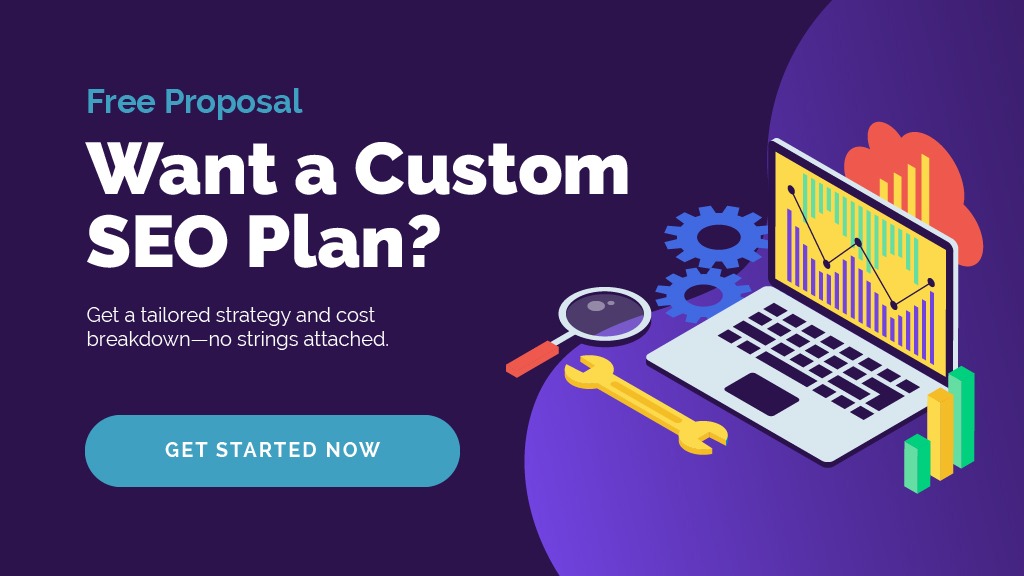
The SERP Is Becoming Less Like a Results Page and More Like an Interface
For years, marketers have optimized around the search engine results page.
That meant understanding rankings, featured snippets, People Also Ask boxes, maps, shopping results, images, videos and all the other lovely SERP furniture Google kept moving around like an over-caffeinated interior designer.
But this update points to something bigger.
The SERP itself is becoming less central.
Google’s own Search page now describes the product as “totally reimagined with AI,” bringing together Gemini models, agentic capabilities and the world’s information. It highlights information agents, AI Mode, Search Live, agentic shopping, personal intelligence and interactive visual responses as part of the new Search experience.
That means the search journey is no longer just:
Query → results → click → website.
It is becoming:
Prompt → AI interpretation → synthesized answer → recommended next action → possible transaction.
In that model, the brand that wins is not always the brand with the highest-ranking page.
It may be the brand Google understands best.
The brand with the strongest entity signals.
The brand mentioned consistently across trusted sources.
The brand visible on YouTube, LinkedIn, Reddit, review platforms, social search, PR placements and expert-led content.
The brand with structured, crawlable, quotable and genuinely useful content.
In other words, the brand with a Search Everywhere Optimization™ strategy.
Funny how that works.
This Is the Validation Search Everywhere Optimization™ Needed
For a while, Search Everywhere Optimization™ has sounded to some businesses like a nice future-facing idea.
A bit trendy.
A bit “someone said TikTok is a search engine on LinkedIn and now everyone is wearing a black turtleneck.”
But Google’s I/O 2026 announcements make the point very clear.
Search is no longer contained inside the traditional Google results page.
Google’s information agents are designed to look across blogs, news sites, social posts and fresh data sources. AI Mode supports follow-up questions. Search can now reason across different formats. Ask YouTube is being tested as a more digestible way to navigate video content. Personal intelligence is expanding across Google products.
That means brand visibility has to exist across the wider search ecosystem.
Not because it looks good in a strategy deck.
Because AI systems need multiple trusted signals to understand who you are, what you do, what you are known for and whether you deserve to be recommended.
Search Everywhere Optimization™ is not about abandoning Google.
It is about understanding that Google itself is becoming Search Everywhere.
It is pulling from more surfaces.
It is interpreting more formats.
It is blending content, context, entities, media, social signals, local data and user intent into a single AI-led experience.
So, if your strategy is still “publish blogs and hope for the best,” we need to gently take the keyboard away.
For your own good.
Why This Matters for Businesses
This shift has massive implications for businesses that rely on organic visibility.
In the old model, losing a ranking meant losing traffic.
In the new model, the risk is bigger.
You may never appear in the answer at all.
If Google’s AI interface summarizes the market and recommends three providers, you need to be one of those providers.
If an information agent monitors options for a user, you need to be part of the sources it trusts.
If AI Mode compares service providers, you need strong enough brand, content, review, and authority signals to be included.
If search builds a custom decision interface, your business data needs to be clear, structured, and consistent enough to appear accurately.
The danger is not just lower rankings.
It is invisibility.
And invisibility in an AI-led search journey is a nasty little beast, because users may not even know you were excluded.
There is no page two to blame.
There is no “we dropped from position four to position nine.”
There is just the answer.
And your brand either made it into that answer or it did not.
Why Working With the Wrong SEO Team Could Cost You
This is where things get uncomfortable.
A traditional SEO strategy is no longer enough on its own.
Technical SEO still matters. Content still matters. Links still matter. Local SEO still matters.
But they now need to work as part of a much broader visibility system.
Businesses need teams that understand how search behavior is fragmenting across Google, AI platforms, social search, YouTube, Reddit, marketplaces, review platforms and community-led discovery.
They need people who understand how entity signals are built.
They need content systems that create assets for multiple search environments, not just blog posts for one keyword.
They need technical foundations that allow AI systems to crawl, render, understand and cite their content properly.
They need digital PR, expert content, social visibility, structured data, video assets, brand consistency and platform-native optimization working together.
Because in an agentic search environment, AI does not just find pages.
It evaluates brands.
That means working with people who do not understand Search Everywhere Optimization™ could leave serious gaps in your visibility.
Not cute little gaps.
Not “we forgot to optimize one image alt tag” gaps.
We are talking about strategic gaps that can stop your brand from being found, trusted and chosen when your customers are making decisions.
And once AI systems start shaping those decisions earlier, faster and more invisibly, catching up gets harder.
The New Search Strategy Is Brand-Led, Entity-Led and Everywhere
The businesses that win in this next phase will not be the ones chasing every algorithm update with a butterfly net.
They will be the ones building a durable search presence across the full discovery ecosystem.
That means creating content that answers real customer questions across the funnel.
It means making sure your brand is consistently described across your website, social profiles, third-party mentions, reviews, PR placements and expert content.
It means building authority around people, not just pages. It means using video, social content and thought leadership to reinforce expertise. It means making your content easy for humans to trust and easy for machines to understand.
And yes, it means thinking beyond “how do we rank this page?”
The better question now is:
How do we become the brand AI chooses when a customer asks for help?
That is the real game. The blue links are not dead. But they are no longer the whole battlefield.

Google Just Made the Future of Search Very Obvious
Google I/O 2026 did not quietly hint at the future of search.
It walked onto the stage, grabbed the microphone and shouted it through an AI-powered megaphone.
Search is becoming conversational.
Search is becoming multimodal.
Search is becoming personalized.
Search is becoming agentic.
And most importantly, Search is becoming less dependent on the traditional results page businesses have optimized for over the last 20 years.
That does not mean SEO is dead.
Honestly, SEO has been declared dead so many times it should have its own loyalty card.
But it does mean SEO has evolved again.
The brands that adapt now will have a serious advantage.
The brands that wait until their traffic drops, their leads slow down or their competitors start appearing in AI-generated recommendations will be playing catch-up in a much harder game.
Search Everywhere Optimization™ is no longer a buzzword.
It is the strategy Google just validated.
And if your business wants to stay visible in an AI-led search world, now is the time to build for it.
Need Help Future-Proofing Your Search Strategy?
If you want to understand how your brand appears across Google, AI search, social search and the wider discovery ecosystem, SEO Sherpa can help.
Book a free discovery call with our team and find out how we can help your business get found, trusted and chosen everywhere your customers search.















Leave a Reply