
Summarize This Article With AI
 Try with ChatGPT
 Try with Claude
 Try with AI Mode
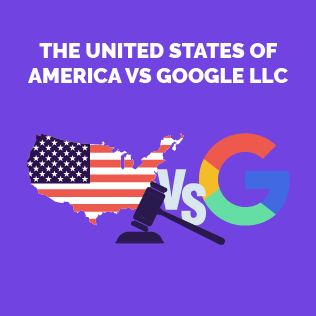
On September 2, 2025, the landmark case of the United States v. Google LLC reached its long-awaited remedy phase. After years of arguments and antitrust wrangling, the court officially handed down its decision.
The verdict?
Google keeps its empire intact, but new rules now restrict how it can wield that dominance. For SEOs and marketers, this ruling is more than legal drama; it signals the beginning of a reshaped search landscape.
How does your website score? Get a free instant audit that will uncover the biggest SEO issues affecting your site, and how to fix them.
Article Summary
- The court says Google maintained its search monopoly through exclusionary default-distribution deals. Remedies now curb that behavior, without breaking up Chrome or Android.
- Google must stop exclusive contracts for Search, Chrome, Assistant, and Gemini, and cannot tie Play Store licensing or revenue share to keeping Google defaults in place long term.
- No breakup, no choice screens, and no forced hand-over of advertiser-level query data. There is ad-auction transparency coming.
- Google must share some search index and user-interaction data with Qualified Competitors, and offer search and text-ads syndication on commercial terms.
- A Technical Committee oversees compliance for six years. The judgment takes effect 60 days after entry.
First, What Was This Case About?
This fight didn’t appear out of nowhere. The U.S. government has circled Google’s search dominance for years, and the case has unfolded in several significant milestones.
Let’s catch up quickly before we dig into the remedies.

The Backstory
The Department of Justice first filed its lawsuit in 2020, claiming Google had locked up the search market by striking deals that kept it the default engine across browsers, devices, and platforms.
On August 5, 2024, after a ten-week trial, Judge Amit Mehta agreed: Google had violated antitrust law by illegally maintaining a monopoly in internet search. That ruling set the stage for the remedies phase.
By April 2025, the DOJ had presented its proposed fixes. These weren’t small asks. They included forcing Google to divest Chrome and rolling out restrictions around distribution, data access, and advertising practices.
The Core Allegation
At the heart of the case was this:
Google paid billions of dollars each year to make sure it was the default search engine on nearly every device and browser.
Rivals never had a fair shot at distribution, scale, or revenue, which meant Google’s dominance reinforced itself.
Why That Matters
When one company controls nearly every default entry point into the internet, it doesn’t just crowd out competitors; it locks in user habits and starves innovation.
The court’s liability ruling confirmed this, and the September 2 remedies were designed to pry those gates open.
What Did The Court Decide This Week?
The September 2nd ruling laid out remedies designed to curb Google’s exclusionary practices without dismantling the company. The court drew a line between overreaching demands and practical measures to promote competition.
No More Exclusive Distribution Of Search, Chrome, Assistant, Or Gemini
Google can’t lock up defaults with long-term contracts or tie Play Store access and revenue shares to keeping its products in place. Rivals must have a fair shot at distribution across devices and platforms.
No Breakup Of Chrome Or Android
Calls to spin off Chrome or force Android divestitures were denied. Instead, the court opted for behavioral remedies and oversight.
Data-Sharing Obligations To Jumpstart Rivals
Google must share parts of its search index and user-interaction data with “Qualified Competitors.”
Ads data is off the table, but this gives rivals raw materials to build stronger search and AI products.
Search And Text-Ads Syndication On Commercial Terms
Rivals can access Google’s search and ad syndication on fair commercial terms, allowing them to compete while building independent systems.
Ad-Auction Transparency
Google must disclose material changes to its ad auctions so it can’t quietly raise prices through hidden tweaks.
No Mandated Choice Screens
Unlike Europe, no browser-style choice screens will appear in the U.S. The court saw little evidence that they significantly boost competition.
No Publisher Opt-Out Remedy
The court declined to give publishers new controls over how Google uses their content. That issue will play out in other arenas.
Oversight, Scope, And Timing
A Technical Committee will enforce compliance. The ruling lasts six years, with most provisions taking effect 60 days after the judgment.
AI Changed The Game Inside The Courtroom
This wasn’t just a search case frozen in the 2010s. The court directly acknowledged the role of generative AI and designed remedies to prevent Google’s dominance from carrying over unchecked into the AI layer.
The Court Explicitly Considered GenAI And Search
Remedies cover defaults not only in search but also in AI assistants like Gemini.
Regulators are watching how AI search products distribute queries just as closely as they did browsers and devices.
Early Signals On AI Overviews And Organic Click Behavior
Evidence showed that AI Overviews boost satisfaction but cut organic clicks when they appear. The SERP is shifting into an answer layer, and SEO strategies need to adapt fast.

What Does This Mean For SEO In Practice?
This is where things get real.
The ruling doesn’t topple Google overnight, but it gives rivals more market share, more access, and more legitimacy.
For SEOs, this is confirmation that optimizing for “just Google” is no longer enough.

Prepare For Multi-Engine Optimization
With Google forced to share data and distribution, competitors will grow stronger. That means monitoring visibility across Bing, Perplexity, and emerging AI-first players — not just Google.
Optimize For Answer-First Surfaces
AI Overviews and assistants thrive on structured, clear, citable content. Your strategy must account for visibility inside answer layers, not only rankings in blue links.
Re-Forecast Traffic Mix And De-Risk Dependency
Traffic is fragmenting. Some clicks go to AI Overviews, others to rival engines, and more to assistants. Your traffic models need to reflect this, with new KPIs for citations and mentions.
Ads Teams Get More Auction Sunlight
Auction disclosures mean advertisers can better link performance swings to system changes. But don’t expect query logs or exact match to come back.
Search Everywhere As The New Baseline
Here’s the headline: Search Everywhere is no longer just a Sherpa concept; it’s now the market reality.
The court’s ruling ensures more competition, more fragmentation, and more platforms that matter.
Optimizing for one search engine won’t cut it. The future belongs to brands that build visibility across all engines, all assistants, and all algorithms.
That’s what Search Everywhere is designed for and this case just proved why it’s essential.
What To Watch Next
Implementation starts soon, and the next six years will determine whether these remedies truly reshape competition or simply trim Google’s edges.
The Implementation Clock
Most remedies take effect within 60 days. With a six-year enforcement window, rivals have plenty of time to ramp up.
Market Reactions
Expect browsers and OEMs to loosen their ties to Google, and for AI assistants to seize new distribution deals. Syndication may scale fastest since it uses existing infrastructure.
Your 90-Day Plan
- Refresh your SEO strategy into a full Search Everywhere model.
- Update briefs to include source-ready, citable claims for AI inclusion.
- Adjust CTR models for AI Overview queries.
- Track assistant-layer citations in Gemini, Copilot, and other GenAI engines.
The Take
Google keeps its crown, but the moat is shrinking.
The September 2 ruling ensures rivals get more oxygen, especially in AI.
For SEOs, this is a wake-up call: the future isn’t Google-only, it’s Search Everywhere. The brands that embrace that shift now will lead the next era of visibility.
Want Help Actioning This?
Book a free strategy call with SEO Sherpa, and we’ll show you how to build a Search Everywhere strategy that ensures your brand shows up across Google, AI Overviews, and every assistant layer that matters.
Plus, use our free Website Grader audit to see where you stand today.

















Leave a Reply