

Google just quietly made search results a little more… Pinterest-y.
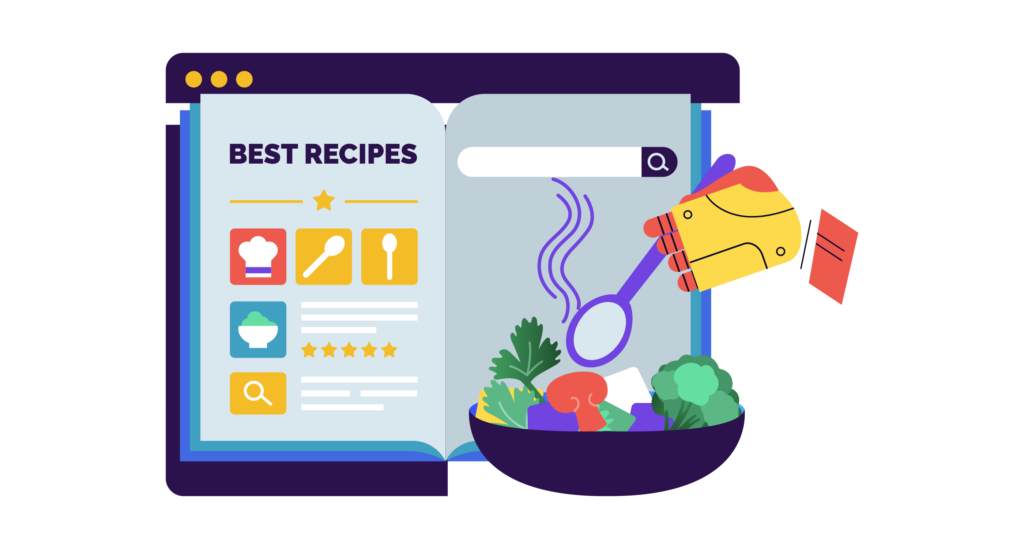
In its experimental AI Mode, recipe queries are now showing visual result cards with clickable images, additional links, and contextual cooking information like preparation time and related recipes.
On the surface, this looks like a simple UX improvement.
Better visuals. More helpful information. Easier discovery.
But like many Google updates lately, the real story isn’t the feature itself.
It’s the direction it points.
Because every time Google adds richer AI-driven results like this, the search experience moves one step further away from “10 blue links” and one step closer to Google curating the entire answer experience.
And that shift has big implications for publishers.
Article Summary
- Google has introduced a new visual recipe presentation inside AI Mode.
- Results include clickable images, contextual information, and additional links to relevant sites.
- The update reflects Google’s ongoing push toward AI-generated search experiences.
- Visual content and structured data will likely become even more important for discoverability.
- Publishers should pay attention: these interfaces may reshape how traffic flows from search.
AI Mode Is Quietly Redesigning Search
Google’s AI Mode is still experimental, but updates like this reveal how the company is thinking about the future of search.
Instead of simply listing links, AI Mode increasingly curates information into structured experiences.
For recipes, that now means:
- Large visual thumbnails
- Ingredient or cooking context
- Related recipes
- Multiple links to supporting sources
In other words, Google isn’t just pointing users toward content anymore.
It’s assembling the content into a search interface that feels more like a discovery app than a search engine.
And recipes are the perfect testing ground.
They’re visual, structured, and predictable.
If Google can organize recipe results this way, it’s not hard to imagine similar layouts appearing for:
- Travel searches
- Product comparisons
- Tutorials
- Health queries
- How-to guides
Once the format works for one category, it rarely stays there.
Google Is Becoming a Content Organizer
One of the biggest shifts in modern search is that Google increasingly acts as a content organizer rather than just a search engine.
Instead of sending users directly to individual pages, Google now often:
- Aggregates content
- Summarizes answers
- Visualizes information
- And presents the result in its own interface
AI Mode accelerates that trend.
The new recipe layout demonstrates how Google can take information from multiple sites and assemble it into a single, visually engaging search experience.
Users get:
- Faster answers
- Better browsing
- And richer context
From a user standpoint, it’s fantastic.
From a publisher standpoint, the relationship with search engines is evolving.
Traffic is no longer guaranteed just because your page ranks.
You increasingly need to earn a place inside the interface itself.
Structured Data Is Becoming Even More Important
One immediate takeaway from this update is the growing importance of structured data and well-organized content.
Recipe content already relies heavily on schema markup.
Things like:
- Cooking time
- Ingredients
- Ratings
- Instructions
These fields allow Google to understand recipes in a structured way.
Which is exactly why they work so well inside AI-generated search experiences.
The more clearly your content communicates its structure, the easier it becomes for search engines to:
- Interpret it
- Organize it
- Display it in enhanced results
This isn’t just about recipes.
The same principle applies across the web.
Content that is structured, scannable, and machine-readable is far easier for AI-powered search systems to use.
The Visual Web Is Winning
Another signal from this update: visual discovery is becoming central to search.
Images have always mattered.
But the rise of platforms like TikTok, Pinterest, and Instagram has changed user expectations.
People want to:
- Scan results visually
- Compare options quickly
- Explore ideas through images
Google is adapting to that behavior.
Large image-driven search results keep users engaged and make it easier to browse multiple options.
For recipe searches, this works perfectly.
But visual search is expanding into other areas too:
- Fashion
- Travel
- Home decor
- Ecommerce
As AI Mode evolves, expect visual-first search interfaces to become more common.
Which means brands need to think beyond text.
The Bigger SEO Implication
The real lesson here isn’t about recipes.
It’s about how search results are evolving.
Traditional SEO was built around a simple goal:
Rank a page. Get the click. Win the traffic.
But AI-driven search is creating something different.
A curated discovery experience where:
- Multiple sources contribute to an answer
- Search engines assemble the interface
- And users interact with information before choosing a destination
That doesn’t mean traffic disappears.
But it does mean competition shifts from ranking alone to visibility within the search experience.
Search Is Becoming a Discovery Engine
One of the most interesting aspects of this update is how it changes search behavior.
Traditional search is linear.
You type a query, choose a result, and click.
Visual AI-driven search is more exploratory.
Users browse images, compare options, and jump between related ideas.
It feels less like a search engine and more like a content discovery platform.
Which means the brands that win in this environment are those that create content people want to explore.
Not just click.
Want to Prepare for the Future of AI Search?
Google’s AI search experiences are evolving quickly.
Between AI Mode, AI Overviews, and visual discovery interfaces, the way users interact with search results is changing fast.
At SEO Sherpa, we help brands adapt their strategies for AI-driven search and modern discovery platforms—so your content stays visible as search evolves.
Book a free discovery call with our team.
We’ll review your current search strategy and help you position your content for the next generation of search experiences.
Because the future of search isn’t just about ranking.
It’s about being part of the answer.















Leave a Reply