

Google built the most powerful search engine in history.
Then AI came along and complicated everything.
Now the company is trying to answer a surprisingly big question:
What exactly is the future of Google Search?
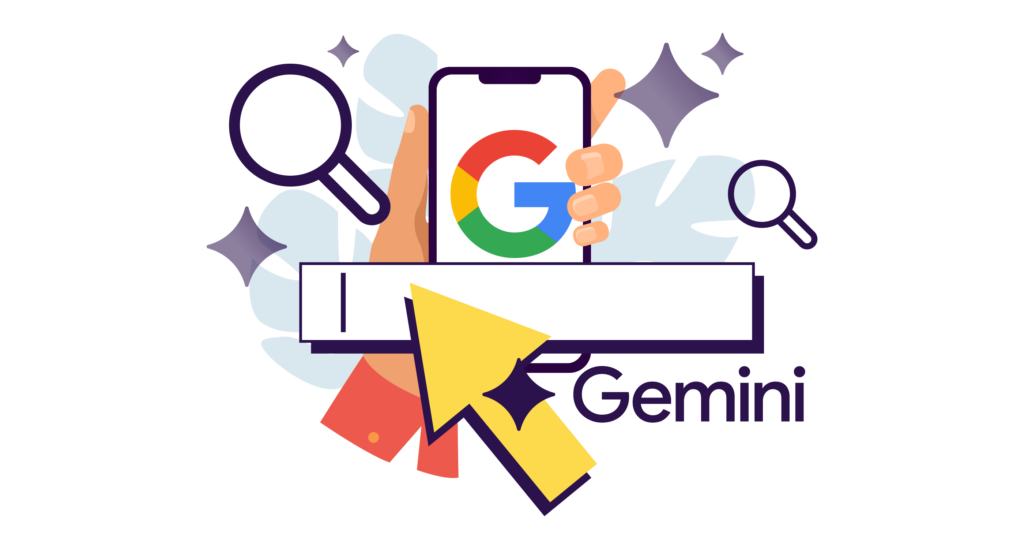
According to comments from Google’s head of Search, Liz Reid, the company isn’t even certain whether Google Search and Gemini will ultimately converge into one experience or evolve as separate products.
That might sound like a harmless product roadmap discussion.
In reality, it reveals something far more interesting.
Google—the company that defined search for two decades—is still figuring out what search should look like in the age of AI agents, conversational interfaces, and generative answers.
And when the market leader is still experimenting, it usually means one thing:
The entire search landscape is up for grabs.
Article Summary
- Google executives say it’s still unclear whether Google Search and Gemini will merge into one product or remain separate experiences.
- The uncertainty highlights how quickly AI is reshaping the search landscape.
- Google appears to be experimenting with two different paradigms: traditional search results vs conversational AI answers.
- The eventual outcome could dramatically change how users discover information online.
- For marketers, the takeaway is clear: visibility will increasingly depend on AI platforms as well as traditional search engines.
Google Is Running Two Different Search Experiments
Right now, Google is effectively operating two discovery systems at once.
First, there’s the familiar experience:
Google Search.
It still delivers the classic format we know:
- Search query
- Ranked results
- Links to websites
Yes, it now includes AI Overviews, rich results, and interactive elements.
But fundamentally, it still behaves like a search engine.
Then there’s Gemini.
Gemini is something different.
It’s conversational. It’s interactive. And it doesn’t necessarily prioritize sending users to websites.
Instead, it focuses on generating answers.
These two paradigms represent very different philosophies of information discovery.
Search: Find the best page. AI: Generate the best answer.
Google is currently exploring both.
The question is whether those worlds eventually collide.
The Big Question: Do People Want Search or Answers?
At the heart of this debate is a simple question.
When people look for information online, what do they actually want?
Do they want:
The best source of information, or the fastest possible answer?
Traditional search assumes the first.
AI systems assume the second.
Historically, Google has acted as a traffic router for the web. It finds the best pages and sends users there.
But generative AI changes that equation.
If an AI system can synthesize information instantly, the user might never need to visit the original source.
This is exactly why publishers have become increasingly nervous about AI-driven search experiences.
The entire economic model of the web depends on traffic flowing from search engines to content creators.
If AI systems start answering everything directly, that model starts to wobble.
Gemini Suggests a Different Internet
One of the more intriguing comments from Google’s leadership was the suggestion that the future web might involve AI agents interacting with each other regularly, not just humans.
That idea might sound abstract.
But it hints at something big.
Instead of humans manually searching for information, we may eventually see AI assistants handling discovery on our behalf.
For example:
Your AI assistant could:
- Research products
- Compare services
- Plan travel
- Summarize articles
- Coordinate information from multiple sources
In that world, the interface isn’t a search engine.
It’s an AI.
And the web becomes something that AI systems interact with programmatically.
That’s a very different ecosystem than the one SEO was built around.
Google Has a Strategic Problem
The reason Google appears uncertain about Search vs Gemini is simple.
Both models have strengths.
Search is incredibly efficient for navigation and exploration.
If you want to:
- Find a specific website
- Compare products
- Browse multiple perspectives
Search works beautifully.
AI, on the other hand, excels at synthesis.
It can summarize information quickly and generate explanations tailored to the user.
But AI also introduces risks.
Generated answers can:
- Hallucinate
- versimplify complex topics
- remove context from original sources
Google has spent decades building trust as a gateway to information.
Replacing that system with AI-generated answers requires careful balance.
Which explains why the company appears to be testing multiple approaches simultaneously.
What This Means for SEO
For marketers, the uncertainty around Search and Gemini highlights something important.
The definition of search visibility is expanding.
Traditional SEO focused on ranking in Google’s organic results.
But AI systems are creating new surfaces where content can appear:
- AI-generated answers
- Conversational assistants
- AI-powered research tools
- Discovery feeds
Winning visibility in this environment requires more than ranking pages.
It requires building brand authority and structured knowledge that AI systems can interpret and reference.
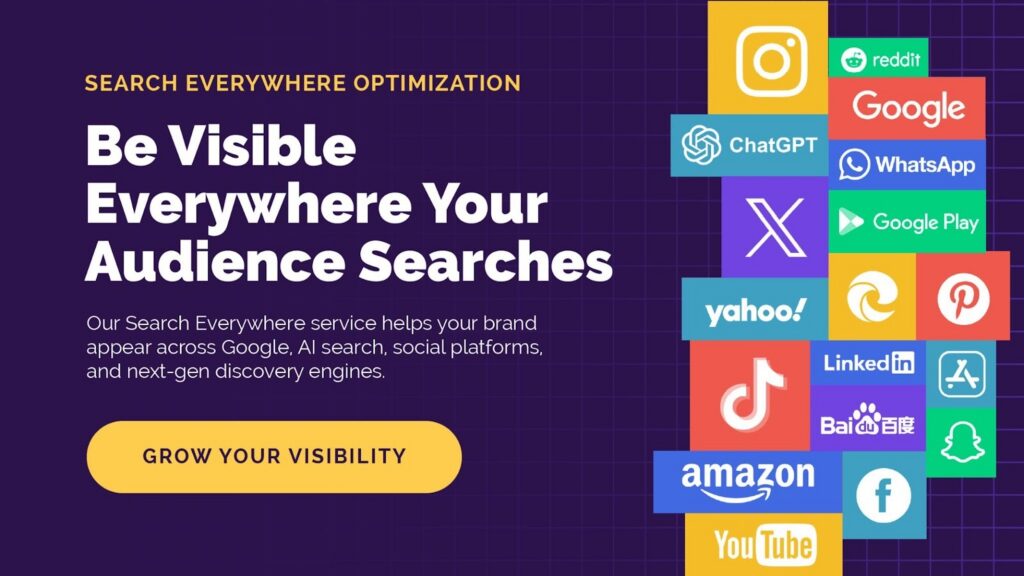
This is one reason many marketers are starting to talk about Search Everywhere Optimization™.
Because the places where people discover information are multiplying.
And not all of them look like search engines.
The Real Signal: Google Is Still Experimenting
The most interesting takeaway from this story isn’t the feature itself.
It’s the uncertainty.
Google doesn’t usually admit uncertainty publicly.
But when it does, it’s a sign that the company is exploring multiple future paths.
Right now, Google is essentially running a live experiment across the entire internet.
Will users prefer:
- AI-generated answers?
- Traditional search results?
- Some hybrid of both?
The answer will shape the next decade of the web.
And until Google sees clear user behavior signals, both systems will likely continue evolving side by side.
The Smart Strategy for Businesses
When platforms are experimenting, the safest strategy is diversification.
Relying entirely on one discovery channel—whether that’s Google Search, Gemini, or any other platform—creates risk.
Instead, brands should focus on building visibility across multiple ecosystems:
- Traditional search engines
- AI assistants
- Social discovery platforms
- Communities and forums
- Direct audience channels
Because if discovery continues shifting toward AI-driven experiences, the brands that win will be the ones already visible across the broader information landscape.
Want to Future-Proof Your SEO Strategy?
AI is rapidly changing how people discover information online.
Between traditional search engines, conversational AI platforms, and emerging discovery interfaces, the rules of visibility are evolving quickly.
At SEO Sherpa, we help brands adapt to this new environment through Search Everywhere Optimization™ strategies that ensure your content remains visible wherever discovery happens.
Book a free discovery call with our team.
We’ll review your current search strategy and help you build a future-ready approach that works across both traditional search and AI-powered discovery platforms.
Because the future of search might not be one platform.
It might be all of them.















Leave a Reply