


There’s a quiet shift happening in the browser.
Not the kind that arrives with fireworks or a dramatic keynote announcement. The kind that slips in through an update notification you click past while trying to reopen the 27 tabs you forgot about.
But make no mistake, it’s a big one.
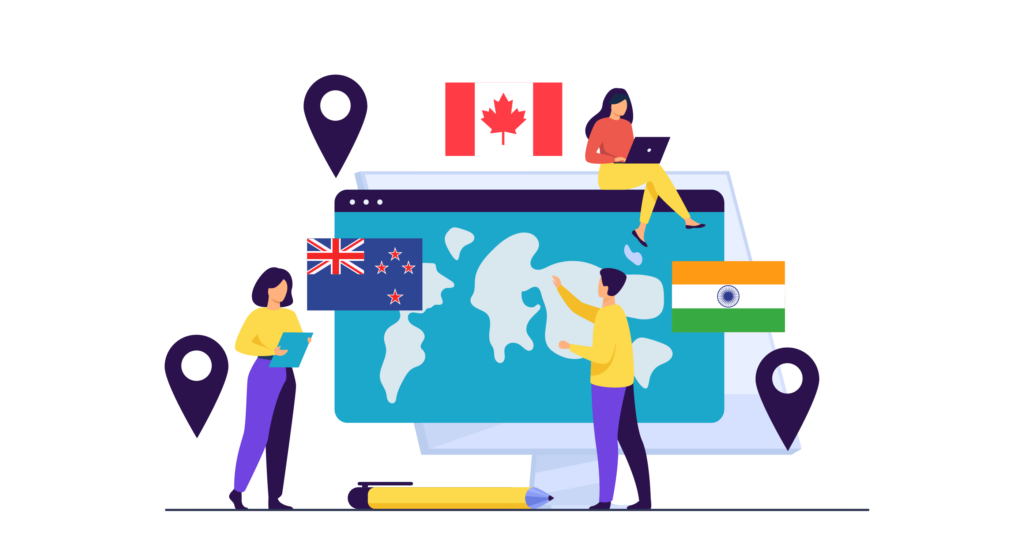
Google is expanding Gemini in Chrome—its AI assistant built directly into the browser—to users in India, New Zealand, and Canada, along with support for more than 50 additional languages.
At first glance, this looks like another incremental AI rollout.
Another assistant.
Another productivity feature.
Another “helpful” sidebar.
But when you zoom out, it’s something far more interesting.
Because when AI moves into the browser—the place where most of the internet is actually experienced—it stops being a tool you visit.
It becomes the layer that interprets the web itself.
And that changes how people search, discover information, and interact with content.
Which, of course, has enormous implications for anyone working in search.
Article Summary
- Google is expanding Gemini in Chrome to India, New Zealand, and Canada.
- The browser AI can work across tabs, summarize pages, and integrate with other applications.
- Support for more than 50 additional languages is also rolling out.
- As AI assistants move directly into browsers, discovery may increasingly happen through AI interpretation rather than traditional search results.
Why Putting AI Inside The Browser Is A Big Deal
Search has traditionally followed a familiar rhythm.
You open a new tab.
You type a query.
You scroll through results.
But when AI lives inside the browser itself, that flow begins to change.
Instead of sending users to search engines first, the browser can:
- Summarize the page you’re reading
- Compare information across tabs
- Answer questions about the content in front of you
- Surface related insights instantly
In other words, the browser becomes an AI interface for the internet.
And that matters because the browser is still one of the most powerful distribution channels in technology.
Google Chrome alone commands the majority of global browser market share.
Which means embedding AI directly into Chrome places it at the front door of the web.
Not as a destination.
But as a layer.

The Real Strategy Behind Gemini In Chrome
If you’ve been watching the AI race closely, this move makes perfect sense.
Right now, every major tech company is trying to answer the same question:
Where should AI live?
Inside search engines? Inside productivity apps? Inside operating systems?
Google’s answer appears to be: everywhere.
We’ve already seen Gemini appear in:
- Google Search
- Google Workspace
- Android devices
- AI Overviews in the SERP
Now it’s moving into the browser itself.
Which creates a powerful feedback loop.
The browser sees what users are reading.
Gemini interprets it.
And Google becomes the intermediary between users and the information on the page.
It’s less like traditional search and more like having a research assistant sitting beside you while you browse.
The Discovery Shift That Comes With Browser AI
Here’s where things get interesting for marketers.
Historically, discovery on the web relied on search queries.
You asked a question. A search engine returned results. You clicked a link.
But AI assistants embedded in browsers introduce a different dynamic.
Users don’t necessarily need to leave the page to explore related ideas anymore.
They can ask the browser.
Which means information may increasingly be surfaced through AI summaries, recommendations, and contextual insights rather than traditional search result pages.
That doesn’t eliminate SEO.
But it does change the path users take to reach content.
And when the path changes, the optimization strategy has to evolve as well.
The Search Everywhere Optimization™ Perspective
This is exactly why the search landscape is expanding beyond traditional SEO.
Discovery today happens across an entire ecosystem:
- Search engines
- AI assistants
- Social platforms
- Marketplaces
- Recommendation algorithms
Now we can add browser AI layers to that list.
Each of these environments acts as a gateway between users and information.
Which means brands can no longer think about visibility in terms of rankings alone.
They need to think about presence across discovery environments.
This is the central idea behind Search Everywhere Optimization™.
Your audience might discover your brand through:
- A Google search result
- A YouTube video
- An AI answer
- A social post
- Or an AI assistant summarizing your article inside a browser
All of those moments contribute to visibility.
And increasingly, they influence each other.

The Browser Is Becoming The New Search Interface
If you’ve been in SEO long enough, you’ve probably heard someone declare that “search is changing forever” about once every six months.
Usually with a dramatic blog post and a slightly alarming graph.
But this time, the shift might actually live up to the hype.
Because when AI assistants move into the browser, they sit exactly where the internet experience happens.
Not before it.
Not after it.
During it.
Which means they can interpret content, connect ideas, and guide exploration in real time.
In other words, the browser becomes less like a window into the web and more like a co-pilot for navigating it.
For marketers and SEOs, that’s both exciting and slightly terrifying.
Exciting because it creates new discovery pathways.
Terrifying because those pathways are increasingly mediated by AI systems deciding what information is most relevant.
And if your brand isn’t part of that information ecosystem…
You risk disappearing from the conversation entirely.
The Real Takeaway For Marketers
AI is rapidly moving from standalone tools into the core infrastructure of how people use the internet.
Search engines.
Operating systems.
Browsers.
Apps.
Every layer is becoming intelligent.
And every layer influences discovery.
The brands that succeed in this environment won’t just optimize for one platform.
They’ll build visibility across the entire discovery ecosystem.
That’s exactly what Search Everywhere Optimization™ is designed to do.
If you want to understand how to position your brand for visibility across AI search, traditional search, and emerging discovery platforms, book a free discovery call with SEO Sherpa.
We’ll help you build a search strategy that works everywhere your audience is looking.













Leave a Reply