
Summarize This Article With AI
 Try with ChatGPT
 Try with Claude
 Try with AI Mode
Nobody talks about Giphy in their marketing strategy meetings. And that’s exactly why you should.
While everyone else is obsessing over Google rankings, Instagram reach, and LinkedIn impressions, Giphy is sitting quietly in the background serving 1.3 billion search queries every single day and powering more than 15 billion daily media impressions across Instagram, TikTok, iMessage, WhatsApp, Twitter/X, and Slack.
That’s not a niche platform. That’s an enormous, largely uncontested search surface that most brands have never thought to optimize.
Giphy’s own co-founder, Alex Chung, declared it the second-largest search engine in the world by total searches, behind only Google. The difference is that Google search optimization is fiercely competitive, with billions of dollars invested in it. Giphy SEO is not. Yet.
This is a channel where a well-tagged GIF from a brand no one has heard of can accumulate tens of millions of views simply because it appeared first for the right search term. And once you understand how the algorithm works, getting there is more straightforward than most traditional SEO.
Here’s how it works.
Article Summary
- Giphy is a search engine with 1.3 billion daily queries, powering GIF discovery across Instagram, TikTok, iMessage, WhatsApp, and more.
- Tags are the most critical ranking factor on Giphy. Without the right keyword tags, your GIF is invisible regardless of how good it looks.
- Engagement signals (views, shares, click-throughs) determine whether Giphy promotes or demotes your GIFs after initial testing in organic results.
- A Verified Brand Channel is essential for brands — without it, your stickers won’t surface in Instagram and TikTok’s built-in GIF search tools.
- Keyword research applies here just like anywhere else. Targeting lower-competition search terms (under 10,000 results) dramatically increases your chances of ranking.
- Giphy SEO is an untapped competitive advantage and one of the most underused tactics in any Search Everywhere Optimization™ strategy.
What Is Giphy SEO?
Giphy SEO is the practice of optimizing your GIFs, stickers, and branded content on Giphy so they rank higher in Giphy’s search results and surface across the third-party platforms Giphy powers.
The concept is sometimes called GIF Engine Optimization, or GEO (not to be confused with Generative Engine Optimization). Whatever you call it, the discipline is the same: identify the right keywords, tag your content accurately and strategically, create GIFs that generate genuine engagement, and build the kind of account authority that the Giphy algorithm rewards.
It’s SEO. Just for animated images.
Giphy as a Search Engine
Most people interact with Giphy without realizing they’re using a search engine. Every time someone opens the GIF keyboard in Instagram Stories, types a reaction into a Slack message, or searches for an emotion in WhatsApp, they’re querying Giphy’s database.
That database contains hundreds of millions of GIFs, all indexed and ranked by an algorithm that determines which results appear first for any given search term. The algorithm evaluates keyword relevance, engagement signals, and account authority, then surfaces the most appropriate GIF for the query.
Sound familiar? It should. This is search engine logic applied to visual, emotional, conversational content.
Why Giphy SEO Matters for Brands
Here’s the opportunity in plain terms.
When someone searches “excited” in their Instagram Stories GIF keyboard, they see a ranked list of results. If your brand’s GIF appears at the top of that list, every person who uses it is distributing your branded content to their audience. That distribution is organic. It’s free. And it scales infinitely because the content is designed to be shared.
Over 25% of Instagram Stories now contain a GIF, and the vast majority of those GIFs come from Giphy’s library. Brands that have invested in optimizing their Giphy presence are getting millions of passive impressions from this content every day. Brands that haven’t are simply invisible on a surface that their audience actively uses.
How Giphy Search Works
Understanding how Giphy’s algorithm works is the fastest path to optimizing for it effectively.
Keyword Tagging System
Tags are everything on Giphy.
When you upload a GIF, you assign it a set of keyword tags. These tags are what Giphy’s search engine uses to determine which queries your GIF should appear for. Without tags, your GIF effectively doesn’t exist in search. With the wrong tags, it ranks for queries no one is searching. With the right tags, it can accumulate millions of impressions.
Giphy recommends using at least 10 tags per GIF, and the sweet spot appears to be 10–20 highly relevant, varied tags. These should include a mix of the emotion or reaction your GIF conveys, the action happening in the GIF, your branded keywords, and relevant contextual terms.
The brief guide here: think like the person searching, not like the brand creating.
Someone searching for a GIF to react to good news isn’t typing your company name. They’re typing “excited,” “yes,” “celebration,” “good news,” or “happy dance.” Those are the tags that get your GIF used. Your brand name tags are important for brand search, but they’ll never drive the volume that emotion-based and action-based tags will.
Engagement Signals
After you upload a GIF with your tags, Giphy’s algorithm begins testing it in organic search results.
It observes how users interact with it. Are they clicking on it? Are they using it (sharing it)? Are they scrolling past it? Based on that behavior data, Giphy decides whether to promote the GIF higher in the rankings or demote it. A GIF that generates high click-through and share rates for a given keyword will climb. A GIF that gets scrolled past repeatedly will fall.
This is the same feedback loop you see in Google’s user engagement signals. The algorithm uses real user behavior to validate (or invalidate) relevance.
The implication is that your GIFs need to be genuinely good. Not just tagged correctly, but visually clear, emotionally resonant, and immediately recognizable in the context of the query they’re targeting. A blurry, slow-loading GIF that technically matches a tag won’t survive the engagement test.
Account Authority
Giphy also weighs the account the GIF comes from.
A Verified Brand Channel carries significantly more authority than an unverified account. Verified accounts get priority distribution across Giphy’s partner platforms, including Instagram’s GIF sticker search and TikTok’s built-in GIF tools. Without verification, your stickers simply will not appear in those in-app searches at all.
Consistent uploading, account completeness, and a history of well-performing GIFs all contribute to account-level authority signals over time.
Giphy SEO Ranking Factors
Here’s your quick reference checklist of what Giphy’s algorithm weighs when ranking GIFs:
- Keyword tag relevance: How precisely your tags match the search query
- Tag quantity and variety: Using 10–20 varied, accurate tags per GIF
- Engagement rate: Views, shares, and click-throughs after initial testing
- Loop quality: GIFs that loop seamlessly perform better; jarring cuts lose engagement
- Visual clarity: Clear, well-lit, easy-to-understand GIFs outperform cluttered ones
- File size and load speed: Keep files under 8MB ideally; slow-loading GIFs lose users
- Account verification status: Verified channels get priority placement in partner apps
- Posting consistency: Active accounts with a growing library rank better over time
- Branded vs. generic balance: Mix branded and non-branded tags to maximize reach
How to Optimize GIFs for Giphy SEO
Keyword Research for GIFs
Yes, keyword research applies here.
Before you create a single GIF, spend time in Giphy’s search bar typing the keywords you want to rank for and noting how many results come up. If a keyword returns fewer than 10,000 GIFs, it’s a viable target. Fewer than 1,000 results are a genuine opportunity, what the brief calls a “gold mine.”
A sports brand trying to rank for “sports” is competing against hundreds of thousands of results. That same brand targeting “perfect pass” or “goal celebration” might find far less competition and a highly engaged audience for exactly that content.
Think in terms of emotions, reactions, actions, cultural moments, and niche interests. These long-tail GIF queries are where the best opportunities live.
Your branded keywords also matter here. Include your brand name, campaign taglines, and any phrases strongly associated with your identity as tags on every GIF you upload. Somebody searching specifically for your brand should find your GIFs immediately.
Optimize Titles and Tags
Your title and tags are doing the same job as a page title and meta description in traditional SEO. They tell the algorithm what your content is about.
For titles, be descriptive and keyword-forward. Instead of “GIF #1,” write “Excited Happy Dance Celebration Reaction.” That title is searchable in its own right and reinforces the tags.
For tags, build a structured tagging framework for each GIF:
- Primary emotion or reaction (e.g., “excited,” “nervous,” “celebrating”)
- Action in the GIF (e.g., “jumping,” “clapping,” “facepalm”)
- Context tags (e.g., “work,” “Monday,” “meeting,” “Friday feeling”)
- Your brand keywords (e.g., your brand name, campaign hashtags)
- Cultural or seasonal relevance where applicable (e.g., “summer,” “new year”)
Avoid tag stuffing for keywords that aren’t genuinely relevant. Giphy’s engagement testing will expose irrelevant tags quickly — if users searching for an unrelated term see your GIF and don’t click, that’s negative engagement data the algorithm factors in.
File Naming and Metadata
Before you upload, name your GIF file with your target keyword rather than a default alphanumeric filename. “excited-celebration-reaction-[brandname].gif” gives the algorithm an additional relevance signal compared to “IMG_20241104_094312.gif.“
This is exactly the same logic as naming image files descriptively before uploading to a webpage. It’s a small signal, but it costs nothing and reinforces everything else you’re doing.
Visual Clarity and Loop Quality
A GIF that loops badly breaks the viewing experience and signals low quality to both users and the algorithm.
Your GIFs should loop seamlessly. The last frame should connect naturally to the first. The content should be immediately clear in the first second. Movement should be smooth. File size should be small enough to load quickly — ideally under 8MB, never over 100MB.
For branded stickers specifically, the content should work on any background since users add them over their own photos and videos. That means transparent backgrounds for stickers, clear visual hierarchy, and enough contrast to be legible at small sizes on a busy Stories background.
How to Rank Giphy Stickers on Instagram and TikTok
This is where Giphy SEO becomes genuinely powerful for brand reach.
When Instagram and TikTok users open the sticker or GIF search tool within the app, they’re searching Giphy’s database directly. A well-optimized sticker from a Verified Brand Channel can appear in those in-app searches and be placed directly in millions of Stories and TikToks by users who may never have heard of your brand.
Transparent Background Stickers
Stickers are a separate content type from regular GIFs on Giphy. They require a transparent background (PNG-style, not a solid color fill) so they can be layered cleanly over any content.
This is a technical requirement, not optional. A sticker with a solid background looks wrong on any Stories post, and users won’t use it. Transparent background stickers that look clean and intentional get used repeatedly.
Branded vs. Non-Branded Keywords
The most common mistake brands make is tagging all their GIFs only with their own brand name.
Here’s the reality: most people searching for a GIF to express emotion in iMessage are not typing your brand name. They don’t know your brand. They’re typing “ugh,” “seriously,” “let’s go,” or “thank you.” If your branded GIFs are only tagged with your brand, they’ll only surface for people already looking for you. That’s a tiny audience.
Tag your GIFs with the emotional and contextual keywords first. Add your brand keywords too. But the non-branded tags are what drive discovery from new audiences, and discovery is the point of being on Giphy.
Trending Keywords Strategy
Seasonal moments and cultural events create temporary search spikes on Giphy. “Back to school,” “summer vibes,” “World Cup,” “awards season,” “Black Friday” — all of these generate elevated search volume at predictable times of year.
If you create GIFs timed to these moments and tag them with the relevant seasonal keywords before the search spike hits, you can ride the wave of increased traffic. This is the GIF equivalent of creating timely, trending content for Google search, and it works for the same reasons.
Giphy SEO for Brand Awareness
Creating a Verified Brand Channel
Verification is not a nice-to-have. It is the prerequisite for everything that matters.
Without a Verified Brand Channel, your stickers will not appear in Instagram’s or TikTok’s built-in GIF tools. Full stop. The verification application process typically takes 2–14 days, and Giphy requires proof of a legitimate business with a professional website and an established social media presence, along with a minimum of 5–10 original quality GIFs already uploaded to your account.
Get this done first. Everything else you do on Giphy only matters if your channel is verified.
Campaign-Based GIF Sets
Rather than uploading GIFs randomly, treat each campaign, product launch, or brand moment as an opportunity to create a coherent GIF set.
A product launch might generate five to 10 GIFs covering reactions (excitement, curiosity, celebration), product-specific actions, and branded expressions tied to the launch messaging. Tagged correctly, each GIF in the set reinforces the others and builds topical authority around your campaign keywords.
This approach also gives you content for cross-promotion. Embedding campaign GIFs in blog posts, sharing them on social channels, and linking to your Giphy channel in relevant content all generate external signals that reinforce your Giphy authority.
Influencer and UGC Amplification
The most efficient way to accelerate Giphy performance is to get other people using your GIFs.
When creators and users include your branded GIFs in their Stories, TikToks, or messages, those uses register as engagement signals in Giphy’s algorithm. A coordinated influencer campaign that seeds your GIFs across relevant creators’ content can dramatically accelerate the engagement data the algorithm needs to start ranking your content prominently.
This sits naturally within a content marketing or digital PR strategy. Distribution is as important as creation on Giphy, and relationships with creators who can seed your content into real conversations are a genuine competitive advantage here.
Common Giphy SEO Mistakes to Avoid
Thin tagging. Uploading a GIF with two or three tags and calling it done is leaving almost all of your potential visibility on the table. Ten well-chosen, varied tags are the starting point.
Only tagging your brand name. As established above, your brand name is important, but it won’t drive discovery. Emotion, reaction, action, and context tags are what get new audiences to use your GIFs.
Poor loop quality. A GIF that doesn’t loop cleanly communicates low production value. Users won’t use it. The algorithm will demote it. Fix the loop.
Creating GIFs that only work for your brand. “Celebrate with [Brand Name]” is not a reaction a random user is looking for. “Celebration dance” is. The best branded GIFs work as universal reactions that happen to feature your brand identity subtly, not content that’s overtly promotional.
Uploading and forgetting. Giphy SEO rewards consistency. An account that uploads a batch of GIFs once and then goes dark will lose ground to accounts that add fresh content regularly.
Giphy SEO in a Search Everywhere Strategy
Most brands think of search as Google. Some have expanded that to include TikTok and Instagram. Very few have thought about the GIF search bar.
That gap is the opportunity.
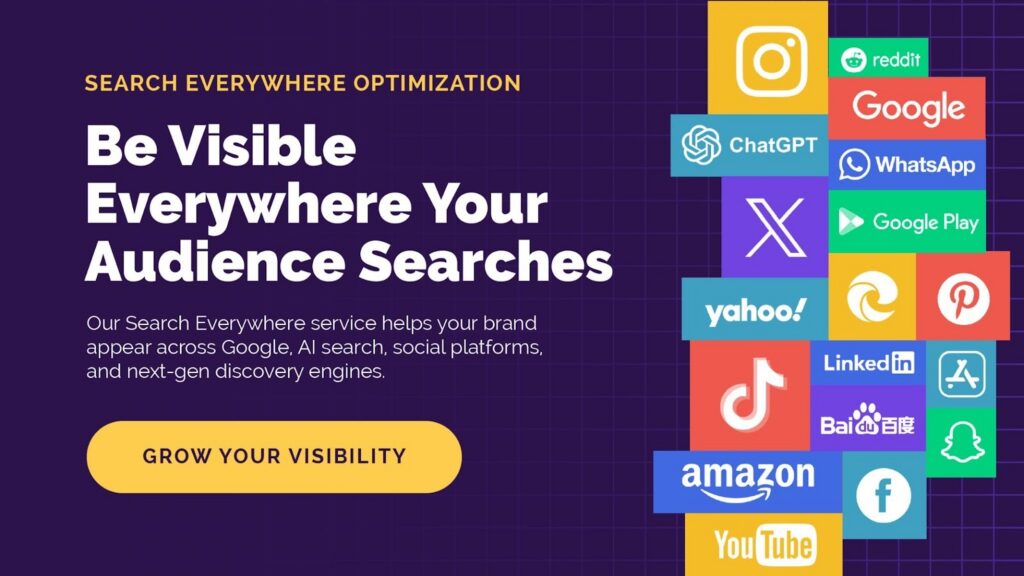
Search Everywhere Optimization™ is built on the principle that your audience doesn’t search in one place. They search on Google, on social platforms, in AI tools, in communities, in messaging apps, and yes, in GIF keyboards. A brand that shows up in all of those places has a compounding visibility advantage that a brand optimizing only for Google simply cannot match.
Giphy is one of the most accessible entries into that multi-surface visibility because the competition is genuinely low, the content format (GIFs) is inherently shareable, and the distribution network (15 billion daily impressions across the platforms your audience already uses) is enormous.
GIFs Are a Search Asset
A well-tagged, well-crafted GIF on a Verified Brand Channel is not just a fun piece of content. It is a search asset.
It can rank for competitive emotional queries. It can be distributed organically by millions of users across Instagram, TikTok, iMessage, and Slack without a single dollar in paid media. It can generate brand impressions in the intimate context of personal conversations where traditional advertising has no access.
And most of your competitors have never thought about it.
If you’re building a Search Everywhere Optimization™ strategy and want to ensure your brand shows up across every channel your audience uses, we’d love to help you map it out. Book a free discovery call with the SEO Sherpa team, and let’s talk about the full picture.

















Leave a Reply