


Google just expanded Gemini to Home Assistant devices, adding LLM-powered conversational search directly into homes.
This shift marks the long-awaited comeback of voice search.
Transforming how users interact with Google and opening new doors for brand visibility across voice interfaces.
Article Summary
- Google expands Gemini to Home Assistant, bringing LLM-powered conversational search into homes.
- This update makes voice search smarter and more contextual, capable of understanding intent and follow-up questions.
- It signals the long-awaited revival of voice search, now fused with AI-level comprehension.
- Content optimization shifts toward conversational phrasing, FAQ-style structures, and entity-based relevance.
- Speakable schema may finally become valuable again for voice surfaces.
- Brands that adapt early will gain visibility across the next major frontier: voice-driven discovery.
The Comeback Story No One Saw Coming
If you’ve been in SEO long enough, you probably remember when voice search was the buzzword of the decade. Every conference deck from 2016 to 2019 had a slide claiming “50% of searches will be voice by 2020.”
Then… nothing.
Voice assistants plateaued. Smart speakers became glorified timers. And SEOs quietly moved on to schema markup and featured snippets.
But now, it’s back—and this time, it’s got backup.
Gemini Just Gave Google Home a Brain Upgrade
Google’s expansion of Gemini to Home Assistant devices officially brings LLM-level intelligence into households.
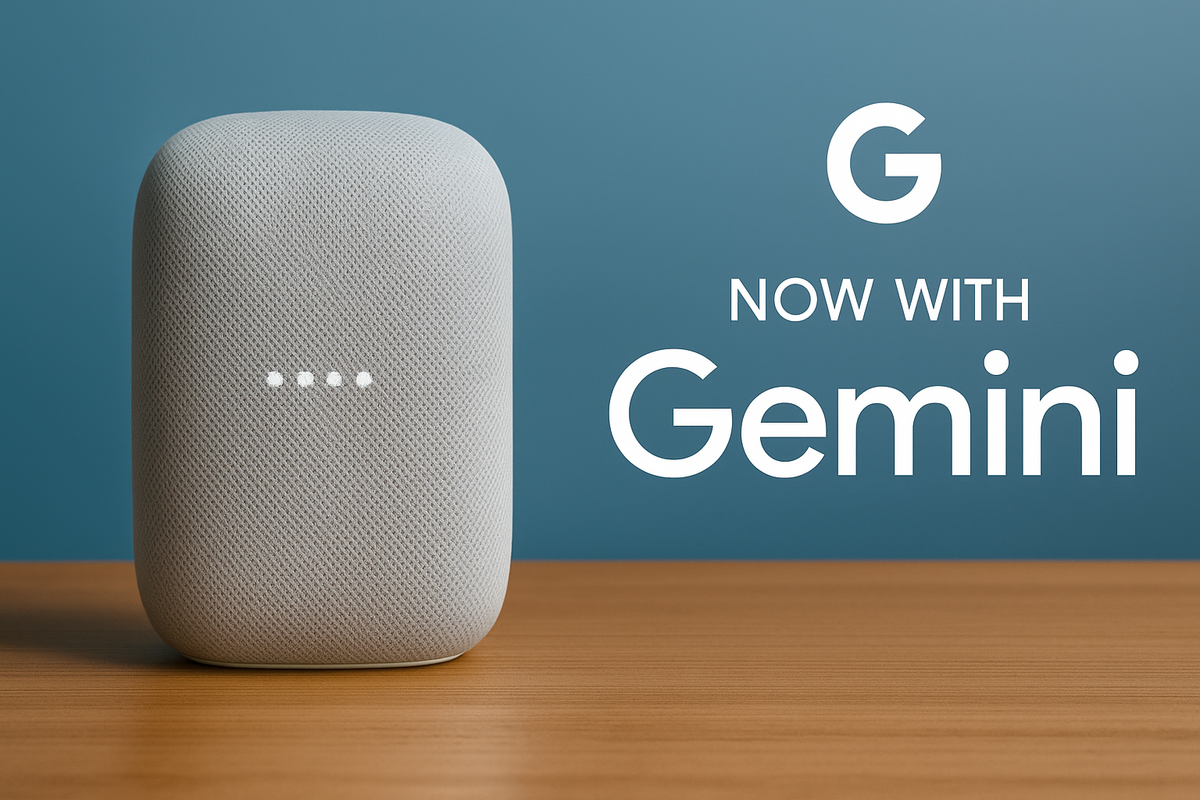
Instead of scripted voice commands (“Hey Google, what’s the weather?”), users can now have natural, contextual conversations.
Think:
- “Hey Google, find a restaurant nearby that matches my dietary preferences and isn’t too expensive.”
- “Who’s the creator of that song I played yesterday?”
- “Remind me what SEO tool Jenny mentioned in her last video.”
This isn’t just voice recognition—it’s voice comprehension. Gemini can now parse intent, follow up naturally, and even connect information across sessions.
Why This Changes Everything for Search
This isn’t another “nice-to-have” update—it’s a fundamental shift in how people query Google.
We’re entering a world where:
- Search becomes ambient, happening through devices rather than screens.
- Results are conversational, not just lists of links.
- Content optimization needs to match spoken, natural phrasing, not keyword-heavy structures.
Voice and LLM-driven search are merging, which means your content’s NLP foundation (remember those entity-based structures and long-tail queries?) is about to finally pay off.
What SEOs Should Be Doing Right Now
If you’ve been future-proofing your content for LLMs and conversational search, congratulations—you’re ahead. But if not, here’s what to focus on:
1. Optimize for Conversational Queries
Use real questions, natural phrasing, and structured answers. Gemini thrives on intent-driven queries like “how do I,” “what’s the best way,” or “where can I.”
2. Revisit Speakable Schema
This might finally be the moment schema for voice assistants becomes valuable again. Mark up short, clear answers that Gemini can surface or read aloud.
3. Think Context, Not Keywords
Voice search powered by LLMs relies on understanding entities and relationships, not exact match keywords. Align your content with how topics connect, not how they’re phrased.
The Bottom Line
Voice search is officially getting its second act—powered by AI.
And this time, it’s smarter, faster, and actually useful.
So while the rest of the industry is still debating clicks and impressions, smart brands will be optimizing for the next real frontier: voice-driven discovery.
Because if Google Home can now talk like Gemini, the future of search might just sound a lot more human.
Ready to Be Found Everywhere?
Voice search isn’t coming; it’s already here.
If you want your brand to show up when people (and their devices) start asking the questions that matter, our team can help.

Book a free discovery call with SEO Sherpa and let’s future-proof your visibility across every search surface — from Gemini to Google.













Leave a Reply