


If SEO is how people find you, digital PR is why they trust you.
And in 2026, trust is doing a lot of heavy lifting.
Search engines are no longer just ranking pages. They’re evaluating brands. They’re looking at who talks about you, where you’re mentioned, and whether authoritative sites vouch for you. At the same time, digital PR on its own can generate buzz that looks great on a slide deck but quietly disappears if it never translates into search visibility or organic traffic.
This is where the SEO vs digital PR debate usually goes wrong.
It’s framed as a choice when in reality, it’s a partnership.
SEO focuses on search engine optimization fundamentals like technical SEO, content optimization, keyword research, and site structure to help your website rank higher in search engine results pages. Digital PR focuses on storytelling, media coverage, brand reputation, and relationship-building to earn high-quality backlinks and brand mentions from authoritative sites.
Separately, they deliver partial wins.
Together, they create momentum.
SEO ensures your brand is visible when people actively search. Digital PR ensures your brand looks credible when they do. One feeds rankings. The other feeds authority. Both influence search engine visibility, brand perception, and long-term organic rankings.
This article breaks down where SEO and digital PR differ, how they work together, and why modern growth strategies need both if they want to win consistently.
Article Summary
- SEO focuses on rankings, organic traffic, and technical website optimization
- Digital PR focuses on brand authority, media coverage, and high-quality backlinks
- SEO without digital PR struggles to build trust and authority signals
- Digital PR without SEO often fails to translate awareness into sustained traffic
- High-quality links from digital PR directly improve search engine rankings
- SEO ensures PR-driven visibility turns into measurable search performance
- The strongest strategies integrate SEO and digital PR from day one
Next, let’s break down what SEO actually is, beyond the buzzwords, and why it forms the foundation for everything that follows.
What Is SEO?
Search engine optimization, or SEO, is the practice of making your website easier for search engines to understand, trust, and rank.
At its core, SEO is about helping your site appear in relevant search results when people actively look for answers, products, or services. That means showing up on search engine results pages when potential customers type queries into Google, Bing, or other search engines, not just once, but consistently.
Modern SEO goes far beyond sprinkling keywords into a blog post and hoping for the best. It blends technical SEO, content creation, and off-page SEO into one connected system designed to improve a website’s visibility, rankings, and organic traffic over time.

On the technical side, SEO focuses on things like site speed, mobile performance, crawlability, indexing, and site structure. If search engines cannot efficiently crawl your pages or understand how your content fits together, rankings suffer, no matter how good the content is. Technical SEO ensures your website is fast, accessible, and structurally sound so search engines can do their job properly.
On-page SEO is where content and optimization meet. This includes keyword research, relevant keywords mapped to specific pages, optimized title tags, meta descriptions, internal linking, and content that aligns with search intent. When SEO is done well, each web page serves a clear purpose and answers a specific search query better than competing pages.
Off-page SEO plays an equally important role. Search engines look at how other websites reference and link to your content as a signal of credibility. High-quality backlinks from authoritative sites tell search engines that your content is trusted and worth ranking. This is where SEO and digital PR begin to overlap, even if they come at the problem from different angles.
Ultimately, SEO focuses on improving search engine rankings, driving organic traffic, and increasing a website’s visibility across search results. It is a long-term strategy. Results take time, often three to six months or more, but they compound. Once your pages rank, they can generate consistent traffic without paying for every click.
SEO is not about tricking search engines. It is about aligning your website with how search engines evaluate relevance, authority, and user experience.
Now let’s contrast that with digital PR, which plays a very different role in how brands earn attention and trust online.

What Is Digital PR?
Digital PR is the modern evolution of traditional public relations, built specifically for the online world and deeply intertwined with how brands earn visibility, credibility, and authority today.
Where traditional PR focused on print coverage, press releases, and brand perception alone, digital PR focuses on earning attention across online media, news sites, blogs, and authoritative publications that influence both people and search engines. The goal is not just to be talked about, but to be talked about in the right places, in a way that drives measurable impact.
At a tactical level, digital PR campaigns revolve around creating newsworthy, high-quality content and pitching it to journalists, editors, creators, and media outlets. This might include data studies, thought leadership, reactive commentary, product launches, or creative campaigns designed to spark coverage. When those stories land, they often result in media mentions, referral traffic, and most importantly for SEO, high-quality backlinks from high authority sites.
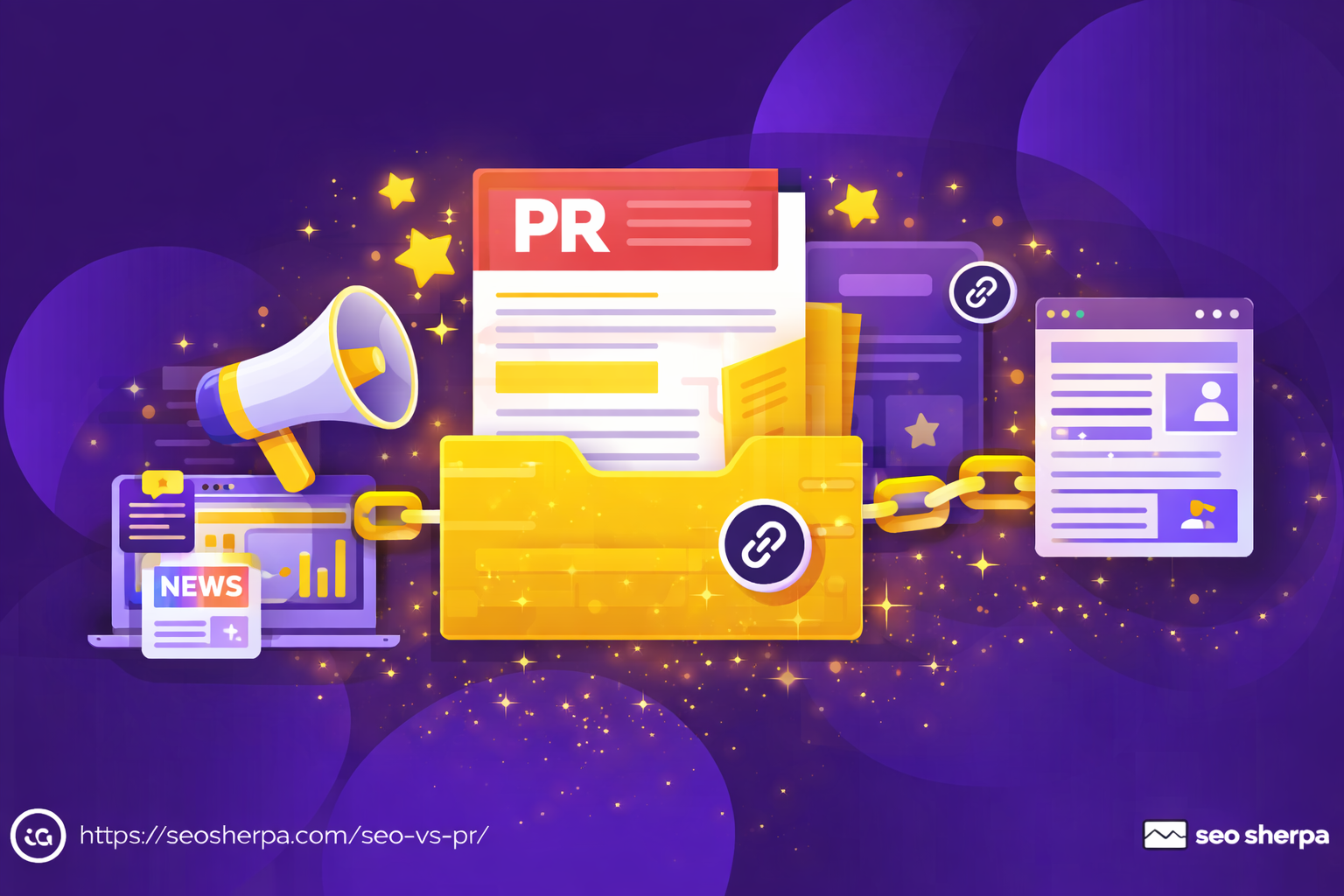
This is where digital PR works very differently from SEO, even though the outcomes increasingly overlap. Digital PR focuses on brand authority, reputation, and visibility. It is about shaping how a brand is perceived, building trust, and earning coverage through storytelling and relationship-building. SEO, by contrast, focuses on rankings, search engine visibility, and performance in search results.
Unlike traditional PR strategies, digital PR is measurable. You can track referral traffic from news sites, brand mentions across the web, earned links, improvements in domain authority, and even increases in branded search volume after a strong digital PR campaign. These signals matter because search engines use them as trust and authority indicators when deciding how websites rank.
Digital PR also plays a powerful role in brand reputation management. When done well, it can help push positive stories into prominent positions across search engine results pages, making it easier for potential customers to find credible, authoritative information about your brand. In competitive or sensitive industries, this can be just as important as driving direct traffic.
Another key difference is intent. SEO targets users who are already searching. Digital PR creates demand by putting your brand in front of people who were not actively looking but become curious after seeing coverage. That curiosity often leads to branded searches later, which are strong signals for search engines and a major reason digital PR and SEO work so well together.
In short, digital PR focuses on earning attention, trust, and authority through media coverage, relationship-building, and the creation of compelling content. It boosts online visibility, strengthens brand perception, and creates the kind of signals search engines value but cannot be manufactured through optimization alone.
Next, let’s break down the key differences between SEO and digital PR, and why treating them as competing strategies misses the bigger picture.

SEO vs Digital PR: The Key Differences
This is where people usually try to force a face-off. SEO on one side. Digital PR on the other. Gloves on. Winner takes the budget.
In reality, they are solving different problems at different layers of visibility. Same end goal, very different routes.
Let’s break it down properly.
Goals and Outcomes
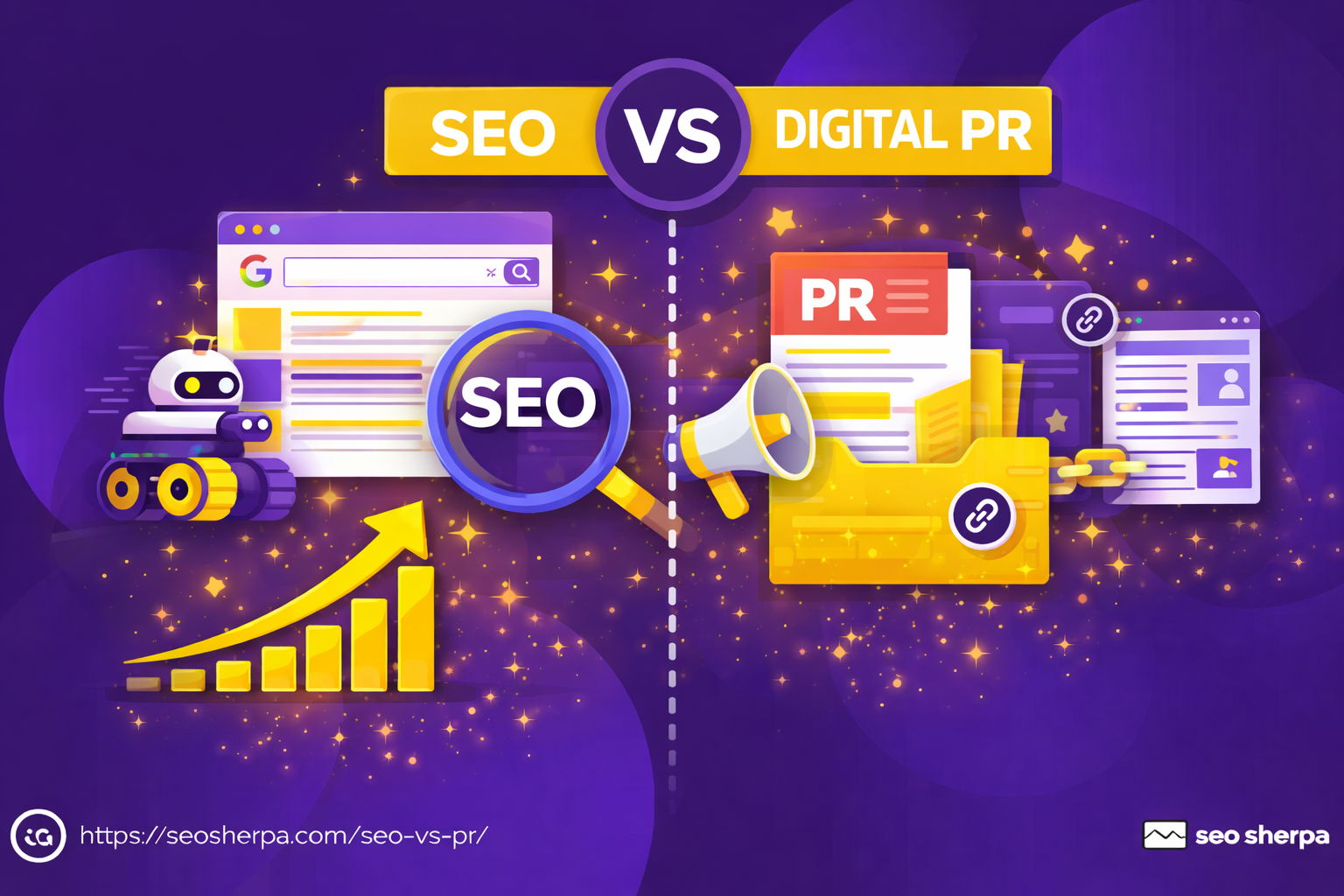
SEO is obsessed with performance. Rankings, organic traffic, search engine visibility, conversions. It lives and dies by how well your website shows up in search engine results pages when someone types a specific query into Google or other search engines.
Digital PR is obsessed with perception and authority. Brand awareness, credibility, media coverage, trust. A strong digital PR campaign is about shaping how your brand is talked about and where it appears online, especially on high authority sites, news outlets, and industry publications.
Here’s the overlap point that matters.
Successful PR campaigns tend to increase branded search volume. People see your brand mentioned on news sites, podcasts, or media outlets, then go and search for you directly. That spike in branded searches is a powerful trust signal for search engines and often correlates with improved search rankings over time.
SEO helps you rank higher when demand already exists.
Digital PR helps create that demand in the first place.
Channels and Tools
SEO lives inside your website and your data stack. Keyword research, technical SEO, site structure, internal linking, content optimization, page speed, mobile performance, broken links, crawlability. Tools like Google Search Console, analytics platforms, and SEO software dominate this world.
Digital PR lives outside your website. Outreach, relationship-building, storytelling, pitching journalists, securing media mentions, and earning backlinks from authoritative sites. The tools look different, too. There are media databases, outreach platforms, campaign tracking, referral traffic analysis, and brand mention monitoring.
SEO focuses on search engines.
Digital PR focuses on people first, then earns value from how search engines interpret that attention.
Another key difference is control. SEO is largely deterministic. You can optimize a page, fix technical issues, refine keyword targeting, and influence outcomes directly over time. Digital PR is probabilistic. You pitch, you promote, you create high-quality content, but coverage depends on timing, relevance, and editorial decisions.
That unpredictability is not a weakness. This is why digital PR carries so much weight.
Search engines trust what they cannot easily game. Earned links, brand mentions, referral traffic from news sites, and authoritative media coverage all signal that a brand is legitimate, relevant, and worth surfacing in search results.
SEO ensures your website is discoverable and performs well once people arrive.
Digital PR ensures your brand is talked about, trusted, and linked to across the web.
Different tools. Different tactics. Different levers.
Same scoreboard in the end.
How SEO and Digital PR Work Together
This is where things stop being theoretical and start making a lot of sense.
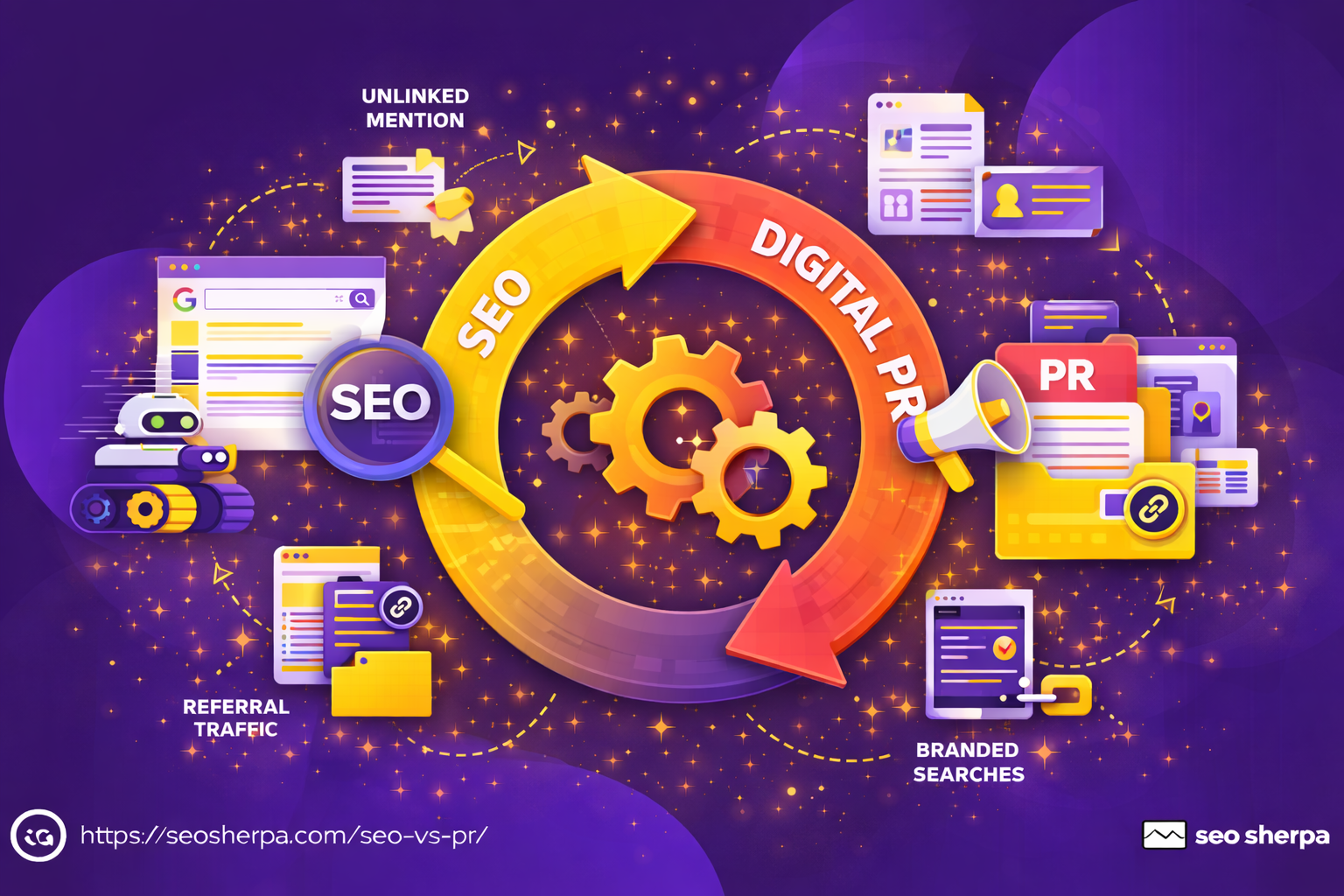
SEO and digital PR are not parallel tracks. They are more like a flywheel. When one moves, the other spins faster.
Digital PR earns attention. SEO turns that attention into long-term value.
When a digital PR campaign lands coverage on high authority sites, a few important things happen all at once. You earn high-quality backlinks from trusted media outlets. You generate referral traffic from readers who are already interested. You increase brand mentions across the web. And very often, you spark curiosity that leads people straight to Google to search for your brand.
Search engines pay close attention to all of this.
Those earned backlinks strengthen domain authority and directly support off-page SEO. Brand mentions, even when they are unlinked, help reinforce brand credibility and entity recognition. Referral traffic sends positive engagement signals. Branded search demand increases. All of these are strong trust indicators that influence search engine rankings over time.
SEO then takes over and amplifies the impact.
Optimized landing pages ensure that PR-driven traffic actually converts. Technical SEO makes sure those pages load fast, work on mobile, and are easy for search engines to crawl and index. Keyword-optimized content helps PR coverage rank in search results, pushing positive stories higher in the SERPs and improving overall brand perception.
This is especially powerful for reputation management. If a brand faces negative sentiment, SEO and digital PR together can saturate search engine results pages with authoritative, positive content. PR supplies the stories. SEO ensures they rank.
There is also a content advantage most teams overlook.
The best digital PR campaigns are built on genuinely useful, newsworthy assets. Original data, expert commentary, industry insights, strong narratives. That same content can be repurposed into blog posts, resource hubs, and evergreen pages optimized for relevant keywords. One campaign can fuel multiple SEO wins when the teams are aligned.
Digital PR focuses on relationship building and storytelling.
SEO focuses on discoverability and performance.
Together, they create a loop where content earns attention, attention earns authority, authority earns rankings, and rankings drive sustained organic traffic.
In 2026, this integration is no longer optional. Search engines are increasingly weighing trust, brand authority, and real-world relevance. Digital PR builds those signals. SEO makes sure they compound instead of fading after the news cycle ends.
When PR and SEO operate in silos, value leaks out everywhere.
When they work together, every win stacks on top of the last.
That is how brands stop chasing rankings and start building lasting search visibility.
When to Prioritize One Over the Other
This is usually the point where someone says, “Okay, but which one do I actually need right now?”
Fair question. Annoying answer: It depends.
If your website has weak search engine visibility, thin content, or technical SEO issues, SEO needs to come first. There is no point pouring fuel into digital PR if your site cannot rank, convert, or even be crawled properly. SEO lays the foundation. It ensures your website is structurally sound, your content is aligned with search intent, and your pages can actually compete in search engine results pages. Without that base, even the best media coverage leaks value.
On the flip side, if your SEO fundamentals are solid but your brand lacks authority, trust, or recognition, digital PR becomes the accelerator. This is common for B2B brands, fintech, SaaS, e-commerce, and challenger brands trying to punch above their weight. You might already rank reasonably well for some relevant keywords, but you are being outranked by competitors with stronger brand perception, more media mentions, and higher domain authority. That is a digital PR problem, not a keyword problem.
There are also moments where digital PR should clearly take the lead. Product launches, funding rounds, major announcements, rebrands, or entry into new markets all benefit from PR first. These moments create demand. They generate branded searches. They earn high-quality backlinks and media coverage fast. SEO then captures and compounds that demand by making sure your brand appears consistently across organic search results when curiosity spikes.
SEO, by contrast, is usually a long game. It is ideal when you need steady organic traffic, predictable growth, and a cost-effective way to acquire customers over time. It is especially powerful for businesses competing on high-intent searches, local queries, or evergreen informational content.
The mistake is treating this as a permanent choice.
Most businesses that ask whether to focus on SEO or digital PR are really asking when to sequence them. Early-stage companies often need SEO to build discoverability. Growing brands need digital PR to build authority. Mature brands need both working together to defend rankings, protect reputation, and maintain visibility across competitive search landscapes.
And in a Search Everywhere world, that balance matters even more. AI-driven search, brand mentions, and authority signals mean you cannot rely on one discipline alone for very long.
If SEO builds the engine and digital PR builds the reputation, the strongest brands are the ones running both at the same time.

Building An Integrated SEO And Digital PR Strategy
In 2026, SEO vs digital PR is no longer a meaningful debate. The reality is that SEO and digital PR have moved from separate disciplines into a single, integrated growth engine. The brands winning search engine visibility are not choosing between rankings and reputation. They are deliberately engineering both.
This is where most strategies quietly fall apart. SEO teams focus on search engine rankings and technical SEO. PR teams focus on media coverage, press releases, and relationship building. Both generate value, but when they operate in silos, a lot of that value evaporates. The real leverage comes when PR and SEO are designed to support each other from the start.
Align Outreach With SEO Goals
A strong digital PR strategy does not start with a media list. It starts with search data. Keyword research reveals what your target audience is actively searching for. SEO strategy highlights where your website’s visibility is weakest and where authority gaps exist in search engine results pages.
Once that is clear, PR campaigns can be built with intent. Instead of chasing coverage for coverage’s sake, you pursue media outlets, news sites, and authoritative sites that actually influence domain authority, organic rankings, and search engine performance. That is how digital PR works when it is aligned with SEO. Media mentions become high-quality backlinks. Referral traffic becomes qualified organic traffic. Brand mentions reinforce brand authority inside search engines and other search engines beyond Google.
This is also where off-page SEO stops being a vague concept and becomes a measurable outcome of PR strategies.
Create Linkable Assets And Campaigns
Digital PR focuses on earning attention. SEO ensures that attention compounds.
The most effective digital PR and SEO campaigns are built around high-quality content that journalists actually want to reference. Original data, industry reports, expert commentary, strong blog posts, and genuinely useful resources all act as link magnets. When those assets live on a technically sound website with strong content quality, SEO ensures they rank, attract organic traffic, and support long-term search rankings.
Unlike traditional PR strategies that often rely on short-lived press releases, modern digital PR translates coverage into lasting SEO performance. High-quality links from high authority sites continue to benefit your website’s SEO long after the initial media coverage fades. That is how you boost brand authority and website visibility at the same time.
Measure Brand Reach And SEO Impact Together
This is where many teams still get it wrong.
PR success is often measured by media mentions and reach. SEO success is measured by organic traffic, search results, and website rankings. An integrated approach measures both together. Referral traffic from media outlets. Growth in branded searches. Improvements in search engine rankings for relevant keywords. Increases in domain authority. A visible lift in brand perception across search results.
SEO ensures the credibility earned through public relations actually shows up when potential customers search. Digital PR gives SEO the authority signals it cannot manufacture alone.
In short, SEO provides the foundation. Digital PR builds the reputation. Together, they create online visibility that neither can achieve in isolation. And in a Search Everywhere landscape, that integration is no longer optional.
SEO and Digital PR Win Together or Not At All
If there is one takeaway here, it is this.
SEO vs digital PR is the wrong framing.
SEO focuses on making your website discoverable, crawlable, and competitive in search engine results pages. Digital PR focuses on building brand authority, credibility, and visibility through media coverage, relationships, and high-quality backlinks. On their own, both can work. Together, they work a lot harder.
A strong SEO strategy ensures your content ranks, attracts organic traffic, and converts search demand. A strong digital PR strategy earns media mentions, referral traffic, and trust signals that search engines value. When you integrate PR and SEO properly, digital PR translates directly into better search engine rankings, stronger brand perception, and sustainable organic growth.
This is especially true in 2025. Search engines are increasingly brand-led. Authority, reputation, and real-world credibility matter more than ever. High-quality links from authoritative sites, consistent brand mentions across news sites, and genuine relationship building are no longer optional extras. They are core SEO practices.
Brands that separate SEO and digital PR often end up with half a strategy. Rankings without trust. Coverage without lasting visibility. Traffic without authority. The brands that dominate search results understand that SEO and digital PR are two sides of the same system.
If you are serious about boosting brand authority, improving search engine visibility, and building a strategy that compounds over time, integration is the only sensible path forward.
https://seosherpa.com/schedule/?utm_source=blog&utm_medium=blog&utm_content=general-seoWant to see how SEO and Digital PR can work together for your business?
Book a free discovery call with our team, and we will walk you through how an integrated Search Everywhere Optimization™ strategy can drive rankings, credibility, and long-term growth.
















Leave a Reply